Key takeaways
- Hardness rating: Acacia and hard maple sit high on the Janka scale and shrug off daily dents; walnut and birch are softer and will record family history in the surface. Neither is wrong — decide whether you want a table that stays pristine or one that earns character.
- Solid versus engineered core: Read the thickness spec, not the adjective. A 1.5-inch butcher block plank and a 0.7-inch veneered top behave completely differently under a clamp, a router, or twenty years of use.
- Kiln-dried stock: Properly dried lumber has been stabilized to a controlled moisture content, which is what keeps a wide top from cupping once your heating comes on. It’s worth prioritizing over almost any cosmetic feature.
- Finish chemistry: Wirebrushed and low-VOC finishes hide micro-scratches and skip the off-gassing period. Unfinished tops give you full control but require your own oil or hardwax schedule before first use.
- Footprint math: Allow 24 inches of edge per diner and 36 inches of clearance to walls. A 63-inch table comfortably seats six; a 79-inch table needs a genuinely generous room to avoid feeling like an obstacle.
What's inside
Hardwood shopping for a dining table gets murky fast. Showroom lighting flatters everything, product titles bury the species in a wall of keywords, and “solid wood” is doing a lot of quiet work in some listings. Meanwhile the actual decisions that matter — how a species handles a dropped ceramic bowl, whether the finish will haze under a hot casserole dish, how much a 79-inch slab moves through a dry winter — rarely make it into the copy. Buyers end up choosing by photo and hoping the grain looks the same in their own kitchen light.
This guide sorts the field by species behavior rather than styling. Below you’ll find picks spanning acacia, birch, pecan-finished hardwood, and FSC-certified bamboo, covering both finished tables and raw tops for anyone building their own base. Each entry notes what the material is genuinely good at, where it asks for patience, and the room proportions it suits.
As an Amazon Associate we earn from qualifying purchases.




🛒 Best Price Today on Amazon
Prime members get fast, free shipping on everything above, plus member-only deals. New members get a 30-day free trial — cancel anytime.
How to Choose a Hardwood For Dining Table (2026)
- Hardness rating: Acacia and hard maple sit high on the Janka scale and shrug off daily dents; walnut and birch are softer and will record family history in the surface. Neither is wrong — decide whether you want a table that stays pristine or one that earns character.
- Solid versus engineered core: Read the thickness spec, not the adjective. A 1.5-inch butcher block plank and a 0.7-inch veneered top behave completely differently under a clamp, a router, or twenty years of use.
- Kiln-dried stock: Properly dried lumber has been stabilized to a controlled moisture content, which is what keeps a wide top from cupping once your heating comes on. It’s worth prioritizing over almost any cosmetic feature.
- Finish chemistry: Wirebrushed and low-VOC finishes hide micro-scratches and skip the off-gassing period. Unfinished tops give you full control but require your own oil or hardwax schedule before first use.
- Footprint math: Allow 24 inches of edge per diner and 36 inches of clearance to walls. A 63-inch table comfortably seats six; a 79-inch table needs a genuinely generous room to avoid feeling like an obstacle.
The Best Hardwood For Dining Table (2026)s Reviewed
Pemberly Row Solid Acacia Wood Dining Table
Kiln-dried acacia with crossed angular legs makes this the most durable everyday surface in the group — acacia’s density resists the ring-and-dent cycle that softer species surrender to within a year. At 79 inches it wants a proper dining room, but the natural finish reads warm rather than orange, which is uncommon at this price.
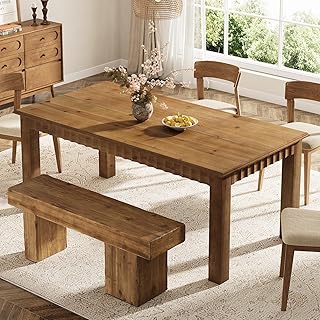
Plank+Beam Classic 72 Inch Dining Table
The pecan wirebrush treatment is the standout here: brushing opens the grain slightly so light scuffs disappear into the texture instead of announcing themselves. Non-toxic finishes and quick assembly make it a sensible choice for households that don’t want a curing period before dinner.
63-Inch Solid Wood Dining Table for 6
Heavy-duty legs and a dark brown finish give this one the most forgiving profile for high-traffic homes — the depth of color conceals crumbs, water spots, and the general chaos of weekday meals. The 63-inch length is the sweet spot for apartments and open-plan kitchens where a 72-inch table would crowd the walkway.
BAKEVE Bamboo Dining Table for 4-6
FSC-certified bamboo is technically a grass, but laminated into a tabletop it tests harder than red oak while weighing noticeably less. The walnut tone and mid-century silhouette suit smaller rooms, and at 47.2 inches it doubles convincingly as a desk.
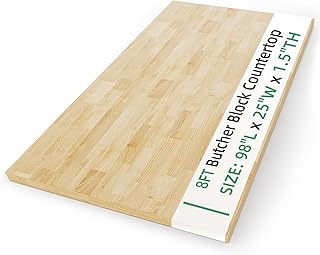
Butcher Block Countertop Wood Tabletop
An unfinished 8-foot birch plank at 1.5 inches thick is the DIY foundation of choice — thick enough to accept a heavy trestle base without sagging across the span. Budget a weekend for sanding and three coats of hardwax oil; birch is soft enough that skipping the finish schedule will cost you.
Frequently Asked Questions
Which hardwood lasts longest for a dining table?
Acacia, hard maple, and white oak lead on density and dimensional stability. Acacia in particular resists moisture well, which matters more than raw hardness in a room where spills are routine.
Do I need to seal an unfinished tabletop?
Yes. Bare hardwood absorbs liquid and stains permanently within minutes. A hardwax oil or food-safe penetrating finish, applied in thin coats with light sanding between, is the standard approach.
Is bamboo genuinely comparable to hardwood?
Laminated bamboo outperforms several traditional hardwoods on hardness testing and is dimensionally stable. Its limitation is repair — deep gouges are harder to sand out invisibly than on solid timber.
How do I stop a solid wood table from cracking?
Keep indoor humidity between 35 and 55 percent, avoid placing the table against a radiator or in direct afternoon sun, and re-oil annually if the surface is oil-finished.
Final Thoughts
For most dining rooms the Pemberly Row Solid Acacia table delivers the best balance of hardness, honest kiln-dried construction, and a finish that ages gracefully. If your space is tighter or your budget more measured, the Plank+Beam Classic 72-Inch in pecan wirebrush hides wear better than anything else here, while the BAKEVE Bamboo table is the smart pick for small rooms and dual-purpose use.