Key takeaways
- Rib count and reinforcement: Six ribs is the budget standard; eight is the threshold for real wind performance. Look for fiberglass or reinforced ribs, which flex and return rather than crease permanently the way thin-gauge aluminum does.
- Venting architecture: A single vent is helpful, a double or triple tier is better. Layered canopies let pressure bleed out the top instead of building underneath and lifting the whole assembly — this is the single most effective anti-inversion feature.
- Canopy fabric and fade rating: Solution-dyed acrylic holds color for years; printed polyester rarely makes it past two summers. Check GSM weight (240 and up signals real body) and treat a stated multi-year no-fade warranty as the manufacturer’s confidence in its own cloth.
- Base mass, matched to type: Center-pole umbrellas need 50 lbs minimum freestanding, less if the pole passes through a table. Cantilevers are a different equation entirely, often needing 150–200 lbs of plates or a filled base to counterweight the offset arm.
- Mechanism quality: Cranks and push-button tilts are where cheap umbrellas fail first. Prefer sealed hardware, metal gearing over plastic, and an auto-tilt that engages smoothly rather than needing force at the end of the throw.
What's inside
Wind is the quiet destroyer of outdoor rooms. A canopy that looked sculptural in June turns into a folded-back mess by August, ribs snapped at the joints, fabric bleached to a chalky version of the color you chose. The frustrating part is that most patio umbrellas aren’t engineered for weather at all: they’re engineered for a photograph. Thin aluminum tubing, six unreinforced ribs, a polyester canopy with no escape route for a gust, and a base that weighs less than a bag of soil.
This guide looks at the umbrellas built to stay standing. We compared frame construction, rib count, venting, canopy weight and fade warranties across center-pole market umbrellas and offset cantilevers, then narrowed to the models that hold their shape on genuinely breezy sites — coastal decks, open lawns, poolsides with nothing to break the wind. Below you’ll find our shortlist, a buying framework, and answers to the questions that actually determine whether an umbrella lasts one season or ten.
As an Amazon Associate we earn from qualifying purchases.


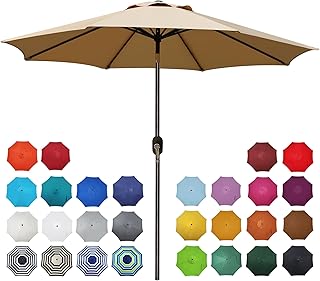

How to Choose a Heavy-Duty Wind Resistant Patio Umbrella (2026)
- Rib count and reinforcement: Six ribs is the budget standard; eight is the threshold for real wind performance. Look for fiberglass or reinforced ribs, which flex and return rather than crease permanently the way thin-gauge aluminum does.
- Venting architecture: A single vent is helpful, a double or triple tier is better. Layered canopies let pressure bleed out the top instead of building underneath and lifting the whole assembly — this is the single most effective anti-inversion feature.
- Canopy fabric and fade rating: Solution-dyed acrylic holds color for years; printed polyester rarely makes it past two summers. Check GSM weight (240 and up signals real body) and treat a stated multi-year no-fade warranty as the manufacturer’s confidence in its own cloth.
- Base mass, matched to type: Center-pole umbrellas need 50 lbs minimum freestanding, less if the pole passes through a table. Cantilevers are a different equation entirely, often needing 150–200 lbs of plates or a filled base to counterweight the offset arm.
- Mechanism quality: Cranks and push-button tilts are where cheap umbrellas fail first. Prefer sealed hardware, metal gearing over plastic, and an auto-tilt that engages smoothly rather than needing force at the end of the throw.
The Best Heavy-Duty Wind Resistant Patio Umbrellas (2026) Reviewed
PURPLE LEAF Cantilever 10′ x 10′ Double Top
A 35 MPH wind-rated frame paired with a double-top canopy makes this the most capable offset umbrella on the list, and the 240GSM fabric carries a three-year fade warranty. Budget for a properly weighted base and about half an hour of assembly — the payoff is a clear span of shade with no pole interrupting your seating plan.
Midtown Umbrellas The Lean 9 Ft
Eight reinforced ribs and Acrylast acrylic fabric with a ten-year no-fade rating put this in genuine commercial territory, and the auto-tilt is one of the smoother mechanisms we’ve handled. The azure canopy on a matte black pole reads more designed than most residential options, which is why it turns up so often at hotels and cafés.
EliteShade USA 9ft 3-Tier Market Umbrella
The three-tier canopy is the standout here: it sheds gusts efficiently while adding real visual depth, and the UPF 50+ commercial-grade fabric is backed by a ten-year non-fading claim. A dependable center-pole workhorse for pool decks and bistro-style tables.
Tempera Patio Market Umbrella with Tilt and Crank
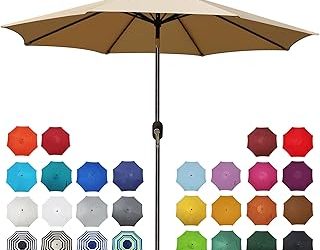
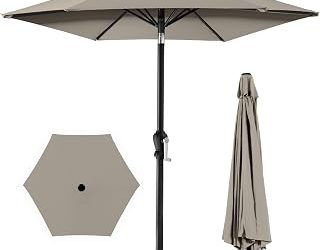
A sturdier pole and fade-resistant canopy than the price suggests, with a straightforward crank and push-button tilt that’s easy to live with day to day. Best suited to patios with some natural windbreak, where you want reliable coverage without a specialist budget.
9′ Market Umbrella with 8 Sturdy Ribs
Eight ribs at an entry-level price is the reason to consider this one, and the tilt-and-crank combination covers the essentials cleanly. Pair it with a heavier base than the minimum recommendation and it holds up well on sheltered decks.
Frequently Asked Questions
How much wind can a patio umbrella really handle?
Well-built models are typically rated to 30–35 MPH, but ratings assume correct base weight and a properly tensioned canopy. Treat any rating as a survival threshold, not an operating condition — close the umbrella before sustained wind reaches it.
How heavy does my base need to be?
Roughly 50 lbs for a 9-foot freestanding center pole, 30–40 lbs if it’s threaded through a table for lateral support, and 150 lbs or more for a cantilever. Underweighting the base is the most common cause of failure we see.
Is acrylic fabric worth the extra cost over polyester?
Yes, if you use the space regularly. Solution-dyed acrylic is colored at the fiber level rather than surface-printed, so it resists UV bleaching for years and holds up to repeated wetting without going brittle.
What works for a long table or a double lounge setup?
Rectangular double-sided designs are the efficient answer. A 15FT double-sided market umbrella with base included covers two zones from a single center support — ideal for poolside runs and long dining tables where one round canopy leaves someone in the sun.
Final Thoughts
For exposed sites where wind is the deciding factor, the PURPLE LEAF Cantilever 10′ x 10′ Double Top offers the strongest frame rating and the cleanest shade footprint. If you want long-term fabric integrity and a more refined look over a table, the Midtown Umbrellas Lean 9 Ft is the one to build a patio around, with the EliteShade 3-Tier close behind as the better value in a classic market silhouette.