Key takeaways
- Tank capacity versus runtime: A 2L tank suits a single plant shelf or a bedside grouping; 5 to 6L is the realistic minimum if you want unattended overnight or weekend operation. Runtime claims assume the lowest output setting, so expect roughly half the advertised figure when running near maximum.
- Mist type: Ultrasonic cool mist is affordable and effective but aerosolizes dissolved minerals as white dust that settles on leaves and finishes. Evaporative units push air through a wick, producing no visible mist and no residue — better for glossy furniture and dark surfaces.
- Humidity control: A built-in hygrometer with a target setpoint prevents the overshoot that leads to condensation on windows and fungal spotting on dense foliage. Without one, you are running blind and cycling the unit by hand.
- Cleaning access: Any reservoir left standing will grow biofilm. Look for a wide top-fill opening you can reach into with a cloth, and a base that separates cleanly from the tank. This single detail determines whether you maintain the unit or abandon it.
- Placement and acoustics: Position the unit a few feet from foliage rather than aimed at it, so mist disperses instead of pooling on leaves. Anything above 35dB becomes noticeable in a quiet room, which matters for bedrooms doubling as plant space.
What's inside
Anyone who has styled a room around a fiddle-leaf fig or a shelf of trailing pothos knows the quiet frustration: the plants look perfect for about six weeks, then the leaf tips brown, new growth stalls, and the whole vignette starts to sulk. The culprit is almost never light or fertilizer. It is the air. Heated and air-conditioned interiors routinely sit between 20 and 30 percent relative humidity, while most of the tropical species we love as decor evolved in the 50 to 70 percent range. That gap is invisible, which is exactly why it goes unaddressed for so long.
A humidifier is the least glamorous piece of equipment in a plant-forward interior and the one that changes the most. This guide looks at the models worth putting in a living space you actually care about — machines that hold enough water to run overnight, stay quiet enough to disappear, and refill without a wrestling match at the kitchen sink. Below you will find the specifications that genuinely matter for foliage, honest notes on each unit, and answers to the questions that come up once a humidifier lives alongside your collection.
As an Amazon Associate we earn from qualifying purchases.



How to Choose a Humidifier For Plants (2026)
- Tank capacity versus runtime: A 2L tank suits a single plant shelf or a bedside grouping; 5 to 6L is the realistic minimum if you want unattended overnight or weekend operation. Runtime claims assume the lowest output setting, so expect roughly half the advertised figure when running near maximum.
- Mist type: Ultrasonic cool mist is affordable and effective but aerosolizes dissolved minerals as white dust that settles on leaves and finishes. Evaporative units push air through a wick, producing no visible mist and no residue — better for glossy furniture and dark surfaces.
- Humidity control: A built-in hygrometer with a target setpoint prevents the overshoot that leads to condensation on windows and fungal spotting on dense foliage. Without one, you are running blind and cycling the unit by hand.
- Cleaning access: Any reservoir left standing will grow biofilm. Look for a wide top-fill opening you can reach into with a cloth, and a base that separates cleanly from the tank. This single detail determines whether you maintain the unit or abandon it.
- Placement and acoustics: Position the unit a few feet from foliage rather than aimed at it, so mist disperses instead of pooling on leaves. Anything above 35dB becomes noticeable in a quiet room, which matters for bedrooms doubling as plant space.
The Best Humidifier For Plants (2026)s Reviewed
Levoit Top Fill 2.5L
The most sensibly designed small humidifier available, with a genuinely open top-fill port and a 28dB output that vanishes into room noise. Its 2.5L tank is best matched to a single plant grouping or nursery corner rather than an open-plan room.
ROSEKM 2.0L Cool Mist
A compact filterless ultrasonic unit whose 360-degree nozzle lets you direct mist around a shelf instead of at one target, and the black finish reads far better against dark wood than the usual white plastic. Use distilled water here — mineral dust shows quickly on a filterless design.
LAVIEAIR Evaporative 5L
The pick for anyone who has wiped chalky film off a walnut sideboard. Evaporative operation means zero white dust and no visible plume, and the 5L tank covers around 300 square feet for up to 48 hours, though the wick needs replacing on schedule to maintain output.
Levoit LV600S Smart Warm & Cool Mist
The most capable unit here, with 753 square feet of coverage, warm mist for faster humidity gains in winter, and app and voice control that let you hold a precise setpoint without touching the machine. Worth the premium if plants are distributed across a large room rather than clustered.
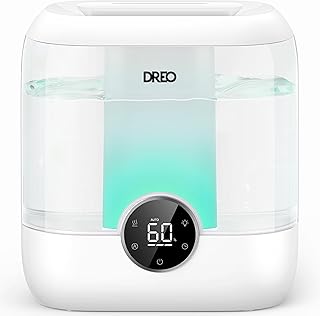
DREO HM524 6L
A strong middle path: 6L capacity, up to 60 hours of runtime, precise humidity targeting, and 28dB operation, all without app dependency. The soft nightlight is a genuine asset in a bedroom, and the wide-mouth tank cleans easily.
Frequently Asked Questions
What humidity level should I target?
Aim for 50 to 60 percent for most tropical houseplants. Calatheas, ferns, and alocasias prefer the upper end; succulents and cacti want nothing added at all.
Do I need distilled water?
For ultrasonic models, strongly recommended. Tap minerals become airborne dust that coats leaves and reduces photosynthesis. Evaporative units trap minerals in the wick, so tap water is acceptable.
How often should I clean the tank?
Rinse every refill and do a full descale with white vinegar weekly. Standing water in a warm room grows bacteria fast, and a neglected humidifier disperses it directly onto your plants.
Can humidity get too high?
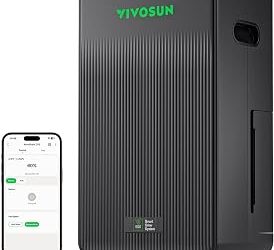
Yes. Sustained levels above 70 percent invite powdery mildew, root issues, and condensation damage to trim and glazing. Growers running enclosed tents often need the opposite tool — the VIVOSUN AeroDrain D12 dehumidifier handles up to 12L per day with app-based monitoring.
Final Thoughts
For most plant-filled rooms, the DREO HM524 6L hits the best balance of capacity, quiet operation, and precise control at a fair price. Choose the LAVIEAIR Evaporative 5L if protecting wood and dark finishes from mineral dust is the priority, or step up to the Levoit LV600S if you need to condition a genuinely large space with warm mist and scheduled automation.