Key takeaways
- One-way vs. two-way: One-way units only release moisture, so they need monitoring in humid months. Two-way systems absorb excess humidity as well, which matters if your home swings from a damp summer to a bone-dry winter without much middle ground.
- Soundhole or case: Soundhole humidifiers hang directly over the strings and treat the body where it counts. Case systems condition the whole enclosure, including the neck and headstock, but only work if the guitar actually lives in its case.
- Built-in hygrometer: Guessing is how tops crack. A model with an integrated gauge, or a separate digital hygrometer in the case, tells you whether the system is keeping up.
- Drip risk: Any water-based unit can leak onto the top or into the body. Look for sealed sponges, high-absorption cores, and non-drip housings rather than open tubes.
- Refill cadence: Sponge units need topping up every one to two weeks in dry conditions. Salt-based packs run six months or longer. Choose based on how much upkeep you’ll realistically tolerate.
What's inside
A guitar leaning in the corner of a well-composed room does a lot of quiet work. It softens a hard wall, adds warmth to a neutral palette, and signals that the space is lived in rather than styled. What most people don’t account for is that the same conditions we optimize for interiors — forced-air heat in January, wide-plank floors that hate moisture, a wood stove going all evening — are actively hostile to a thin-walled spruce top. Below roughly 40% relative humidity, tonewood begins to shed moisture and shrink. The fretboard edges sharpen, the top sinks, the action drops, and eventually a hairline crack appears alongside the bridge. It is not a slow warning; in a dry January it can happen in a matter of weeks.
The fix is unglamorous and inexpensive, which is why it gets skipped. A guitar humidifier is a small reservoir or moisture-regulating pack that sits in the soundhole or case and holds the instrument’s immediate environment in a stable band, usually 45–55%. This guide covers the systems worth owning in 2026, including two-way packs that both add and absorb moisture, all-in-one units with built-in hygrometers, and options for cellos and woodwinds. We’ve weighted the picks toward set-and-forget reliability, since the best humidifier is the one you’ll actually maintain.
As an Amazon Associate we earn from qualifying purchases.



How to Choose a/an Humidifier Guitar (2026)
- One-way vs. two-way: One-way units only release moisture, so they need monitoring in humid months. Two-way systems absorb excess humidity as well, which matters if your home swings from a damp summer to a bone-dry winter without much middle ground.
- Soundhole or case: Soundhole humidifiers hang directly over the strings and treat the body where it counts. Case systems condition the whole enclosure, including the neck and headstock, but only work if the guitar actually lives in its case.
- Built-in hygrometer: Guessing is how tops crack. A model with an integrated gauge, or a separate digital hygrometer in the case, tells you whether the system is keeping up.
- Drip risk: Any water-based unit can leak onto the top or into the body. Look for sealed sponges, high-absorption cores, and non-drip housings rather than open tubes.
- Refill cadence: Sponge units need topping up every one to two weeks in dry conditions. Salt-based packs run six months or longer. Choose based on how much upkeep you’ll realistically tolerate.
The Best Humidifier Guitar (2026)s Reviewed
D’Addario Humidipak Maintain Kit
The most reliable hands-off option here: three sealed packets sit in the case and hold 45–50% by both releasing and absorbing moisture, so there’s no water to spill and no readings to interpret. Replace the packets when they stiffen, roughly every two to six months depending on your climate.
MusicNomad Humitar ONE (MN311)
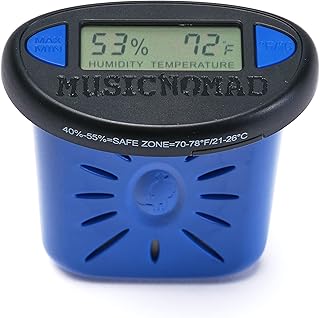
A soundhole humidifier with a hygrometer built into the same unit, which removes the usual excuse for not monitoring anything. The sealed Humid-i-Bar sponge is genuinely non-drip, and the readout gives you a quick sanity check every time you open the case.
Oasis OH-1 Soundhole Humidifier
Oasis uses water-absorbing crystals inside a fabric-sleeved tube that visibly shrinks as it empties, so you can see when a refill is due without opening anything. It hangs neatly between the strings and releases moisture slowly and evenly, making it a favorite of repair techs.
Boveda 49% Size 8, 10-Pack
Two-way salt packs sized for small woodwinds, bows, and instrument compartments where a full guitar kit is overkill. Buying ten at once is the sensible move, since these are consumables and a stocked drawer means you never run a dry month by accident.
Cello F-Hole Moisture Tube (4/4 and 3/4)
A straightforward 12.99-inch tube with a high-absorption sponge, designed to slip through an f-hole and rest safely inside the body. Squeeze it thoroughly before installing and it delivers steady moisture without the seepage risk that plagues cheaper tubes.
Frequently Asked Questions
What humidity level should I target?
Aim for 45–55% relative humidity. Brief excursions are tolerable; sustained readings below 35% or above 65% are where cracking and swelling begin.
Do I need one if my guitar hangs on the wall?
Yes, and more urgently. Wall-hung instruments are fully exposed to room air, so a soundhole unit is essential — or better, store the guitar in its case with a two-way system during heating season.
How often do these need refilling?
Sponge and crystal humidifiers typically need water every seven to fourteen days in winter. Two-way packs last months and are replaced rather than refilled.
Can I over-humidify a guitar?
Absolutely. Too much moisture swells the top, raises the action, and dulls projection. That’s the argument for two-way systems, which cap the upper end automatically.
Final Thoughts
For most people, the D’Addario Humidipak Maintain Kit is the right answer: it’s passive, self-regulating, and nearly impossible to misuse. If your guitar lives on a stand and you want visible feedback, the MusicNomad Humitar ONE pairs a sealed sponge with a hygrometer in one unit, while the Oasis OH-1 remains the quiet workhorse for anyone who prefers a soundhole solution they can read at a glance.