Key takeaways
- Budget: Thin steel and laminated particleboard. Works for decor and light books; may wobble and sag.
- Mid-range: Thicker frames, better bracing, higher stated load ratings and anti-tip hardware.
- Premium: Solid wood shelves, welded steel frames and long-term durability.
For most living rooms and home offices, a steel-frame bookshelf with engineered wood shelves is the best industrial-style choice; solid-wood and pipe-style units suit buyers who want a heavier, more authentic look, and open ladder shelves suit small spaces and lighter loads. Industrial bookshelves combine metal frames, wood tones and open shelving, and the right one depends on how much weight it must carry and how much floor it can occupy.
Our top picks


As an Amazon Associate we earn from qualifying purchases at no extra cost to you.
At a Glance: Industrial Bookshelf Types
| Type / example | Best for | Key traits | Limits |
|---|---|---|---|
| Steel frame with engineered wood shelves (VASAGLE, Walker Edison style) | General book and decor storage | Makers list powder-coated steel frames, particleboard or MDF shelves, 4 to 5 tiers | Shelf sag under heavy loads; wobble if not anchored |
| Ladder shelf | Small rooms, apartments | Leaning design, light footprint | Lower capacity; must be anchored |
| Pipe or iron-pipe style | Heavy books, loft looks | Metal pipe frame with wood boards | Heavy and more complex assembly |
| Solid wood and metal | Long-term furniture | Thicker shelves and sturdier joints | Heavier; costlier |
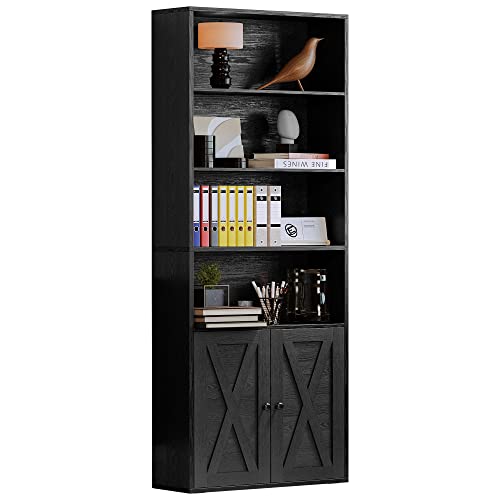
| Wide bookcase with closed doors or cabinets | Mixed storage and display | Open and closed sections | Bulky |
What to Look For
Frame and materials
Steel frames with powder-coat finishes resist scratches and give the industrial look. Thicker tubing and cross-bracing add stability. Shelves are most often particleboard or MDF with a wood-grain laminate, which is lighter and more affordable than solid wood. Solid wood shelves cost more and carry heavier loads. Read the maker’s description of materials rather than assuming.
Weight capacity
Makers frequently list a per-shelf or total load rating. Books are heavy, and a standard shelf filled with hardbacks can exceed the rating. Spread heavy volumes on lower shelves and check that the rating covers your plan. If a rating is not given, treat the shelf as light-duty.
Size and fit
Common heights run from about 120 to 180 cm, with widths of 60 to 100 cm and depths of 25 to 35 cm. Measure the wall, door swing, baseboard, and ceiling height. For deep books and large binders, check shelf depth. For narrow hallways, a shallow ladder shelf is more practical.
Stability and anchoring
Tall shelves can tip. Most makers include a wall anchor kit and instruct buyers to use it, and consumer safety bodies recommend anchoring tall furniture especially in homes with children. Open-back designs rely on cross-bracing, so check that the braces are included and tightened.
Assembly
Most units arrive flat with hardware and take one or two people an hour or two. Reviewers often note that tightening all bolts at the end improves stability, and that instructions vary in clarity. Pre-assembled steel units are rare.
Finish and tone
Black frames with walnut or rustic brown shelves are the classic combination, while white, gray and oak finishes lean toward modern. Laminate finishes resist spills but can chip at edges.
Option Notes
VASAGLE
VASAGLE sells a large range of steel-and-wood shelves, ladder shelves and bookcases. The maker lists powder-coated frames, anti-tip fittings and different shelf counts. Reviewers generally describe them as good value, with the usual trade-off of laminated engineered wood shelves that dislike heavy overloading.
Walker Edison
Walker Edison offers industrial and modern farmhouse styles in metal and wood, including wide and tall bookcases. Reviewers often cite sturdy builds in the mid-range tier and note that assembly takes patience.
Bestier and similar mid-range brands
These brands make metal-frame bookcases in various sizes, often with closed storage on part of the unit. They suit buyers who want a mix of display and hidden storage.
Solid wood and pipe-style
Specialist makers and small furniture brands sell solid wood and pipe-style shelves with higher capacity. They suit large libraries and buyers who value heft, with the trade-off of weight and a premium tier.
Budget Tiers and Trade-Offs
- Budget: Thin steel and laminated particleboard. Works for decor and light books; may wobble and sag.
- Mid-range: Thicker frames, better bracing, higher stated load ratings and anti-tip hardware.
- Premium: Solid wood shelves, welded steel frames and long-term durability.
Pick X If…
| Pick this | If you… |
|---|---|
| Steel frame with engineered wood shelves | want a good-looking general-purpose bookcase at a moderate budget |
| Ladder shelf | have a small room or want light display shelves |
| Pipe-style or solid wood | own many heavy books and want a sturdier piece |
| Bookcase with closed storage | want to hide clutter alongside displayed items |
| Wide low shelf | want a media console or room divider |
Care and Safety Notes
- Anchor tall bookshelves to the wall using the supplied hardware, and use anchors suited to your wall type.
- Do not exceed the maker’s stated shelf load, and place heavier items on lower shelves.
- Do not let children climb on shelves.
- Dust with a dry or lightly damp cloth. Avoid soaking laminated shelves, which can swell at edges.
- Retighten bolts after a few weeks, since vibration can loosen them.
- Keep the unit away from damp areas and direct heat.
Alternatives to Consider
- Floating wall shelves: save floor space but need secure wall mounting suited to the load.
- Cube storage units: flexible modular storage in many finishes.
- Built-in shelving or a carpenter-made unit: best for awkward spaces and heavy collections.
- Metal garage or utility shelving: very high capacity, though less decorative.
Planning the Layout and Load
Before buying, plan what the shelves will hold. A full run of hardcover books is heavy, and a long laminated shelf can bend over time if it is loaded edge to edge. Shorter spans, a center support or a thicker shelf board reduce sag. If you are storing records, large art books or binders, look for a stated high load rating, and consider steel shelving with a wood finish rather than a decorative ladder unit.
Also consider the room. Place tall units against a solid wall where you can anchor into studs, and avoid putting them in front of heating vents. Leave a small gap from the wall for baseboards and cables. In a home office, put the shelf within reach of the desk for reference books and keep the top shelf for light items. In living rooms, mix open shelves with a few baskets so the unit looks tidy rather than crowded.
Common Mistakes to Avoid
- Ignoring the load rating: overloaded laminate shelves bow and may not recover.
- Skipping the wall anchor: tall, narrow units are the most likely to tip.
- Not measuring shelf depth: large books and storage bins need more depth than decorative shelves offer.
- Loose bolts: tighten all hardware after assembly and again after a few weeks.
- Placing on a soft rug: uneven support makes a tall unit wobble; use a hard, level surface or shims.
Quick Buying Checklist
- Measure the wall space, ceiling height and the area needed for doors and walkways.
- Read the maker’s stated load rating per shelf and for the whole unit.
- Check what the shelves are made of: engineered wood, solid wood or metal mesh.
- Confirm the package includes a wall anchor kit and rear bracing.
- Look at shelf depth to make sure it suits large books, baskets or decor.
- Plan for assembly time and a second person for taller models.
- Pick a finish that fits the existing furniture, and remember that black frames show dust more than gray ones.
Frequently Asked Questions
How much weight can an industrial bookshelf hold?
It varies by model, and makers often list a per-shelf and total limit. Engineered wood shelves usually carry less than solid wood or steel. If you have heavy books, choose a unit with a higher stated rating and use the lower shelves for the heaviest volumes.
Do I need to anchor a bookshelf to the wall?
It is strongly advised for tall units, especially in homes with children. Most makers include anti-tip hardware, and consumer safety groups recommend using it. Choose anchors that match your wall material.
Are industrial bookshelves hard to assemble?
Most come flat packed and need basic tools. Allow an hour or two and, for larger units, a second person. Tighten all bolts at the end for better stability.
What is the difference between MDF and solid wood shelves?
MDF and particleboard are engineered wood products that are lighter and more affordable but can sag or swell if overloaded or wet. Solid wood is stronger and can be refinished but costs more and weighs more.
How do I style an industrial bookshelf?
Mix books, plants and baskets, and leave some open space between items. Place heavier objects low and lighter decor high. A few matching boxes or baskets can hide clutter.
Will an open-back bookshelf wobble?
It can if cross-braces are missing or loose. Look for units with back bracing or fasteners that tighten the frame, and anchor to the wall. Reviewers often say that a rear bracing bar reduces side sway significantly.
More from Amazon
Programs that pair well with the guide above. Offers and eligibility are set by Amazon and may change.
Collect the home and kitchen items you want in one registry that guests can shop from.
Create a wedding registrySet up recurring deliveries of everyday items on eligible products. Terms and savings are set by Amazon.
Explore Subscribe & SaveFree shipping on eligible items, Prime Video and more. Eligible new members can start with a free trial.
Start a Prime free trialAudiobooks and podcasts to listen to on the go. Eligible new members can start with a free trial.
Try Audible freeAs an Amazon Associate we earn from qualifying purchases.