Key takeaways
- Upholstery honesty: Top-grain leather ages gracefully and is worth stretching for. PU leather wipes clean and photographs beautifully but has a shorter life; performance fabric splits the difference and breathes better in warm rooms.
- Mechanism type: Manual levers are cheaper, quieter, and have fewer failure points. Power recline earns its keep for anyone with knee, hip, or mobility limitations, or if you want infinite stopping positions rather than two or three preset angles.
- Real footprint, not listed footprint: Measure the fully reclined depth and the wall clearance, not just the seated dimensions. Wall-hugger designs and rocker bases behave very differently in a tight apartment layout.
- Lumbar and seat density: Press for firm resistance rather than instant sink. Overstuffed arms and defined lumbar support signal a chair built for daily hours, not occasional lounging.
- Features you will actually use: Heat and massage are genuinely pleasant for tired backs. LED accents and side pockets are nice-to-have. Prioritize frame quality over gadget count when the budget forces a choice.
What's inside
Recliners have a reputation problem at the low end of the market. Spend under a few hundred dollars and the usual story goes like this: the foam flattens by month three, the release lever develops a personality, and the “leather” starts peeling in the exact spot where your elbow lands. Shoppers end up assuming that a comfortable reclining chair is a four-figure purchase, so they either overspend or skip it entirely and keep sitting on a sofa that doesn’t support their back.
That assumption is outdated. The budget recliner category has quietly matured, and the current crop borrows real engineering from higher tiers: steel reclining mechanisms, denser seat cushioning, top-grain leather at prices that used to buy bonded scraps, and extras like heat, massage, USB-C charging, and cup holders that no longer signal a compromise. This guide covers six affordable recliners worth considering in 2026, what separates a genuine value from a false economy, and how to match a chair to the room it actually has to live in.
As an Amazon Associate we earn from qualifying purchases.




How to Choose an Inexpensive Recliner (2026)
- Upholstery honesty: Top-grain leather ages gracefully and is worth stretching for. PU leather wipes clean and photographs beautifully but has a shorter life; performance fabric splits the difference and breathes better in warm rooms.
- Mechanism type: Manual levers are cheaper, quieter, and have fewer failure points. Power recline earns its keep for anyone with knee, hip, or mobility limitations, or if you want infinite stopping positions rather than two or three preset angles.
- Real footprint, not listed footprint: Measure the fully reclined depth and the wall clearance, not just the seated dimensions. Wall-hugger designs and rocker bases behave very differently in a tight apartment layout.
- Lumbar and seat density: Press for firm resistance rather than instant sink. Overstuffed arms and defined lumbar support signal a chair built for daily hours, not occasional lounging.
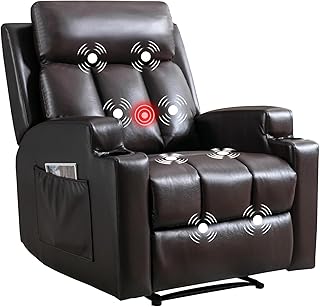
- Features you will actually use: Heat and massage are genuinely pleasant for tired backs. LED accents and side pockets are nice-to-have. Prioritize frame quality over gadget count when the budget forces a choice.
The Best Inexpensive Recliners of 2026, Reviewed
AIRSKY Genuine Leather Recliner
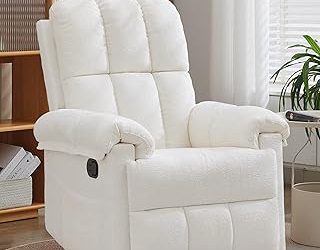
Top-grain leather finished with an Italian water-washing process is unusual at this price, and it shows in the supple hand-feel and the way the beige develops character instead of cracking. The overstuffed arms and back give it a substantial, traditional presence, making it the pick for anyone who wants a chair that reads as an investment piece.
Power Swivel Rocker Recliner with Heat and Massage (2-Pack)
Sold as a pair, this is the most sensible way to build a two-seat lounge or media corner without matching two separate purchases. The combination of powered recline, swivel rocking, heat, massage, cup holders, and both USB-A and USB-C ports covers essentially every convenience request, and the per-chair cost lands well below what a single comparable recliner usually runs.
Classic Manual Leather Recliner in Brown
A straightforward traditional silhouette with pillowed arms and a supportive back, built around a manual mechanism that keeps the price down and the maintenance minimal. It suits period-leaning interiors and rooms where you want the recliner to blend with existing seating rather than announce itself.
Sweetcrispy Massage Recliner
The strongest small-space option here: modern grey fabric, a compact frame, lumbar support, and adjustable home-theater positioning that fits studios, bedrooms, and bonus rooms where a bulkier leather chair would dominate. Fabric also runs cooler than leather during long viewing sessions.
Homall PU Leather Recliner
The entry point of the group and a legitimately good first recliner, with dedicated lumbar support and clean home-theater lines in black PU leather. Expect a shorter service life than genuine leather, but the value per dollar is hard to argue with for a guest room, dorm, or basement setup.
Frequently Asked Questions
Is a manual or power recliner better on a budget?
Manual, in most cases. Fewer electronic components means fewer things to fail, and the savings usually go into a better frame or upholstery. Choose power if reclining under your own weight is difficult or you want precise positioning.
How long should an affordable recliner last?
Plan on three to five years of daily use from a PU leather chair, and eight or more from top-grain leather or a quality performance fabric. Placement matters too: direct sunlight and forced-air vents shorten upholstery life considerably.
Do the heat and massage functions actually do anything?
Yes, within limits. Vibration motors and low-level heat are effective for warming stiff muscles and general relaxation. They are not therapeutic equipment, so treat them as comfort features rather than a treatment plan.
How much clearance do I need behind the chair?
Assume four to six inches for most standard recliners, and confirm the reclined depth in the product specifications before committing. Wall-hugger and rocker bases both need extra room to move properly.
Final Thoughts
For the best balance of material quality and longevity, the AIRSKY genuine leather recliner is the one to stretch for. If you are furnishing a media room or need two seats at once, the power swivel rocker two-pack delivers more features per dollar than anything else here, while the Sweetcrispy massage recliner remains the smartest choice for apartments and tight corners.