Key takeaways
- Coverage versus your surface area: Match the rated capacity to your pool with headroom to spare. A cleaner spec’d for 2,600 sq. ft. handles a standard 16×32 rectangle comfortably, but a 20×40 with a tanning ledge and a spa spillover benefits from something rated closer to 3,200 sq. ft.
- Runtime and charging behavior: Two hours covers floor and walls on most residential pools. Beyond that, look for auto-return docking or surface parking, since a robot stranded mid-basin means fishing it out with a pole and undoing the convenience you paid for.
- Waterline and wall performance: This is where cheap units fail. Vertical climbing needs genuine adhesion and a rotating brush that sits against the tile, not a vacuum port that skims past it. Ask whether the machine scrubs the waterline or simply touches it.
- Navigation intelligence: Random-bounce patterns waste battery on freeform shapes, kidney curves, and Baja shelves. Mapping systems, sensor arrays, and camera-guided path planning matter most in geometrically complex pools with varied depth transitions.
- Filtration and maintenance rhythm: Dual-stage or ultra-fine baskets capture pollen and algae fines that coarse mesh releases straight back into the water. A top-loading basket you can rinse in thirty seconds is the difference between a habit you keep and one you abandon by August.
What's inside
A pool is the one piece of furniture in your home you can’t slipcover, restyle, or push into a corner when it stops looking good. It sits at the center of the sightline from your kitchen window, and when the plaster goes hazy or a gray tideline creeps along the waterline tile, the whole exterior scheme reads as neglected. Most owners discover this the hard way: the suction-side cleaner that came with the build wanders the deep end, ignores the steps entirely, and leaves the vertical surfaces to a brush and a Saturday morning.
Cordless robotic cleaners have quietly solved that problem. The current generation maps the basin, climbs walls, scrubs the waterline band, and returns to a dock without a hose crossing your deck. Below we’ve curated six machines worth considering for an inground pool in 2026, with notes on runtime, navigation, and which pool shapes each one actually suits.
As an Amazon Associate we earn from qualifying purchases.



How to Choose an Inground Pool Vacuum Robot (2026)
- Coverage versus your surface area: Match the rated capacity to your pool with headroom to spare. A cleaner spec’d for 2,600 sq. ft. handles a standard 16×32 rectangle comfortably, but a 20×40 with a tanning ledge and a spa spillover benefits from something rated closer to 3,200 sq. ft.
- Runtime and charging behavior: Two hours covers floor and walls on most residential pools. Beyond that, look for auto-return docking or surface parking, since a robot stranded mid-basin means fishing it out with a pole and undoing the convenience you paid for.
- Waterline and wall performance: This is where cheap units fail. Vertical climbing needs genuine adhesion and a rotating brush that sits against the tile, not a vacuum port that skims past it. Ask whether the machine scrubs the waterline or simply touches it.
- Navigation intelligence: Random-bounce patterns waste battery on freeform shapes, kidney curves, and Baja shelves. Mapping systems, sensor arrays, and camera-guided path planning matter most in geometrically complex pools with varied depth transitions.
- Filtration and maintenance rhythm: Dual-stage or ultra-fine baskets capture pollen and algae fines that coarse mesh releases straight back into the water. A top-loading basket you can rinse in thirty seconds is the difference between a habit you keep and one you abandon by August.
The Best Inground Pool Vacuum Robots (2026) Reviewed
Beatbot AquaSense 2 Ultra
The most capable machine here, and the one built for pools that defeat everything else: freeform outlines, split levels, dark interior finishes. Its AI camera mapping and five-mode cleaning cover floor, walls, waterline, surface skimming, and water clarification, and the smart surface parking means retrieval never involves reaching into the deep end.
DREAME Z1 PRO
Strong suction and a genuinely long runtime make this the practical choice for larger residential pools that need a single uninterrupted pass. The mapping navigation is methodical rather than showy, which is exactly what you want on a big rectangle where systematic coverage beats clever improvisation.
Aiper Scuba S3
A well-balanced everyday cleaner with smart sensing, path planning, and dual ultra-fine filtration that handles fine debris loads without constant basket emptying. Its lighter frame and app scheduling suit owners who want the pool maintained on a rhythm they set once and forget.
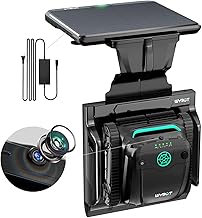
WYBOT S2 Solar Vision
The solar dock is the distinguishing feature, and it earns its place if your equipment pad is inconveniently placed or your outdoor outlets are already committed. AI vision guidance and 3D adsorption keep it reliable on walls, and auto-return charging closes the loop on a low-intervention setup.
U8 Cordless Robotic Pool Cleaner
Focused and unfussy: it climbs, scrubs the waterline, docks itself, and does so at a friendlier price than the flagship models. Best suited to pools up to 2,600 sq. ft. with conventional geometry, where its 150-minute cycle is more than sufficient.
Frequently Asked Questions
How often should a robotic cleaner run?
Two to three cycles per week keeps most inground pools visually clean during swim season. Increase frequency during heavy pollen weeks or after storms, and reduce it once water temperatures drop and biological activity slows.
Do these replace chemical maintenance?
No. Mechanical cleaning removes debris and biofilm, which lowers chemical demand, but sanitizer levels, pH, and alkalinity still require regular testing and adjustment.
Can they be left in the water permanently?
Manufacturers advise against it. Continuous immersion accelerates seal and brush wear, and prolonged chemical exposure shortens battery life. Remove the unit after each cycle and store it shaded and dry.
Will a cordless robot handle a saltwater pool?
Yes, all six models here are rated for saltwater systems. Rinse the housing with fresh water after use to prevent salt crystallization around the brushes and filter seals.
Final Thoughts
For complex or architecturally ambitious pools, the Beatbot AquaSense 2 Ultra is the clear investment, with mapping and multi-surface coverage nothing else here matches. The DREAME Z1 PRO is the stronger value on large conventional pools thanks to its runtime and suction, while the Aiper Scuba S3 is the sensible mid-range default for standard inground shapes maintained on a weekly schedule.