Key takeaways
- Compare woven and featherweight fusible interfacing for t-shirt quilts, from wide quilt-size sheets to bolts, and pick support that stops stretch.
A T-shirt looks simple until you try to cut it into an exact square. The knit curls at the edges, stretches under the ruler, and shifts as the needle feeds it, so a logo that started centered can end up wavy or cropped. The real decision is how much stability to fuse behind each shirt without turning a soft keepsake quilt into a stiff board.
This guide is for graduation and memory quilters saving years of shirts, parents preserving baby and school tees, and first-time makers who want blocks that stay square through piecing and quilting. The picks below were chosen from product names and specifications on the Amazon pages, comparing fiber, weave, sheet or bolt size, and intended use.
Quick Picks
As an Amazon Associate we earn from qualifying purchases
| Product | Best for | Key spec from title |
|---|---|---|
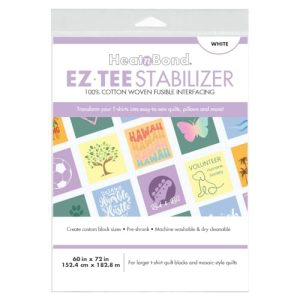
| HeatnBond EZ TEE Iron-On Woven Fusible Stabilizer, 60 Inches x 72 Inches, White | One quilt laid out from a single wide sheet | 60 Inches x 72 Inches |
| June Tailor T-Shirt Project Fusible Interfacing, 60in x 72in, White | T-shirt blocks that must not distort while piecing | 60in x 72in |
| Pellon SF101 Shape-Flex Cotton Woven Fusible Interfacing 20″ x 10 yards Bolt, White | Several quilts or a studio stash cut as needed | 20″ x 10 yards Bolt |
| Pellon 911FF Fusible Featherweight Interfacing 20″ x 10 yards Bolt, White | Light to midweight shirts needing featherweight support | 20″ x 10 yards Bolt |
How to Choose
Woven Stability Versus Nonwoven Featherweight Support
Woven interfacing has threads running in two directions, much like quilting cotton, so it limits stretch while still moving in a familiar way under the presser foot. That structure is why the cotton woven options in this guide are described specifically for stabilizing knit T-shirts and jerseys. A nonwoven featherweight works differently. Its fibers are bonded rather than woven, and the listing for the Pellon 911FF notes suitability for wovens and knits including jersey. Choose woven when complete stability matters most, and featherweight nonwoven when the shirts are light and you want the finished block to stay supple rather than crisp.
Weight, Because Too Much Support Changes the Quilt
Interfacing should be no heavier than the shirt it backs, and ideally a step lighter. A heavy stabilizer behind a thin concert tee creates a block that feels different from its neighbors, quilts with a visible ridge, and resists draping over a bed or lap. Lightweight and featherweight products address that problem directly: the EZ TEE description stresses stability without adding bulk, so the quilt stays as soft as the shirts. If a shirt is especially thin or worn, do not compensate by jumping to a craft-weight fusible. Keep the weight light and let the batting and backing provide the body of the finished quilt instead.
Sheet Size, Bolt Width, and How Your Blocks Are Cut
Format decides how much waste and seaming your prep involves. A single sheet measuring sixty by seventy-two inches can be laid out and cut into a planned set of blocks, and the EZ TEE listing states that size makes up to twelve finished blocks at sixteen by sixteen inches. A twenty-inch-wide bolt works another way. It suits blocks cut at or under that width and lets you pull fresh yardage for each new batch of shirts, which helps when quilts arrive one at a time. Before ordering, sketch your block size, count the shirts, and check whether the width covers a block plus trimming allowance in one piece.
Color, Shrinking, and Care After the Quilt Is Finished
White interfacing disappears behind pale shirts but can lighten the look behind a black or navy tee, which is why some t-shirt lines are offered in both white and black versions. Match the interfacing tone to the shirt where the fabric is thin. Pre-shrunk material matters too, because a stabilizer that shrinks after fusing can pucker a block that was flat on the cutting table. The EZ TEE listing calls out pre-shrunk cotton and says the product is machine washable and dry cleanable. Read the care line for any pick you choose, since the quilt will be washed as one layered object, not as separate parts.
The 4 Best Options
HeatnBond EZ TEE Iron-On Woven Fusible Stabilizer, 60 Inches x 72 Inches, White

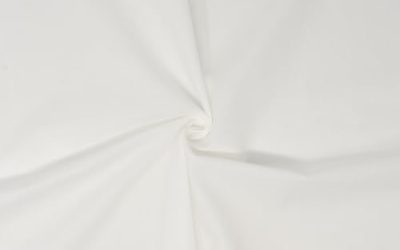
This is the most purpose-built option in the group, made specifically for turning knit shirts into quilt blocks. The listing describes a lightweight, one hundred percent cotton woven fusible that adds just enough stability to T-shirts, sweatshirts, and jerseys to prevent curling and stretching without adding bulk. Because the sheet is wide, a maker can lay out many blocks before cutting, plan logo placement calmly, and keep one consistent backing across the whole quilt. It fits memory, honor, college, baby, and concert quilts where softness matters as much as squareness.
Specs
- Brand: HeatnBond
- Material: 100% cotton woven fusible
- Size: 60 in width x 72 in
- Color: White
- Pre-shrunk
- Machine washable and dry cleanable
- Makes up to (12) 16 in x 16 in finished blocks
- Made in the USA
- Intended for T-shirt quilts, memory quilts, honor quilts, college quilts, baby quilts, and concert quilts
Best for: A single memory or graduation quilt planned as one project, especially with soft shirts that should stay cuddly.
Watch out for: Confirm the white tone suits your darkest thin shirts, and count your blocks against the stated twelve-block yield before cutting the first piece.
ASIN: B083G8MVCM
June Tailor T-Shirt Project Fusible Interfacing, 60in x 72in, White
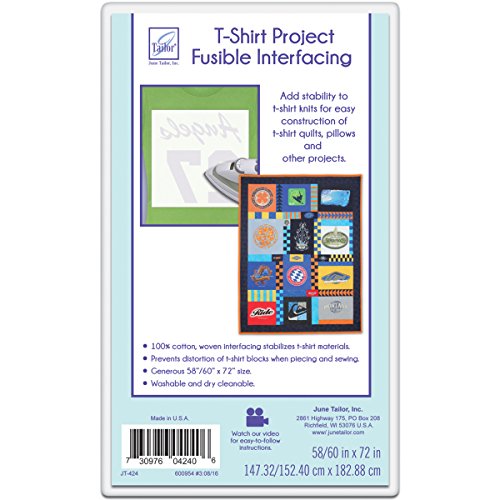
June Tailor takes the same wide-sheet approach and frames the job plainly: woven, fusible interfacing provides stability to T-shirt fabrics for sewing into T-shirt quilts, and it prevents distortion of the shirts when piecing and sewing. That distortion point is the one that ruins otherwise careful work, when a block stretches a fraction during joining and the rows no longer meet cleanly. A single large sheet keeps the backing consistent from block to block, with no change in hand between rolls. It suits makers who want a quilt-specific product and a straightforward layout on a cutting table.
Specs
- Brand: June Tailor
- Type: Woven fusible interfacing
- Size: 60 in x 72 in, 1 sheet
- Color: White
- Pattern: JT-424
- Material listed as 100% cotton in retailer specifications
- Purpose: Provides stability to T-shirt fabrics for T-shirt quilts
- Purpose: Prevents distortion of T-shirts when piecing and sewing
Best for: Piecing-focused makers whose main worry is blocks stretching out of shape as rows are joined.
Watch out for: The format is one large sheet, so plan the full block layout before cutting, and check the current listing for the exact sheet count in the package.
ASIN: B00LKIWKYU
Pellon SF101 Shape-Flex Cotton Woven Fusible Interfacing 20″ x 10 yards Bolt, White

Shape-Flex is the bolt to consider when t-shirt quilts are not a one-off. The listing identifies it as cotton woven fusible interfacing on a twenty-inch by ten-yard bolt, and describes it as an all-purpose woven fusible that provides support to detail areas as well as larger fabric pieces. For shirt work, the appeal is the woven cotton structure in a continuous length: cut a piece behind each logo, move to the next shirt, and keep going without rationing a single sheet. It also leaves yardage on hand for a second quilt, matching pillows, or replacement blocks if one shirt is damaged.
Specs
- Brand: Pellon
- Model: SF101 Shape-Flex
- Material: 100% cotton woven
- Type: Fusible interfacing
- Size: 20 inches x 10 yards bolt
- Color: White
- Use: All-purpose woven fusible support for light to medium weight fabrics
- Manufacturer part number listed for the bolt format: SF101
Best for: Makers producing several t-shirt quilts, or anyone who prefers cutting interfacing fresh from a bolt for each batch of shirts.
Watch out for: The twenty-inch width must cover your planned block plus trimming room in one piece, so verify block dimensions against the bolt width before ordering.
ASIN: B081DB312V
Pellon 911FF Fusible Featherweight Interfacing 20″ x 10 yards Bolt, White

The 911FF is the featherweight route, and Pellon’s own interfacing guidance lists this style for stabilizing T-shirt quilts. The Amazon description calls it a fusible, nonwoven interfacing made of polyester and rayon, suitable for light to midweight fabrics and usable with wovens and knits such as challis, chambray, jersey, broadcloth, and linen. That jersey mention matters, because many keepsake shirts are jersey rather than heavy cotton tee material. On a ten-yard bolt, it gives a long supply of light support for makers who want the block stabilized while keeping the hand as close as possible to the original shirt.
Specs
- Brand: Pellon
- Model: 911FF-2010BOLT
- Type: Fusible featherweight, nonwoven interfacing
- Fiber content: 90% polyester, 10% rayon
- Size: 20 inches x 10 yards bolt, 20-inch wide interfacing
- Color: White
- Suitable fabrics: Light to midweight wovens and knits, including jersey
- Item weight listed: 16 ounces
- Made in the USA
Best for: Lightweight jerseys and thin tees that need stabilization without a noticeable change in drape.
Watch out for: The listing guidance notes fusing is not recommended for some specialty fabrics, so check any unusual shirt material, such as lace or rainwear-style synthetics, before applying heat.
ASIN: B081DC81DN
Which One Fits Your Situation
You Have One Box of Graduation Shirts and One Quilt to Finish
Start with the HeatnBond EZ TEE sheet. Its stated yield of up to twelve sixteen-inch blocks gives you a concrete way to count shirts against material before you cut, and the cotton woven backing is described as keeping quilts soft. Lay every logo out first, mark the cutting lines, and only then fuse, so no favorite shirt is backed with an offcut meant for another block.
Your Rows Keep Waving and Corners Will Not Meet
Look at the June Tailor sheet, whose stated job is preventing distortion when piecing and sewing. If blocks leave the cutting table square but arrive at the join stretched, a woven fusible across the full back of each block addresses the cause rather than the symptom. Fuse before final trimming, let each block cool flat, and trim to size afterward so the stabilized edge, not the raw knit, sets the measurement.
You Make Memory Quilts for Family or Clients All Year
The Pellon SF101 bolt fits a repeating workflow better than single sheets. Ten yards on the bolt means a new quilt does not wait on a new order, and the woven cotton structure stays consistent across projects. Keep a simple note of how many blocks a yard yields at your standard block size, and reorder by that count rather than by guesswork when the bolt starts to feel light.
Your Shirts Are Thin, Soft, and Barely There
Choose the Pellon 911FF featherweight bolt when preserving hand feel is the priority. Its featherweight nonwoven build and stated suitability for jersey suit shirts that would feel boardy behind a heavier woven backing. Test the iron setting on a sleeve or hem offcut from a duplicate shirt first, because thin jersey shows overheating quickly and there is no undoing a scorched logo.
Common Mistakes
- Skipping interfacing on the stretchy shirts and backing only the stable ones, which leaves a quilt where some blocks grow during piecing and others do not, so seams drift across every row.
- Choosing a medium or craft-weight fusible for extra safety, then discovering the finished quilt feels stiff, quilts with ridges at every block, and no longer drapes like the shirts it preserves.
- Cutting shirts to final size before fusing, so the knit curls and stretches during handling and the block that gets stabilized is already slightly larger or smaller than intended.
- Fusing with an iron that is too hot or moving it like a clothes iron, which can distort the knit, damage printed logos, and leave bubbles or lifted corners that show after quilting.
- Ignoring color show-through and yardage planning: white backing behind a thin black shirt can change its tone, and an uncounted sheet can run out two blocks before the layout is complete.
Frequently Asked Questions
Does every T-shirt in a quilt need interfacing?
Most knit shirts benefit from it, because the interfacing stops the two-way stretch that makes accurate cutting and piecing difficult. A very stable, thick shirt may feel firm already, but mixing backed and unbacked blocks can create uneven rows. Backing every knit block with the same lightweight product keeps the whole top consistent and easier to quilt evenly.
Should interfacing be fused before or after cutting the shirt?
Fuse before the final cut. Rough-cut the shirt panel larger than the finished block, fuse the interfacing to the back, let it cool flat, and then trim to the exact block size using the logo as your guide. This order means the stabilized fabric, not the curling raw knit, is what your ruler measures, which produces cleaner and more consistent squares.
Will fusible interfacing make a T-shirt quilt stiff?
A lightweight or featherweight fusible should not, provided it is lighter than the shirt itself. Stiffness usually comes from choosing a weight meant for bags or home decor rather than apparel. The t-shirt-specific listings in this guide emphasize stability without bulk. If drape matters most, pick the featherweight option and keep the same weight across all blocks.
Can a T-shirt quilt with fusible interfacing be washed?
Yes, when the interfacing care matches the quilt. The EZ TEE listing states pre-shrunk, machine washable, and dry cleanable, which is the kind of care line to look for. Wash the finished quilt gently and avoid high heat that could stress the fusible bond. Checking care before fusing matters, because replacing a failed backing inside a finished quilt is not practical.
More from Amazon
Programs that pair well with the guide above. Offers and eligibility are set by Amazon and may change.
Collect the home and kitchen items you want in one registry that guests can shop from.
Create a wedding registrySet up recurring deliveries of everyday items on eligible products. Terms and savings are set by Amazon.
Explore Subscribe & SaveFree shipping on eligible items, Prime Video and more. Eligible new members can start with a free trial.
Start a Prime free trialAudiobooks and podcasts to listen to on the go. Eligible new members can start with a free trial.
Try Audible freeAs an Amazon Associate we earn from qualifying purchases.