Key takeaways
- Compare throat space, feed and speed control to pick a sewing machine for quilts that handles bulky layers, piecing and free-motion work at home.
A quilt asks a machine to do two jobs that pull in opposite directions. Piecing rewards short, accurate seams and a reliable quarter-inch guide, while quilting the finished sandwich means pushing a bulky, layered bundle through a limited space without dragging, puckering, or losing control at corners. Choosing only on stitch count or top speed misses that tension, so the real decision is how much room, feeding help, and speed control your usual quilt size demands.
This guide is for piecers moving to larger tops, free-motion quilters working at home, and general sewists who want one machine that also handles garments or decor. The picks below were chosen from product names and specifications on the Amazon pages, comparing throat space, feed systems, included tables and feet, and whether the machine is straight-stitch only or fully versatile.
Quick Picks
As an Amazon Associate we earn from qualifying purchases
| Product | Best for | Key spec from title |
|---|---|---|
| Brother PQ1600S High-Speed Straight Stitch Sewing & Quilting Machine | Fast piecing and straight-line quilting on large tops | Up to 1,500 stitches per minute, straight stitch |
| Juki TL-2010Q 1-Needle Lockstitch Sewing Machine | Controlled free-motion work with a speed limiter | Automatic thread trimmer for quilting |
| Juki TL-2000Qi Sewing and Quilting Machine | Straight-stitch quilting with a simpler control layout | LED lights and one-pedal operation |
| SINGER Quantum Stylist 9960 Computerized Sewing & Quilting Machine | Quilts plus garments, lettering and decorative work | 600 stitches, lettering and extension table |
How to Choose
Throat Space and the Table That Supports the Quilt
The area to the right of the needle decides how comfortably a rolled or folded quilt moves while you stitch. A compact machine can finish a baby quilt, yet a queen-size top bunched into a small harp quickly fights every turn. Look at both the needle-to-arm measurement in the listing and whether an extension table is included, because the table carries weight that would otherwise pull the sandwich down and distort seams. If you mostly make throws and wall hangings, a moderate space may suffice. If large bed quilts are routine, prioritise the widest workspace here.
Straight Stitch Only Versus a Full Stitch Library
Three machines in this guide concentrate on a single straight stitch, and that focus brings speed, a sturdy feed, and fewer settings to manage during long seams. The trade-off is absolute: no zigzag for applique edges, no buttonholes, and no decorative finishing unless another machine is available. A computerized model with hundreds of stitches handles quilting alongside dressmaking, lettering, and home decor in one cabinet. Decide honestly which work fills your week. A quilter who pieces and quilts almost exclusively may prefer the specialist route, while a mixed sewist usually needs the broader library despite lower top speed.
Feed, Presser Foot Lift and Handling Thick Layers
A quilt sandwich shifts if the top layer creeps against batting and backing, so feeding details matter more than headline speed. The listings describe different answers: pin feed and adjustable feed dog levels on the Brother, an even feed foot among the Juki accessories, and drop feed for free-motion work on the Singer. Extra presser foot lift helps slide bulky sections under the foot at the start of a seam. Check which quilting feet are actually included, especially a quarter-inch foot, a walking or even feed foot, and a free-motion foot, rather than assuming every quilting foot ships in the box.
Speed Control When Accuracy Matters More Than Pace
A maximum near fifteen hundred stitches per minute shortens long straight runs, but free-motion quilting and careful piecing often go better far below that ceiling. A slider that caps speed, as the listing shows for the TL-2010Q, lets the pedal stay forgiving when you guide fabric with both hands. Push-button trimming, a knee lifter, and a programmable needle stop position also reduce hand movements away from the work. If you are newer to quilting, controllable pace and needle positioning will improve results sooner than raw speed, so weigh those controls heavily against the maximum figure.
The 4 Best Options
Brother PQ1600S High-Speed Straight Stitch Sewing & Quilting Machine

This Brother suits quilters whose main frustration is feeding: layers that creep, long seams that wander, and a quilt that drags off a small surface. The listing highlights a pin feed mechanism alongside adjustable feed dog levels, a combination aimed at moving layered work evenly, plus a wide included table to support larger pieces. Because the machine is straight-stitch only, it fits piecing, straight-line quilting, and free-motion work far better than garment finishing. Buyers who already own a general sewing machine for zigzag tasks will get the clearest benefit from adding this specialist.
Specs
- Sewing speed up to 1,500 stitches per minute, per the listing
- Straight stitch only
- Pin feed mechanism with four feed dog levels
- Push-button thread cutter and knee lifter
- Needle-to-arm space listed as 5.7 by 8.7 inches
- Included table listed as 11.1 by 23.3 inches
- Seven included feet, including quarter-inch and free-motion quilting feet
Best for: Piecing at pace and straight-line quilting where even feeding of layers is the priority.
Watch out for: Confirm you do not need zigzag or buttonholes from this machine, since the listing describes straight stitch only.
ASIN: B0CFYQZX5Q
Juki TL-2010Q 1-Needle Lockstitch Sewing Machine
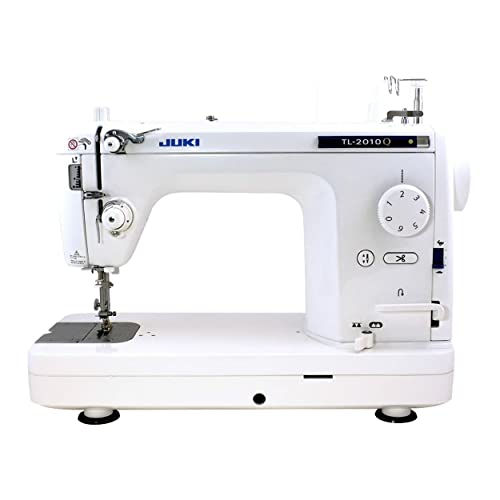
The TL-2010Q is aimed at quilters who want a specialist machine but also want to set a ceiling on speed before starting a careful seam. Its listing describes a single-needle lockstitch machine with an automatic thread trimmer, a knee lifter, and a speed control that can be limited for free-motion and precision work. The included auxiliary table and quilting feet support larger projects without turning the setup into a permanent frame installation. It makes the most sense for dedicated piecing and quilting, particularly for someone upgrading from a basic general-purpose machine that struggles with thickness and control.
Specs
- Single-needle lockstitch, straight stitch, per the listing
- Sewing speed adjustable from 200 to 1,500 stitches per minute
- Maximum stitch length listed as 6 mm
- Automatic thread trimmer and automatic needle threader
- Knee lifter for hands-free presser foot control
- Auxiliary table listed as 23 by 13 inches
- Standard feet include even feed and quarter-inch quilting feet
Best for: Free-motion and piecing work where a capped, predictable pace matters.
Watch out for: Check the weight and your lifting routine before ordering, because this style of metal-bodied machine is heavy to move to classes.
ASIN: B00AAZU1KE
Juki TL-2000Qi Sewing and Quilting Machine
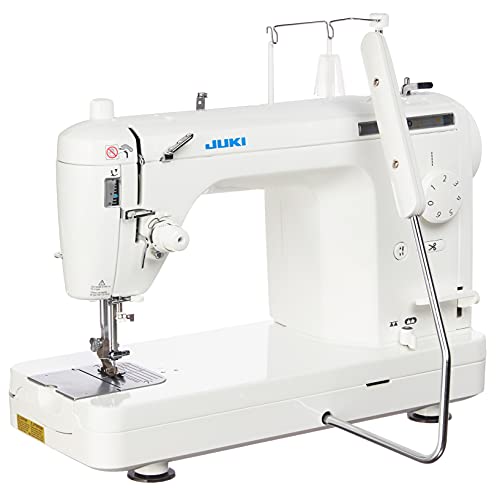
For quilters who like the straight-stitch specialist idea but prefer a more straightforward feature set, the TL-2000Qi keeps the focus narrow. The Amazon description lists an aluminum die-cast arm and bed intended for low-vibration operation, LED lighting over the work area, one-pedal operation, and an extension table for a wider working surface. That combination suits long piecing sessions, straight-line quilting, apparel seams, and home decor projects that rely on a strong straight stitch. It is a considered choice for a sewing room where the machine will stay set up rather than travel frequently.
Specs
- Sewing speed listed as 1,500 stitches per minute
- Straight stitch, with maximum stitch length listed as 6 mm
- Aluminum die-cast arm and bed for low-vibration operation
- Automatic needle threader
- LED lights and one-pedal operation, per the listing
- Extension table included for a wide work area
- Drop feed described for free-motion work
Best for: Long straight seams and quilting in a dedicated home setup.
Watch out for: Compare its included accessories carefully with the TL-2010Q listing, since trimmer and speed-control features differ between the two Juki models.
ASIN: B004C04YII
SINGER Quantum Stylist 9960 Computerized Sewing & Quilting Machine

The Singer is the outlier here, and deliberately so. Instead of specialising in one stitch, the listing describes a computerized machine with a large stitch library, lettering, an extension table, a hard case, and a broad accessory set. That breadth suits quilters who also sew garments, add decorative stitching to borders, or label quilts with lettering, and who do not want a second machine for buttonholes. Its quilting case rests on the included table, drop feed for free-motion work, and the convenience of push-button controls rather than on the very high speeds of the straight-stitch models.
Specs
- Computerized sewing and quilting machine, per the listing
- 600 built-in stitches, including lettering
- One-step buttonhole described in the listing title
- Extension table and hard case included
- LED light and high-end touch controls
- Automatic needle threader and thread cutter described for the model
- Drop feed for free-motion sewing and quilting
Best for: Mixed sewing rooms where quilts share time with garments and decorative projects.
Watch out for: Verify the exact included feet in the listing before buying, especially the quilting and walking feet you plan to use first.
ASIN: B004RDH7Y8
Which One Fits Your Situation
You Make Large Bed Quilts at a Home Table
Start with the Brother PQ1600S or the Juki TL-2010Q, because both pair a wide included table with a feed and control package built around layered work. The Brother emphasises pin feed for moving the sandwich evenly, while the Juki lets you cap speed before guiding a heavy quilt through turns. Either way, measure your table depth first, since the extension surface needs room behind and beside the machine to carry the quilt without it spilling onto the floor.
You Are Learning Free-Motion Quilting
The TL-2010Q fits this stage well because the listing shows speed can be limited, so the pedal does not punish small movements while both hands guide the fabric. A knee lifter and automatic trimmer also cut down on reaching away from the work. The Singer 9960 is the alternative if free-motion is only one part of your learning, since its drop feed and wider stitch range let you practise quilting alongside other techniques on the same machine without buying a specialist immediately.
You Sew Garments as Often as Quilts
Choose the SINGER Quantum Stylist 9960. It is the only pick here whose listing includes a large decorative stitch library, lettering, and a one-step buttonhole, so a quilt top, a shirt, and a labelled gift can all stay on one machine. The three straight-stitch models would leave everyday garment tasks unfinished. Accept the compromise consciously: you gain versatility and included accessories for many project types, while giving up the fifteen-hundred-stitch pace and specialist feeding focus of the dedicated quilting machines.
You Piece in Long, Focused Sessions
The TL-2000Qi and the PQ1600S both suit repetitive piecing, where a strong straight stitch, a stable body, and a broad table matter more than menus of decorative options. The Juki listing stresses its die-cast construction and LED lighting for long runs, while the Brother adds pin feed and a push-button cutter to keep chain piecing moving. Pick based on the controls you prefer, and plan a permanent spot, because moving a heavy specialist machine between every session quickly becomes a deterrent.
Common Mistakes
- Buying on stitch count alone, then discovering the throat is too small to move a finished quilt top comfortably.
- Assuming a straight-stitch specialist can also make buttonholes or finish applique edges, when the listing clearly limits it to one stitch.
- Ignoring which quilting feet are included, and ordering a machine without the quarter-inch, even feed, or free-motion foot the first project needs.
- Running at maximum speed for free-motion work instead of using a speed limiter or slower pedal control while learning to guide layers.
- Forgetting to measure the table and storage space, even though extension tables and heavy metal-bodied machines need a permanent, level surface.
Frequently Asked Questions
Do I need a straight-stitch machine to make good quilts?
No. A straight-stitch specialist can offer speed, strong feeding, and simple controls for piecing and quilting, but a versatile computerized machine such as the Singer 9960 can also piece, quilt with drop feed, and handle other sewing. The better choice depends on whether quilting dominates your work or shares the machine with garments, decor, and decorative stitching every week.
How much throat space is enough for a bed quilt?
There is no single number, because folding method, batting thickness, and quilting pattern all change how much bulk passes through the arm. Larger needle-to-arm space and a wide extension table make the job easier, especially for straight-line and free-motion work on big tops. For occasional throws, a moderate space can work. For regular bed quilts, prioritise the roomiest setup you can accommodate.
What does drop feed or a walking foot actually do for quilting?
Drop feed lowers the feed dogs so you can move the fabric freely under the needle for free-motion quilting, guiding the stitch length by hand. An even feed or walking foot, by contrast, helps move the top layer in step with the lower layers during straight-line quilting. Many quilters use both approaches on different projects, so checking which feet and feed options a listing includes is worthwhile.
Can these machines handle thick batting and multiple layers?
The specialist models in this guide are described for quilting, apparel, and home decor, with features such as adjustable foot pressure, extra lift, and feeding systems intended for layered work. Even so, thickness limits vary, and denim, canvas, or very lofty batting can challenge any domestic machine. Check the listing details for foot lift and pressure adjustment, use the correct needle for the fabric, and sew a test sandwich first.
More from Amazon
Programs that pair well with the guide above. Offers and eligibility are set by Amazon and may change.
Collect the home and kitchen items you want in one registry that guests can shop from.
Create a wedding registrySet up recurring deliveries of everyday items on eligible products. Terms and savings are set by Amazon.
Explore Subscribe & SaveFree shipping on eligible items, Prime Video and more. Eligible new members can start with a free trial.
Start a Prime free trialAudiobooks and podcasts to listen to on the go. Eligible new members can start with a free trial.
Try Audible freeAs an Amazon Associate we earn from qualifying purchases.