Key takeaways
- Hide grade over hide claims: “Genuine leather” typically means real leather on the seating surfaces with matched vinyl on the outside back and sides. That is a sensible cost tradeoff, not a defect, but it does mean the wear surfaces are where you should focus. Top-grain develops patina; bonded leather flakes. Faux and PU are legitimate choices for pet households and high-traffic playrooms where you want a wipeable surface without babying it.
- Power or manual, decided by seat count: Manual levers are simple, cheaper, and never need an outlet. Power motors matter most on three-seaters, where reaching a side lever from the middle cushion is awkward, and on sofas with adjustable headrests, since that articulation only exists on powered models.
- Measure the recline, not just the sofa: Standard mechanisms want 12 to 18 inches behind the frame. Wall huggers pull the seat forward instead of pushing the back out, dropping that to a few inches. In apartments, alcoves, and RVs, this single spec decides whether the piece works at all.
- Cushion architecture and frame: Look for kiln-dried hardwood or heavy-gauge steel, sinuous spring support, and high-density foam. Deep cushions feel plush in the showroom; the ones that stay comfortable at year three are the resilient, slightly firmer ones.
- Extras that earn their keep: USB and USB-C ports beside the seat, hidden cup holders, drop-down consoles, and heat or massage functions add real daily convenience. Prioritize charging and storage, which get used constantly, over novelty features you may try twice.
What's inside
Recliners have spent decades being the piece of furniture people apologize for. Comfortable, yes, but visually loud: overstuffed arms, chrome levers, a silhouette that fights every other line in the room. The 2026 crop finally reads differently. Frames are slimmer, backs are lower, mechanisms hide inside the upholstery, and wall-hugger geometry means you no longer have to float a sofa three feet off the drywall just to earn a footrest. The catch is that the market moved faster than the product descriptions did, so two listings that look nearly identical can differ enormously in hide quality, seat depth, and how much clearance they actually need.
This guide narrows the field to leather and leather-look reclining sofas that hold up under daily use and still look intentional in a styled room. Below you will find the picks, followed by a short buying framework covering hide grades, power versus manual, footprint math, and the extras worth paying for. Reviews focus on where each sofa genuinely excels and who it suits, so you can match the piece to your floor plan rather than the other way around.
As an Amazon Associate we earn from qualifying purchases.


How to Choose a Leather Recliner Couch (2026)
- Hide grade over hide claims: “Genuine leather” typically means real leather on the seating surfaces with matched vinyl on the outside back and sides. That is a sensible cost tradeoff, not a defect, but it does mean the wear surfaces are where you should focus. Top-grain develops patina; bonded leather flakes. Faux and PU are legitimate choices for pet households and high-traffic playrooms where you want a wipeable surface without babying it.
- Power or manual, decided by seat count: Manual levers are simple, cheaper, and never need an outlet. Power motors matter most on three-seaters, where reaching a side lever from the middle cushion is awkward, and on sofas with adjustable headrests, since that articulation only exists on powered models.
- Measure the recline, not just the sofa: Standard mechanisms want 12 to 18 inches behind the frame. Wall huggers pull the seat forward instead of pushing the back out, dropping that to a few inches. In apartments, alcoves, and RVs, this single spec decides whether the piece works at all.
- Cushion architecture and frame: Look for kiln-dried hardwood or heavy-gauge steel, sinuous spring support, and high-density foam. Deep cushions feel plush in the showroom; the ones that stay comfortable at year three are the resilient, slightly firmer ones.
- Extras that earn their keep: USB and USB-C ports beside the seat, hidden cup holders, drop-down consoles, and heat or massage functions add real daily convenience. Prioritize charging and storage, which get used constantly, over novelty features you may try twice.
The Best Leather Recliner Couches (2026), Reviewed
Watson & Whitely Genuine Leather Wall Hugger Power Reclining Sofa (Saddle)
The most design-forward pick here: saddle leather that warms up beautifully against oak and off-white walls, paired with a wall-hugger mechanism and adjustable power headrests that let taller sitters actually support their neck. USB and Type-C ports make it a genuine media-room anchor, and the compact recline clearance is what makes it viable in tight apartments and RV lounges.
CHITA Leather Power Recliner Sofa Wall Hugger (Dark Brown)
CHITA’s version leans more traditional in color and more generous in features, with a drop-down table between the outer seats, power headrests, and integrated charging. It is the strongest choice if you want one sofa to handle movie nights, laptop work, and drinks without a coffee table crowding the walkway.
Genuine Leather Power Recliner Sofa with Cup Holders and USB
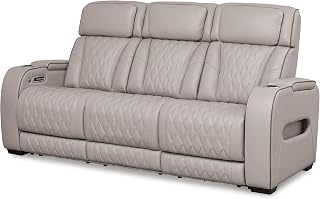
A well-balanced electric three-seater with softly rolled arms, a supportive back, and concealed cup holders that stay out of the sightline when closed. Not a wall hugger, so plan for clearance behind it, but the smooth motorized action and understated brown finish make it an easy fit in transitional living rooms.
Genuine Leather Manual 3-Seat Recliner Sofa (Vintage Brown)
For anyone who distrusts motors, this manual three-seater delivers real leather seating, padded headrests and armrests, and nothing to plug in or repair. The vintage brown tone suits leather-and-brass interiors and office lounges, and the simplicity is exactly why it belongs on this list.
Manual Reclining 3-Seater with Heat & Massage (Grey)
The value play: PU leather upholstery over a sturdy frame with deep cushions, plus built-in heat and massage across all three seats. Grey keeps it neutral in contemporary rooms, and the wipe-clean surface is forgiving with kids and pets.
Frequently Asked Questions
Is genuine leather worth the premium over faux?
If the sofa sees daily use for five or more years, yes. Real leather breathes, softens, and ages into character. Faux and PU stay visually consistent and clean easily, which can matter more in chaotic households.
How much space does a reclining sofa really need?
Conventional mechanisms need roughly a foot and a half behind the frame. Wall huggers need only a few inches, so measure your wall run and your desired walkway before choosing.
Do power recliners have to sit near an outlet?
Yes, though many models accept a battery pack for cord-free placement. Plan the cable route during layout rather than after delivery.
How do I care for a leather recliner?
Dust weekly, blot spills immediately, keep it out of direct sun, and condition real leather two or three times a year. Faux leather needs only a damp cloth and mild soap.
Final Thoughts
For most rooms, the Watson & Whitely wall hugger is the best overall balance of leather quality, tight clearance, and quiet design. Choose the CHITA if you want the drop-down console and maximum built-in function, or the manual vintage brown three-seater if you would rather own a simpler piece with no motors to maintain.