Key takeaways
- Hide grade: Genuine or top-grain leather on the seating surfaces will soften and darken attractively over years of use. Bonded leather looks similar on day one but tends to crack along stress lines, so check whether the listing specifies real hide where your body actually touches it.
- Manual versus power: Manual mechanisms are simpler, cheaper, and have nothing to fail electronically — a genuine advantage over a decade. Power recline gives you infinite stopping points and independent headrest control, which matters if anyone in the household has mobility or back considerations.
- Wall clearance: Standard recliners need eight to fourteen inches of breathing room behind them. Wall-hugger designs recline forward on the base instead, dropping that requirement to three or four inches and opening up small living rooms considerably.
- Frame construction: Kiln-dried hardwood or reinforced steel in the recline assembly is what keeps a three-seater from developing a sag in the middle cushion. Weight capacity per seat is a useful proxy when the spec sheet stays vague.
- Integrated features: Cup holders, drop-down tables, and USB or USB-C ports are genuinely convenient, but they also add failure points and can date a piece. Prioritize charging standards that will still be current in five years.
What's inside
Reclining furniture has spent decades apologizing for itself. The bulky silhouettes, the fabric that never quite matched anything, the sense that comfort and design were negotiating from opposite sides of the table — buyers learned to expect a compromise. Leather changed that calculus. It patinas instead of pilling, it reads architectural rather than slouchy, and it lets a three-seat recliner sit in a considered room without dragging the whole scheme toward the den. The catch is that “leather recliner” now covers everything from full-grain hide over hardwood to bonded scraps stapled onto particleboard, and the listings rarely make the difference obvious.
This guide sorts the current crop by the things that actually determine whether you still like the piece in year five: hide quality, reclining mechanism, wall clearance, and how gracefully the built-in tech ages. We cover manual and power options, wall-hugger designs for tighter floor plans, and a couple of faux-leather picks worth taking seriously when the budget is firm. Each pick below is chosen for a specific room condition rather than ranked on a single scale.
As an Amazon Associate we earn from qualifying purchases.


How to Choose a/an Leather Recliner Couches (2026)
- Hide grade: Genuine or top-grain leather on the seating surfaces will soften and darken attractively over years of use. Bonded leather looks similar on day one but tends to crack along stress lines, so check whether the listing specifies real hide where your body actually touches it.
- Manual versus power: Manual mechanisms are simpler, cheaper, and have nothing to fail electronically — a genuine advantage over a decade. Power recline gives you infinite stopping points and independent headrest control, which matters if anyone in the household has mobility or back considerations.
- Wall clearance: Standard recliners need eight to fourteen inches of breathing room behind them. Wall-hugger designs recline forward on the base instead, dropping that requirement to three or four inches and opening up small living rooms considerably.
- Frame construction: Kiln-dried hardwood or reinforced steel in the recline assembly is what keeps a three-seater from developing a sag in the middle cushion. Weight capacity per seat is a useful proxy when the spec sheet stays vague.
- Integrated features: Cup holders, drop-down tables, and USB or USB-C ports are genuinely convenient, but they also add failure points and can date a piece. Prioritize charging standards that will still be current in five years.
The Best Leather Recliner Couches (2026)s Reviewed
Watson & Whitely Wall Hugger Power Reclining Sofa (Saddle)
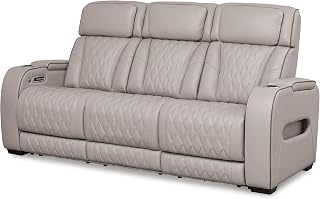
This is the most thoughtfully engineered pick here: real hide in a warm saddle tone, adjustable power headrests that let you actually read upright, and a wall-hugger base that makes it viable in apartments and even RVs. The inclusion of both USB and Type-C charging shows someone was thinking about 2030, not 2018.
CHITA Leather Power Recliner Sofa Wall Hugger (Dark Brown)
CHITA’s version leans more contemporary, with clean lines and a drop-down center table that turns the middle seat into a workable surface for drinks or a laptop. The dark brown genuine leather is forgiving of daily wear, and the power headrest plus wall-hugger combination makes this a strong single-choice sofa for a media room.
Genuine Leather Power Recliner Sofa with Hidden Cup Holders
The hidden cup holders are the smart detail — they disappear into the arms when you want the sofa to read as a sofa rather than a lounger. Combined with genuine leather, generously padded arms, and USB charging, it hits a practical middle ground for households that use the recline function daily.
Genuine Leather Manual 3 Seat Recliner Sofa (Vintage Brown)
For anyone skeptical of motors, this manual three-seater delivers real leather in a vintage brown that will only improve with age. No cords, no ports, nothing to short out — just a durable mechanism and a silhouette that works as well in a meeting room as a living room.
Faux Leather Mid-Century Modern Recliner Sofa (Brown)
The overstuffed armrests and mid-century proportions give this one more design intent than most budget recliners manage. Faux leather means easier cleanup and a lower entry price, making it a sensible choice for rentals, basements, or first apartments.
Frequently Asked Questions
How much space do I need behind a reclining sofa?
Conventional recliners want eight to fourteen inches of clearance. Wall-hugger models like the Watson & Whitely and CHITA picks need only three to four inches, since the seat glides forward as the back tilts.
Is genuine leather worth the premium over faux?
If the sofa will see daily use for more than a few years, yes. Real hide develops patina and resists the surface cracking that eventually affects most synthetic coverings. For light-use or short-term spaces, faux leather is a reasonable trade.
Do power recliners need to stay plugged in?
Yes, unless you add an optional battery pack. Plan an outlet within reach, and note that the transformer box usually sits under the frame, so leave a little access room.
How do I care for a leather recliner sofa?
Dust weekly, wipe spills immediately with a dry cloth, and condition with a leather-specific product every six to twelve months. Keep it out of direct sun, which fades and dries hide faster than anything else.
Final Thoughts
For most rooms, the Watson & Whitely Wall Hugger Power Reclining Sofa is the pick that asks the fewest compromises — real leather, modern charging, and minimal wall clearance. The CHITA Wall Hugger is the better call if you want a cleaner contemporary line and that drop-down table, while the manual Genuine Leather Vintage Brown three-seater remains the smart choice for anyone who wants leather quality without electronics in the equation.