Key takeaways
- Climate first: Coastal salt air and freeze-thaw cycles punish wood and untreated metal hardest. HDPE recycled lumber shrugs off both, which is why it dominates lakefront and shoreline patios. Dry, mild regions open the field back up to hardwood.
- Maintenance appetite: Acacia needs teak oil once or twice a season to stay warm brown instead of silver-gray. If that sounds like a chore you will skip, buy HDPE or metal and spare yourself the guilt.
- Thermal behavior: Dark metal and dark HDPE absorb heat, and a black tabletop in August will radiate warmth onto forearms. Lighter grays and natural wood tones stay noticeably more comfortable in full sun.
- Frame and fastener quality: The tabletop rarely fails first. Look for powder-coated steel or aluminum, stainless hardware, and leveling feet, because a rusted bolt ruins an otherwise sound table.
- Footprint and umbrella provision: Measure your usable deck space, then subtract 30 inches per side for chairs. A pre-cut umbrella hole is far easier to have than to add later with a hole saw and a prayer.
What's inside
Outdoor dining furniture fails in slow motion. The table looks fine through the first summer, then a rainy autumn swells the joints, a hard freeze lifts the finish, and by the following June the surface has gone chalky and the hardware weeps rust down the legs. Almost none of that traces back to the design or the price. It traces back to material, which is the one spec most listings bury under seating capacity and umbrella-hole diameter.
This guide sorts outdoor dining tables by what they are actually made of, and what that means once the furniture lives through real weather. HDPE, powder-coated metal with a polywood top, and acacia hardwood all hold up, but they hold up differently and they ask for different things from you. Below, a shortlist of tables and sets worth considering in 2026, followed by the criteria that separate a table you keep for a decade from one you drag to the curb.
As an Amazon Associate we earn from qualifying purchases.


How to Choose a Material For Outdoor Dining Table (2026)
- Climate first: Coastal salt air and freeze-thaw cycles punish wood and untreated metal hardest. HDPE recycled lumber shrugs off both, which is why it dominates lakefront and shoreline patios. Dry, mild regions open the field back up to hardwood.
- Maintenance appetite: Acacia needs teak oil once or twice a season to stay warm brown instead of silver-gray. If that sounds like a chore you will skip, buy HDPE or metal and spare yourself the guilt.
- Thermal behavior: Dark metal and dark HDPE absorb heat, and a black tabletop in August will radiate warmth onto forearms. Lighter grays and natural wood tones stay noticeably more comfortable in full sun.
- Frame and fastener quality: The tabletop rarely fails first. Look for powder-coated steel or aluminum, stainless hardware, and leveling feet, because a rusted bolt ruins an otherwise sound table.
- Footprint and umbrella provision: Measure your usable deck space, then subtract 30 inches per side for chairs. A pre-cut umbrella hole is far easier to have than to add later with a hole saw and a prayer.
The Best Material For Outdoor Dining Table (2026)s Reviewed
SERWALL 84″ HDPE Rectangular Dining Table
At 84 inches, this is the rare all-weather table that genuinely seats eight without crowding, and HDPE recycled lumber means the brown finish will not splinter, rot, or need sanding. It is heavy enough to stay put in wind and the pre-cut umbrella hole is centered properly, which is not a given at this size.
MFSTUDIO 61″ Metal Dining Table with Polywood Top
A wrought iron base carries a polywood surface here, which is a smart hybrid: the metal supplies the mass and the synthetic slats supply the weather tolerance. At 61 inches it suits a mid-size deck or a narrow balcony run better than the 84-inch options, and it feels considerably more substantial than its price suggests.
Devoko 6-Person Acacia Wood Dining Table
The walnut-brown acacia gives you a farmhouse look that no HDPE table can replicate, and Devoko keeps the proportions honest rather than stretching the top to hit a seating claim. Plan on oiling it seasonally, and consider a cover if it will sit uncovered through winter.
Flamaker Acacia Wood Dining Table with Steel Frame
Natural acacia over a powder-coated steel frame is the most forgiving version of a wood table, since the frame handles structural duty and the top can weather without compromising stability. The lighter finish also runs cooler in direct sun than the darker walnut alternatives.
5-Piece HDPE Outdoor Dining Set for 4
For smaller patios, this square-top set solves the whole problem at once: waterproof wood-grain HDPE, a 1.7-inch umbrella hole, and chairs rated to 300 pounds each. The three-box delivery is worth noting, since pieces may arrive on different days.
Frequently Asked Questions
Is HDPE better than real wood outdoors?
For pure durability, yes. HDPE will not absorb water, host mildew, or fade appreciably. Wood wins on warmth and character, so the honest answer depends on whether you value low maintenance or material feel more.
Will acacia survive winter outside?
It can, but it will not stay pretty. Acacia is dense and naturally rot-resistant, though repeated freeze-thaw cycles raise the grain. Store it in a garage or use a breathable cover for the off-season.
Do I need an umbrella hole?
If you have any unshaded exposure, get one. Retrofitting requires drilling through the top and often the support frame, which voids most warranties and rarely looks clean.
How much space do chairs actually need?
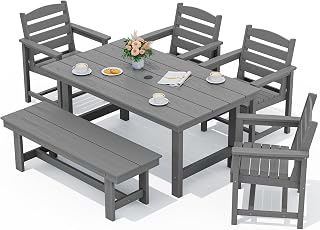
Allow 24 inches of table edge per seat and roughly 36 inches of clearance behind each chair for pulling out and walking past. Benches, like SERWALL’s dining set with bench, compress that requirement usefully on tight decks.
Final Thoughts
If you want a table you never think about again, the SERWALL 84″ HDPE rectangular is the safest long-term bet, particularly in harsh or coastal climates. The MFSTUDIO metal table with polywood top is the value pick for mid-size spaces, and the Flamaker acacia earns its place for anyone who wants real wood grain with a steel frame doing the structural work.