Key takeaways
- Frame metal: Powder-coated aluminum is the default for good reason — it won’t rust, stays light enough for a two-person install, and takes wood-grain finishes convincingly. Steel is stronger per inch but needs vigilance at every scratch, especially within a few miles of salt air.
- Roof strategy: Polycarbonate panels give you dry, year-round coverage. Textilene and yarn-dyed fabric breathe and let filtered light through. Louvered aluminum does both, which is why it commands the premium.
- Post dimension and anchoring: Thicker posts aren’t marketing. Look for a genuine base plate with expansion anchors for concrete or lag bolts for a framed deck, and confirm your substrate can carry the uplift before you order.
- Water management: Integrated gutters and downspouts inside the beams are the difference between a usable patio and a sheet of runoff at the entry. Check that drainage is designed in, not implied.
- Wood if you want warmth: Cedar, redwood, and pressure-treated pine all age beautifully with an annual coat of penetrating oil. Bracket kits let you build with standard 4×4 lumber and skip the joinery, which keeps cost and skill requirements down.
What's inside
Pergola shopping stalls out at the same place for almost everyone: the material spec sheet. One listing promises powder-coated aluminum, the next talks up cedar’s natural oils, a third leads with polycarbonate panels rated for snow load. None of them explain what actually matters once the structure is standing in your yard through a July heat wave and a February freeze. The result is a lot of buyers choosing on price and regretting it two seasons later, when the finish chalks, the timber twists, or the canopy fabric fades to a color nobody picked.
This guide sorts the field by what the frame and roof are made of, because that single decision drives everything downstream: how much maintenance you sign up for, how the structure reads against your architecture, and whether it survives a decade outdoors. Below you’ll find the standout aluminum, hybrid, and timber-ready options for 2026, plus a short framework for matching material to climate, deck type, and the look you’re actually after.
As an Amazon Associate we earn from qualifying purchases.


How to Choose a/an Materials For Pergola (2026)
- Frame metal: Powder-coated aluminum is the default for good reason — it won’t rust, stays light enough for a two-person install, and takes wood-grain finishes convincingly. Steel is stronger per inch but needs vigilance at every scratch, especially within a few miles of salt air.
- Roof strategy: Polycarbonate panels give you dry, year-round coverage. Textilene and yarn-dyed fabric breathe and let filtered light through. Louvered aluminum does both, which is why it commands the premium.
- Post dimension and anchoring: Thicker posts aren’t marketing. Look for a genuine base plate with expansion anchors for concrete or lag bolts for a framed deck, and confirm your substrate can carry the uplift before you order.
- Water management: Integrated gutters and downspouts inside the beams are the difference between a usable patio and a sheet of runoff at the entry. Check that drainage is designed in, not implied.
- Wood if you want warmth: Cedar, redwood, and pressure-treated pine all age beautifully with an annual coat of penetrating oil. Bracket kits let you build with standard 4×4 lumber and skip the joinery, which keeps cost and skill requirements down.
The Best Materials For Pergola (2026)s Reviewed
PURPLE LEAF Louvered Pergola 10′ x 20′
Independently adjustable louvers across a 200-square-foot footprint mean you can shade a dining zone while leaving the lounge side open to sky, then close the whole roof when weather turns. The built-in drainage system is the detail that earns its keep — water routes through the frame instead of over the edge.
PURPLE LEAF Retractable Pergola 10′ x 10′
A sliding yarn-dyed canopy on a thick-post aluminum frame, which is the right combination for anyone who wants shade on demand without committing to a solid roof. The beige colorway is quietly architectural and holds its tone far longer than dyed-after-weaving fabric.
Modern Shade Hybrid Hardtop Pergola 10×20
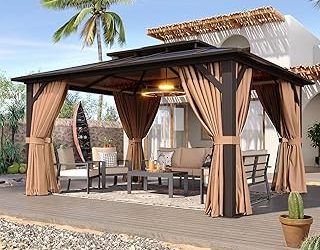
This one splits the difference intelligently: a hardtop roof for genuine rain protection paired with adjustable Textilene shade panels and privacy curtains for glare and sightlines. The wood-grain finish on aluminum reads warmer than bare metal from more than a few feet away.
10′ x 20′ Lean-To Wall-Mounted Pergola
Wall-mounting frees up two posts and visually attaches the structure to the house, which suits narrow patios and side decks where a freestanding footprint won’t fit. Aluminum frame plus polycarbonate panels means it sheds rain and requires essentially nothing from you beyond an occasional rinse.
Slanted Roof Pergola Bracket Kit
For builders who want real timber, these 3-way brackets and post bases turn standard 4×4 lumber into a pitched pergola without cutting a single mortise. It is the most cost-effective route to a wood structure, and you choose the species and stain yourself.
Frequently Asked Questions
Is aluminum or wood better for a pergola?
Aluminum wins on maintenance and longevity; wood wins on warmth and character. If you enjoy an annual weekend of sanding and oiling, build in cedar. If you don’t, choose powder-coated aluminum and spend the time using the space.
Do polycarbonate roof panels yellow over time?
Quality panels carry a UV-protective coating on the sun-facing side and hold clarity for years. Install them with the coated side up — it’s a common and irreversible mistake.
Can I install a pergola on an existing wood deck?
Usually, provided you anchor posts to joists or blocking rather than decking boards alone. Compact models like the AECOJOY 8′ x 5′ grill gazebo are far easier to support than a full 10′ x 20′ span.
Will a pergola handle snow?
Louvered roofs should be opened before a storm so snow falls through. Hardtops carry a rated load, so check that figure against your region and clear accumulation promptly.
Final Thoughts
For the most control over light and weather, the PURPLE LEAF Louvered 10′ x 20′ is the strongest material story here — adjustable aluminum louvers with drainage built into the frame. The Modern Shade Hybrid 10×20 is the smarter value if you want hardtop coverage plus fabric shade in one structure, and the Slanted Roof Bracket Kit remains the honest choice for anyone set on real timber.