Key takeaways
- Temperature floor and ceiling: Look for a range that starts around 34–37°F and climbs to at least 60°F. That upper end matters more than you’d think: stouts, Belgians, and barrel-aged beers show far more nuance served at cellar temperature than ice cold.
- Compressor vs. thermoelectric cooling: Compressor units hold temperature reliably in warm rooms and recover quickly after the door opens. Thermoelectric models run quieter but struggle once ambient temperature climbs past the mid-seventies, which rules them out for garages and sunlit corners.
- Shelf geometry: Tall cans, stubby bottles, and 750ml bombers all want different clearances. Removable, adjustable shelving is the difference between 130 advertised cans and 130 actual ones.
- Built-in versus freestanding: Front-venting models can sit flush in a cabinet run; rear-venting ones need breathing room on all sides. Getting this wrong is the most common cause of premature compressor failure.
- Noise and light: Anything under about 42dB disappears into background room noise. Soft LED interior lighting also does real visual work in an open-plan space, turning the unit into a warm focal point rather than a dark box.
What's inside
Beer is fussier than most people give it credit for. A standard kitchen refrigerator runs cold enough to mute hop aroma and flatten the malt character of anything more interesting than a light lager, and it’s usually crowded with leftovers and condiment jars that leave no room for a six-pack, let alone a growler. The result is a familiar compromise: cans shoved behind the milk, bottles laid sideways on a shelf, and a fridge door that gets opened twenty times an evening when guests arrive.
A dedicated beverage refrigerator solves the storage problem and the temperature problem at once, and in 2026 it has quietly become a design object in its own right. Glass-front units now read as intentional cabinetry rather than dorm-room leftovers, especially in black or brushed silver finishes that sit comfortably beside a bar cart or slide under a counter. This guide covers the six models worth your attention, what separates a genuinely good beer fridge from a cheap cooler with a window in it, and how to choose the right capacity and placement for your space.
As an Amazon Associate we earn from qualifying purchases.



🛒 Best Price Today on Amazon
Prime members get fast, free shipping on everything above, plus member-only deals. New members get a 30-day free trial — cancel anytime.
How to Choose a Mini Fridge For Beer (2026)
- Temperature floor and ceiling: Look for a range that starts around 34–37°F and climbs to at least 60°F. That upper end matters more than you’d think: stouts, Belgians, and barrel-aged beers show far more nuance served at cellar temperature than ice cold.
- Compressor vs. thermoelectric cooling: Compressor units hold temperature reliably in warm rooms and recover quickly after the door opens. Thermoelectric models run quieter but struggle once ambient temperature climbs past the mid-seventies, which rules them out for garages and sunlit corners.
- Shelf geometry: Tall cans, stubby bottles, and 750ml bombers all want different clearances. Removable, adjustable shelving is the difference between 130 advertised cans and 130 actual ones.
- Built-in versus freestanding: Front-venting models can sit flush in a cabinet run; rear-venting ones need breathing room on all sides. Getting this wrong is the most common cause of premature compressor failure.
- Noise and light: Anything under about 42dB disappears into background room noise. Soft LED interior lighting also does real visual work in an open-plan space, turning the unit into a warm focal point rather than a dark box.
The Best Mini Fridges For Beer (2026), Reviewed
Electactic 130 Can Beverage Refrigerator
A well-judged 3.2 cu. ft. compressor unit with digital temperature control that holds its setpoint tightly, which is exactly what you want if you keep anything hop-forward on hand. The straightforward black profile and generous capacity make it the most broadly sensible pick here for a home bar or den.
hOmeLabs Beverage Refrigerator
hOmeLabs has been iterating on this 120-can design for years, and the maturity shows in the shelving and door seal. It’s the one to buy if you want something proven and low-drama for an office or basement bar rather than the newest spec sheet.
EUHOMY 130 Can Beverage Cooler
EUHOMY pairs a clean black glass front with responsive digital controls and removable shelves that genuinely accommodate mixed can and bottle formats. It’s a strong choice when the fridge has to look deliberate in a visible living space.
Feelfunn 15 Inch Under Counter Beverage Refrigerator
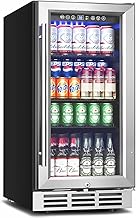
The most architecturally useful unit on this list: a 15-inch, built-in-capable body in silver that installs flush in a cabinet run and stays under 42dB. If you’re building a permanent bar station, this is the one designed for it.
Feelfunn 3.2 Cu.Ft Mini Fridge with Glass Door
Four adjustable shelves and a 126-can capacity in a compact black cabinet, aimed squarely at bedrooms, dorms, and tight offices. It delivers most of what the under-counter model does without requiring you to commit to cabinetry.
Frequently Asked Questions
What temperature should I store beer at?
Around 38–40°F for lagers, pilsners, and IPAs, and closer to 50–55°F for stouts, porters, and Belgian styles. A fridge with a wide range lets you split the difference at about 45°F if you keep a mixed selection.
Will a glass door skunk my beer?
Only if the beer sits in bright light for extended periods, and mainly in clear or green glass bottles. Cans and brown bottles are effectively immune, and LED interior lighting produces almost none of the UV that causes the problem.
Can I put a freestanding model inside a cabinet?
Not safely. Rear-venting units need several inches of clearance to shed heat; trapping one in a cabinet makes it run constantly and shortens its life considerably. Choose a front-venting, built-in-rated model for enclosed installs.
How much capacity do I actually need?
For two people who entertain occasionally, 120–130 cans is comfortable. If you rotate craft cans and want cellar space for larger formats, prioritize adjustable shelving over raw can count.
Final Thoughts
For most homes, the Electactic 130 Can is the easiest recommendation: accurate digital control, real capacity, and a finish that behaves itself in a living space. Choose the Feelfunn 15 Inch Under Counter model if you’re designing a permanent bar into cabinetry, and the EUHOMY 130 Can if you want the sharpest-looking glass front of the group.