Key takeaways
- Ecosystem before enclosure: You’re buying a connection standard, not a box. Confirm the platform has the accessories you’ll want in three years — deep totes, tool bags, mounting plates, shop-wall brackets — because switching later means rebuying everything.
- Latch quality: Auto-locking latches that engage as you stack are the single biggest daily-use upgrade. Manual clips work, but you’ll eventually skip them, and an unsecured tower is how a loaded organizer ends up face-down on concrete.
- Wheels matched to your terrain: Small hard casters are fine on a finished garage floor and useless on gravel or a job site. Look for oversized all-terrain wheels and a telescoping handle if the stack leaves the driveway.
- Weather and dust sealing: An IP65 rating or a gasketed lid matters more than most buyers expect, especially in unheated garages where humidity swings rust hand tools quietly over a season.
- Visibility and dividers: Clear lids and removable dividers turn a bin into an inventory you can read at a glance. Fixed compartments always end up the wrong size for the fasteners you actually own.
What's inside
Garages have quietly become the most-used room in the house, and the least designed. Tools accumulate in mismatched buckets, drawers seize shut, and the drill bit you need lives at the bottom of a five-gallon pail. The friction isn’t a lack of storage; it’s storage that doesn’t scale. A single big chest is dead weight the moment you need to carry half of it to the back fence, and a stack of unrelated bins never quite locks together.
Modular systems solve that by treating storage like furniture: interchangeable units, a shared connection standard, and a footprint you can edit over time. This guide looks at the systems worth building around in 2026 — from ecosystem-grade platforms like Milwaukee Packout and ToughBuilt StackTech to budget-friendly rolling stacks that punch far above their price. Below are the picks, followed by the buying criteria that actually matter once the boxes are in your hands.
As an Amazon Associate we earn from qualifying purchases.


How to Choose a Modular Tool Storage System (2026)
- Ecosystem before enclosure: You’re buying a connection standard, not a box. Confirm the platform has the accessories you’ll want in three years — deep totes, tool bags, mounting plates, shop-wall brackets — because switching later means rebuying everything.
- Latch quality: Auto-locking latches that engage as you stack are the single biggest daily-use upgrade. Manual clips work, but you’ll eventually skip them, and an unsecured tower is how a loaded organizer ends up face-down on concrete.
- Wheels matched to your terrain: Small hard casters are fine on a finished garage floor and useless on gravel or a job site. Look for oversized all-terrain wheels and a telescoping handle if the stack leaves the driveway.
- Weather and dust sealing: An IP65 rating or a gasketed lid matters more than most buyers expect, especially in unheated garages where humidity swings rust hand tools quietly over a season.
- Visibility and dividers: Clear lids and removable dividers turn a bin into an inventory you can read at a glance. Fixed compartments always end up the wrong size for the fasteners you actually own.
The Best Modular Tool Storage Systems (2026), Reviewed
Milwaukee Packout 10-Bin Organizer (48-22-8430)
The low-profile Packout organizer is the reference point for the category: impact-resistant polymer, individually removable bins, and a lid that seals with genuine confidence. At roughly 19.8 by 15 inches and under five inches tall, it slots into a Packout tower without stealing vertical space, and the ecosystem around it is the deepest on the market.
ToughBuilt StackTech Compact Low Profile Organizer
StackTech’s auto-locking mechanism is the standout — units bind together the instant they seat, with no separate latch to remember. Six bins, adjustable dividers, an IP65 rating, and a clear lid make this the sharpest choice for fasteners and small parts, and it’s a genuinely credible alternative to Packout at a friendlier entry price.
Keter Stack N Roll 3-Piece System
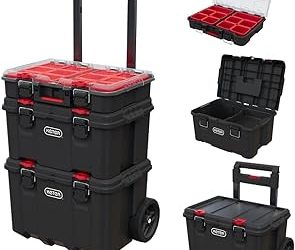
Keter’s three-piece set is the most home-oriented pick here: weatherproof, heavy duty, and built around all-terrain wheels with a telescoping handle that actually tracks straight over grass and gravel. The black-and-red finish reads more utility furniture than job site, which matters if your garage doubles as a workshop and an entryway.
5-Tier Stackable Rolling Tool Box
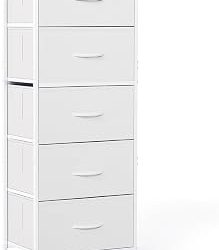
Five tiers with drawers plus a transparent parts box gives you the most sorted capacity per dollar of anything in this roundup. It’s the right answer for a stationary home workshop where you want everything visible and vertical, though the sheer height means it’s happiest parked against a wall rather than hauled around.
3-In-1 Rolling Stackable Tool Box (17″ + 19″ + 21″)
A tidy graduated stack — 17, 19, and 21 inches — with a detachable parts organizer up top and wheels underneath. It’s the low-commitment way into modular storage: enough structure for weekend DIY and small-space garages, without buying into a full platform.
Frequently Asked Questions
Can I mix brands in one stack?
Generally no. Packout, StackTech, and Keter each use proprietary connection geometry, so units from different brands will sit on each other but won’t lock. Pick one platform for anything that needs to travel, and treat other boxes as static shelf storage.
Are these systems worth it for occasional DIY?
If you use tools a few times a year, a two- or three-piece rolling stack is plenty. The premium platforms earn their price through accessory range and daily handling, which mostly pays off for trades and serious hobbyists.
How much weight can a modular stack handle?
Most systems rate the full tower somewhere between 200 and 500 pounds, but the practical limit is the handle and wheels, not the shells. Load heavy items low, and check whether your model’s rating applies to rolling or stationary use.
Will these survive an unheated garage?
Sealed, gasketed units with an IP65 rating handle cold and damp well. Uncovered or loosely lidded bins will accumulate condensation, so add desiccant packs if you’re storing precision tools through winter.
Final Thoughts
For a system you’ll grow into for the next decade, the Milwaukee Packout 10-Bin Organizer remains the safest long-term investment, with ToughBuilt StackTech close behind on latch design and value. If your priority is rolling a weatherproof kit across a yard rather than building an ecosystem, the Keter Stack N Roll three-piece set is the most sensible buy on this list.