Key takeaways
- Locking mechanism quality: The latches doing the stacking are the whole product. Look for auto-locking or single-lever systems that engage when a box is set down, rather than clips you have to fasten by hand — the latter get skipped, and skipped latches mean a spilled stack on the driveway.
- Wheels matched to your surface: Small hard casters are fine on sealed concrete and miserable on gravel, thresholds, or lawn. If the system leaves the garage, prioritize wide all-terrain wheels and a telescoping handle with a solid, non-flexing pull rod.
- Weather sealing: An IP65 rating or a gasketed lid matters even indoors — unheated garages sweat through seasonal temperature swings, and condensation rusts bits and blades over months.
- Visual inventory: Clear lids and transparent parts trays cut search time dramatically. Opaque boxes force you to open every layer; a clear top means you find the anchors without dismantling the tower.
- Platform commitment: Modular systems are ecosystems. Milwaukee Packout, ToughBuilt StackTech, and Keter Stack N Roll each use proprietary interfaces, so decide which family you want before you buy a third box — mixing platforms defeats the point.
What's inside
Garage storage has quietly become an interior design problem. The wall between “workshop” and “living space” keeps thinning — tools now share square footage with bikes, laundry stations, mudroom benches, and in a lot of newer builds, the home office. Which means the old approach of a sagging chest of drawers in the corner and a bucket of loose sockets no longer passes. What buyers actually struggle with is not capacity. It’s the mismatch between how tools are stored and how a room is used: containers that can’t move, lids that hide their contents, stacks that collapse the moment you need the box on the bottom.
Modular systems solve that by treating storage as a kit rather than a piece of furniture. Boxes interlock, roll, split apart, and reassemble around whatever the day requires — a full rolling tower for a weekend renovation, a single parts organizer for hanging a shelf. This guide covers the six systems worth your attention going into 2026, what separates a genuinely useful modular platform from a stack of plastic bins, and how to pick the one that fits your space, your tools, and the finish level of the room it will live in.
As an Amazon Associate we earn from qualifying purchases.


How to Choose a Modular Tool Storage System (2026)
- Locking mechanism quality: The latches doing the stacking are the whole product. Look for auto-locking or single-lever systems that engage when a box is set down, rather than clips you have to fasten by hand — the latter get skipped, and skipped latches mean a spilled stack on the driveway.
- Wheels matched to your surface: Small hard casters are fine on sealed concrete and miserable on gravel, thresholds, or lawn. If the system leaves the garage, prioritize wide all-terrain wheels and a telescoping handle with a solid, non-flexing pull rod.
- Weather sealing: An IP65 rating or a gasketed lid matters even indoors — unheated garages sweat through seasonal temperature swings, and condensation rusts bits and blades over months.
- Visual inventory: Clear lids and transparent parts trays cut search time dramatically. Opaque boxes force you to open every layer; a clear top means you find the anchors without dismantling the tower.
- Platform commitment: Modular systems are ecosystems. Milwaukee Packout, ToughBuilt StackTech, and Keter Stack N Roll each use proprietary interfaces, so decide which family you want before you buy a third box — mixing platforms defeats the point.
The Best Modular Tool Storage Systems (2026) Reviewed
Milwaukee Packout 10-Bin Organizer
The most refined small-parts solution in the category, with ten removable impact-resistant bins under a clear lid and a low 4.61-inch profile that slides neatly onto a shelf or into the top slot of a Packout tower. If you already own Milwaukee tools, this is the obvious entry point; if you don’t, it’s still the benchmark for build quality and long-term parts availability.
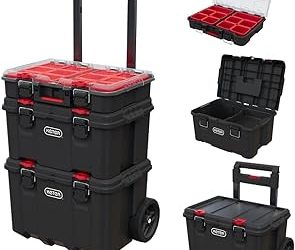
Keter Stack N Roll 3-Piece System
Keter designs for outdoor use, and it shows here — weatherproof housings, genuinely capable all-terrain wheels, and a telescoping handle that holds up under a loaded three-box stack. The black-and-red palette reads more utilitarian than boutique, but for anyone hauling tools across uneven ground, it’s the most practical pick on this list.
ToughBuilt StackTech Compact Low Profile Organizer
The auto-locking StackTech interface is the smartest engagement mechanism I’ve used: set a box down and it’s locked, lift the handle and it releases. Six bins with adjustable dividers and an IP65 rating make this the one to buy if you want a compact organizer that will still be part of a larger system in three years.
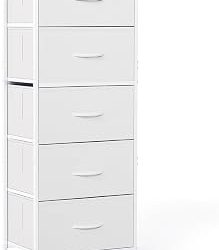
5-Tier Stackable Rolling Tool Box
Five drawer-style tiers give you the deepest capacity here, with a transparent parts box on top for fasteners and bits. Best suited to a fixed workshop corner where it functions as a rolling cabinet rather than something you carry up stairs.
3-In-1 Rolling Stackable Tool Box (17+19+21″)
A well-judged starter set — three graduated boxes, a detachable parts organizer, and a footprint that suits apartment storage closets and small garages. Not as robustly sealed as the platform systems, but the best value for someone building a first serious kit.
Frequently Asked Questions
Can I mix boxes from different brands?
Generally no. Packout, StackTech, and Stack N Roll each use their own locking geometry. Some third-party boxes advertise cross-compatibility, but the connection is rarely as secure as within a single platform.
How much weight can a rolling stack handle?
Most consumer systems are rated between 150 and 250 pounds total. The limiting factor is usually the wheels and handle, not the boxes — load heavy tools into the bottom unit and keep light parts trays up top.
Are these suitable for an unheated garage?
Yes, provided you choose a sealed model. Look for gasketed lids or an IP rating; unsealed boxes let humid air cycle through and will pit unprotected steel over a winter.
Do I need wheels if my workshop is stationary?
Not necessarily. A wheeled base adds height and cost, so if the stack lives permanently under a bench, standalone organizers plus a shelf make better use of the space.
Final Thoughts
For most people building a system they’ll keep expanding, the Milwaukee Packout 10-Bin Organizer and the ToughBuilt StackTech Compact are the two smartest long-term commitments — both are precise, well-sealed, and part of platforms that keep growing. If your tools travel across gravel, grass, or job sites, the Keter Stack N Roll remains the most durable rolling option for the money.