Key takeaways
- Interior clearance: Measure your machine with the water chamber seated and the hose attached at its natural angle. A ResMed AirSense 11 or Philips DreamStation needs roughly 12 inches of depth and 8 to 10 inches of height inside a cabinet, and tight cubbies force the hose into kinks that whistle at 3 a.m.
- Hose routing and ventilation: Look for a dedicated grommet or cutout on the bed-facing side, plus open backs or side panels. Enclosing a humidifier in a sealed box traps heat and encourages condensation in the tube, which is the usual cause of rainout gurgling.
- Integrated power: Built-in AC outlets and USB-C ports keep the power brick inside the cabinet instead of dangling behind it. If your bedroom outlets sit behind the headboard, this feature alone justifies the upgrade.
- Surface height relative to the mattress: Aim for a top within two inches of your mattress height. A machine sitting well below the sleep surface pulls the hose downward and tugs the mask off-seal when you roll over.
- Accessory storage that separates clean from used: Drawers for spare cushions, filters, and cleaning supplies keep consumables organized. A lockable drawer is worth considering if you also store medication bedside.
What's inside
A CPAP machine changes the geometry of a bedside table. Suddenly you need a surface deep enough for a humidifier chamber, a discreet route for six feet of coiled hose, an outlet within arm’s reach, and somewhere to park a mask, filters, and distilled water without the whole arrangement reading as medical equipment. Most nightstands were designed for a lamp and a paperback, which is why so many CPAP users end up with a cluttered surface, a hose draped across the floor, and an extension cord snaking under the bed.
This guide looks at the pieces that actually solve the problem: purpose-built CPAP nightstands with hose ports and ventilated interiors, modern charging nightstands that handle the power side elegantly, and a wall-mounted organizer for anyone who cannot spare the floor space. Each pick is evaluated on interior clearance, cable management, airflow, and whether it looks like furniture rather than a hospital fixture.
As an Amazon Associate we earn from qualifying purchases.


How to Choose a Nightstand For Cpap Machine (2026)
- Interior clearance: Measure your machine with the water chamber seated and the hose attached at its natural angle. A ResMed AirSense 11 or Philips DreamStation needs roughly 12 inches of depth and 8 to 10 inches of height inside a cabinet, and tight cubbies force the hose into kinks that whistle at 3 a.m.
- Hose routing and ventilation: Look for a dedicated grommet or cutout on the bed-facing side, plus open backs or side panels. Enclosing a humidifier in a sealed box traps heat and encourages condensation in the tube, which is the usual cause of rainout gurgling.
- Integrated power: Built-in AC outlets and USB-C ports keep the power brick inside the cabinet instead of dangling behind it. If your bedroom outlets sit behind the headboard, this feature alone justifies the upgrade.
- Surface height relative to the mattress: Aim for a top within two inches of your mattress height. A machine sitting well below the sleep surface pulls the hose downward and tugs the mask off-seal when you roll over.
- Accessory storage that separates clean from used: Drawers for spare cushions, filters, and cleaning supplies keep consumables organized. A lockable drawer is worth considering if you also store medication bedside.
The Best Nightstand For Cpap Machine (2026)s Reviewed
GDLF CPAP Nightstand with Storage
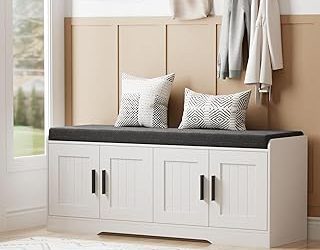
This is the most complete purpose-built option here: a rear hose hole, removable side access panels for airflow and cable runs, a built-in outlet, and interior space sized for a machine plus a sanitizing device. The fluted door front is a genuinely current design detail, so it reads as intentional millwork rather than durable medical equipment.
Northwood Calliger CPAP Nightstand with Drawers
Northwood Calliger builds around the same logic in a lighter register, with a white wood finish, a dedicated hose holder, and drawers scaled for masks, filters, and tubing. Choose this one if your bedroom leans coastal or Scandinavian and a dark cabinet would feel heavy against pale bedding.
Walnut Nightstand with Lockable Drawer and Charging Station
A mid-century walnut case with tapered legs, a combination-lock hidden drawer, and integrated charging, this is the pick for anyone prioritizing design continuity over CPAP-specific engineering. You will need to drill or route the hose around the back, but the payoff is a nightstand that looks like a furniture choice, not an accommodation.
Fixwal Nightstand with Charging Station and LED
Two AC outlets, two USB ports, an open top shelf that suits a machine well, and ambient LED accenting make this a strong value play for smaller bedrooms. The fabric drawer keeps it visually light, though the compact footprint means you should confirm your humidifier chamber clears the shelf opening first.
22″ Modern Charging Nightstand with 3 Drawers
Three deep drawers and built-in USB-A and USB-C make this the best storage-to-footprint ratio on the list, with a matte black finish that disappears against dark walls. The machine lives on top rather than inside, which is actually the simplest setup for ventilation and hose reach.
Frequently Asked Questions
Can I keep my CPAP inside a closed cabinet?
Only if the cabinet is ventilated. Machines draw air through a side or rear intake and generate warmth from the humidifier, so a sealed enclosure risks restricted intake and tube condensation. Open backs, side panels, or a louvered door are essential.
How high should the nightstand be?
Level with or slightly below your mattress top, generally 24 to 28 inches. Placing the machine above mattress height can send condensation down the hose toward the mask.
Do I need a CPAP-specific nightstand?
Not necessarily. A standard nightstand with an open shelf, adequate depth, and nearby power works well. Purpose-built models mainly save you from improvising hose routing and cable management.
What if I have no floor space?
A 2-Tier Wall Mount CPAP Organizer holds the machine, hose, and mask on the wall beside the bed, with adjustable hangers sized for the AirSense 11. It frees the floor entirely and keeps tubing off the ground between uses.
Final Thoughts
For most buyers, the GDLF CPAP Nightstand is the strongest overall choice thanks to its hose port, ventilated side panels, and integrated outlet in a genuinely attractive case. The Northwood Calliger is the better fit for lighter, brighter bedrooms, while the walnut lockable nightstand wins on design for anyone willing to handle hose routing themselves.