Key takeaways
- Measure clearance before anything else: Note your ceiling height, then subtract the overhead clearance in the spec sheet — commonly 24 to 39 inches for propane towers. If the math doesn’t work, a wall or tripod-mounted infrared unit is the correct answer, not a shorter tower.
- Match the technology to the enclosure: Electric infrared warms bodies and surfaces directly, produces no exhaust, and works beautifully in tight, sheltered spaces. Propane heats the surrounding air, which suits taller and breezier structures with genuine cross-ventilation.
- Treat ventilation as non-negotiable: Any propane heater needs open sides and free airflow; a screened porch with a solid ceiling and enclosed walls is not an outdoor space. Where you can’t guarantee that, go electric and add a CO alarm anyway.
- Size to your seating zone, not your square footage: A tabletop unit covering roughly 30 square feet handles a two-chair corner. A 40,000 to 50,000 BTU tower or a pair of mounted infrared panels is what a full dining set needs.
- Prioritize the boring hardware: CSA certification, anti-tilt shutoff, lockable casters, an IP-rated housing, and a remote you’ll actually reach for. These are what separate a heater you use nightly from one that lives under a cover.
What's inside
A covered patio is the best place to sit in October and the hardest place to heat correctly. The roof that keeps rain off your cushions also traps rising warm air, shortens the vertical space a flame-based heater needs, and holds combustion byproducts far longer than open sky ever would. Most people discover this after the box arrives: a 91-inch propane tower shows up, the manual asks for three feet of overhead clearance, and the porch ceiling sits at eight feet flat. The heater either goes back or gets used in a way the manufacturer never intended.
This guide approaches the problem the way a designer would spec any fixed element on a porch: measure first, then choose the technology that suits the volume of air you actually have. Below you’ll find radiant electric units that mount out of the way, tabletop propane for a bistro-sized nook, and full-height wheeled towers for deep, well-ventilated loggias with high ceilings. Each pick is judged on clearance requirements, real coverage, control quality, and whether it belongs under a roof at all.
As an Amazon Associate we earn from qualifying purchases.


How to Choose a Outdoor Heater For Covered Patio (2026)
- Measure clearance before anything else: Note your ceiling height, then subtract the overhead clearance in the spec sheet — commonly 24 to 39 inches for propane towers. If the math doesn’t work, a wall or tripod-mounted infrared unit is the correct answer, not a shorter tower.
- Match the technology to the enclosure: Electric infrared warms bodies and surfaces directly, produces no exhaust, and works beautifully in tight, sheltered spaces. Propane heats the surrounding air, which suits taller and breezier structures with genuine cross-ventilation.
- Treat ventilation as non-negotiable: Any propane heater needs open sides and free airflow; a screened porch with a solid ceiling and enclosed walls is not an outdoor space. Where you can’t guarantee that, go electric and add a CO alarm anyway.
- Size to your seating zone, not your square footage: A tabletop unit covering roughly 30 square feet handles a two-chair corner. A 40,000 to 50,000 BTU tower or a pair of mounted infrared panels is what a full dining set needs.
- Prioritize the boring hardware: CSA certification, anti-tilt shutoff, lockable casters, an IP-rated housing, and a remote you’ll actually reach for. These are what separate a heater you use nightly from one that lives under a cover.
The Best Outdoor Heater For Covered Patio (2026)s Reviewed
Dr. Infrared Heater Portable Infrared Space Heater
The most sensible default for a covered patio: no flame, no fuel swaps, and radiant warmth that lands on people rather than drifting into the rafters. It moves easily between porch and garage, and the remote means you’re not crouching behind furniture to adjust it.
Paraheeter Outdoor Electric Infrared Heater, 1500W
Our pick when floor space is precious. The wall bracket lifts the element above head height and out of the traffic path, while the included tripod keeps it flexible until you commit to a permanent spot. Waterproof housing and CSA certification make it a legitimate long-term fixture.
Cuisinart Tabletop Patio Heater, 11,000 BTU
A tidy propane option for a bistro table on a well-ventilated covered porch, with a burner screen guard and anti-tilt shutoff doing the safety work. Its roughly 30-square-foot reach is honest — think two chairs and a coffee, not a dinner party.
EAST OAK 50,000 BTU Patio Heater with Round Table
The strongest full-height performer here, thanks to a double-layer stainless burner and a triple protection system that includes tilt and flame-failure cutoffs. The integrated table ring is genuinely useful, but reserve this one for tall, open-sided structures where the clearance spec is easily met.
Amazon Basics 46,000 BTU Portable Propane Heater
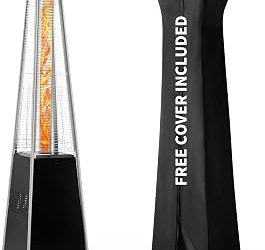
A commercial-grade tower at a residential price, with a nine-foot heat radius and a water-fillable base that resists gusts along an exposed patio edge. At over 91 inches tall, it needs a high ceiling or an uncovered adjacent zone.
Frequently Asked Questions
Can I use a propane patio heater under a roof?
Only if the space is genuinely open on multiple sides and you meet the manufacturer’s stated overhead and side clearances. Propane combustion produces carbon monoxide, so enclosed or screened-in porches call for electric infrared instead.
Is electric infrared powerful enough for a patio?
Yes, when positioned correctly. Infrared doesn’t try to heat the air, so it performs better under a roof than the wattage suggests. Aim the element at the seating area from six to eight feet away and add a second unit for larger zones rather than expecting one to cover everything.
How much overhead clearance does a tower heater need?
Most freestanding propane heaters specify two to three feet above the reflector and a similar distance from combustible walls. Check the exact figure in your model’s manual; it varies more than people expect.
Will one heater warm my whole covered patio?
Rarely. Warmth falls off quickly with distance, so plan around seating clusters — one unit per conversation area, or a pair of mounted panels flanking a dining table.
Final Thoughts
For most covered patios, the Dr. Infrared portable unit is the safest and most flexible starting point, and the Paraheeter 1500W is the one to choose if you want warmth mounted permanently out of the way. If your structure is tall and truly open-sided, the EAST OAK 50,000 BTU tower delivers the broadest reach of anything here.