Key takeaways
- Ventilation: Choose a canopy with a vent or tiered construction so rising air has somewhere to escape instead of forcing the umbrella upward.
- Frame strength: Look for sturdy ribs and a durable center pole. A reinforced frame is more dependable than a lightweight decorative model in changing weather.
- Base compatibility: An umbrella is only as stable as its base. Confirm the pole diameter and use a sufficiently heavy, weather-appropriate base, especially on exposed patios.
- Canopy coverage: A 9-foot round umbrella is versatile for a dining table, while a square cantilever model can shade larger seating zones without a center pole.
- Weather habits: Wind-resistant does not mean storm-proof. Close and secure the umbrella when conditions intensify, and never leave it open unattended in strong gusts.
What's inside
Wind can turn a relaxing outdoor lunch into a chase scene: a canopy lifts, a frame twists, and an unsecured umbrella becomes a hazard rather than shade. The challenge is finding a model that balances airflow, structural support, UV protection, and everyday ease of use without making the patio feel overbuilt.
This guide focuses on patio umbrellas suited to breezy decks, gardens, pool areas, and outdoor dining spaces. We look at venting, rib construction, canopy materials, tilt and crank mechanisms, base compatibility, and the practical difference between a traditional market umbrella and a cantilever design.
As an Amazon Associate we earn from qualifying purchases.


How to Choose a/an Patio Umbrella For Windy Areas (2026)
- Ventilation: Choose a canopy with a vent or tiered construction so rising air has somewhere to escape instead of forcing the umbrella upward.
- Frame strength: Look for sturdy ribs and a durable center pole. A reinforced frame is more dependable than a lightweight decorative model in changing weather.
- Base compatibility: An umbrella is only as stable as its base. Confirm the pole diameter and use a sufficiently heavy, weather-appropriate base, especially on exposed patios.
- Canopy coverage: A 9-foot round umbrella is versatile for a dining table, while a square cantilever model can shade larger seating zones without a center pole.
- Weather habits: Wind-resistant does not mean storm-proof. Close and secure the umbrella when conditions intensify, and never leave it open unattended in strong gusts.
The Best Patio Umbrella For Windy Areas (2026)s Reviewed
EliteShade USA 9ft 3-Tier Market Patio Umbrella
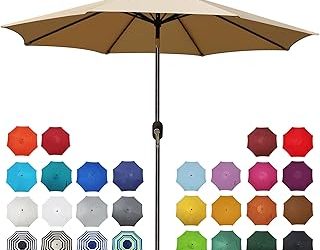
The EliteShade USA combines a three-tier vented canopy with a commercial-grade presentation, making it a compelling choice for patios that regularly experience shifting breezes. Its crank opening, UPF 50+ protection, and advertised fade-resistant construction add everyday practicality, while the layered top gives wind a more controlled exit path.
PURPLE LEAF 10′ x 10′ Square Double-Top Cantilever
For lounge furniture rather than a dining table, the PURPLE LEAF cantilever umbrella is the standout alternative. Its double-top canopy and side-post layout create broad, unobstructed shade, and the listed 35-mph wind-resistant frame specification offers useful context; however, the required base and installation footprint deserve careful planning.
9ft 3-Tier Windproof Patio Umbrella with Tilt and Crank
This navy three-tier market umbrella is designed around the features most useful in breezy conditions: ventilation, eight sturdy ribs, a push-button tilt, and crank operation. It is a practical fit for a pool deck or garden table where adjustable shade matters, though stability still depends heavily on pairing it with a substantial base.
JEAREY 9FT Outdoor Patio Umbrella
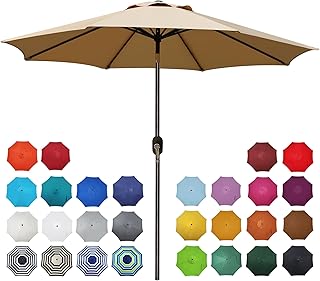
The JEAREY model keeps the familiar market-umbrella format and adds the essentials for flexible outdoor use, including a tilt button, crank lift, waterproof canopy, and eight-rib frame. Its beige finish has a calm, furniture-friendly look that works particularly well with teak, black metal, or woven seating.
9′ Outdoor Patio Umbrella with 8 Sturdy Ribs
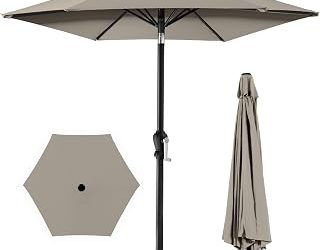
This straightforward market umbrella is a sensible option for shoppers who want a classic 9-foot profile without an elaborate mechanism. The crank, push-button tilt, and eight-rib structure support easy positioning over a table, while a secure base and disciplined closing routine remain essential in exposed areas.
Frequently Asked Questions
What makes a patio umbrella better for windy areas?
Vented or tiered canopies, sturdy ribs, and a well-supported pole can help an umbrella handle ordinary breezy conditions more gracefully. The base is equally important: even a robust canopy can tip if it is installed on an undersized or unstable stand.
Are cantilever umbrellas good in windy locations?
They can be, particularly when their double-top canopy and frame are engineered for airflow. Their offset design creates more leverage, though, so correct assembly, a compatible weighted base, and cautious use in strong wind are especially important.
Should I leave a wind-resistant umbrella open?
No. Wind ratings are not a guarantee of safe, unattended operation, and gusts can change quickly. Close the canopy whenever you leave the area, before storms, and whenever the conditions feel beyond a gentle breeze.
What size patio umbrella should I buy?
A 9-foot round umbrella generally suits a four- to six-seat dining table. A 10-by-10-foot cantilever model is better for larger lounge arrangements, but measure the space, account for the base, and check that the umbrella will not obstruct doors or walkways.
Final Thoughts
For a traditional table setup, the EliteShade USA 9ft 3-Tier is the most feature-rich pick, while the navy three-tier model offers strong everyday versatility. For open lounge seating, the PURPLE LEAF 10′ x 10′ cantilever brings the broadest coverage—provided its base and installation are planned as carefully as the canopy.