Key takeaways
- Rib count and material: Eight ribs is the practical minimum for a 9-foot span. Fiberglass ribs flex and rebound; cheap steel ribs bend once and stay bent. Reinforced aluminum sits in between and holds shape well when properly gauged.
- Vented canopy: A crown vent — or better, a two- or three-tier canopy — lets rising pressure escape instead of levering the frame upward. This single feature separates umbrellas that survive summer storms from ones that don’t.
- Stated wind rating: Look for a number in MPH, not a word like “windproof.” A frame rated to 35 MPH has been tested against something. An unrated one has been tested against nothing you can verify.
- Base weight math: Center-pole umbrellas in a table need 30 to 50 pounds. Freestanding ones need 75 pounds or more. Cantilever models need a cross base loaded with 200-plus pounds of pavers, and skimping here undoes every other good decision.
- Fabric fade warranty: Solution-dyed and specialty fabrics carrying multi-year or decade-long no-fade claims cost more upfront and stay presentable through seasons when polyester has already gone chalky.
What's inside
A patio umbrella that folds itself inside out during the first real gust of the season is one of the most predictable disappointments in outdoor furnishing. The failure point is rarely the fabric. It’s the geometry: ribs too thin for their span, no vent to release pressure, a pole diameter chosen for shipping cost rather than leverage. Wind doesn’t push on an umbrella so much as try to lift it, and a canopy without an escape route becomes a sail bolted to a stick.
This guide looks at the shade structures actually built to stay put — the ones with reinforced rib counts, vented crowns, and frames rated against measured wind speeds rather than vague marketing adjectives. Below you’ll find our current picks across cantilever and center-pole formats, plus the specification details worth checking before anything gets bolted to your deck.
As an Amazon Associate we earn from qualifying purchases.


How to Choose a Patio Umbrella Wind (2026)
- Rib count and material: Eight ribs is the practical minimum for a 9-foot span. Fiberglass ribs flex and rebound; cheap steel ribs bend once and stay bent. Reinforced aluminum sits in between and holds shape well when properly gauged.
- Vented canopy: A crown vent — or better, a two- or three-tier canopy — lets rising pressure escape instead of levering the frame upward. This single feature separates umbrellas that survive summer storms from ones that don’t.
- Stated wind rating: Look for a number in MPH, not a word like “windproof.” A frame rated to 35 MPH has been tested against something. An unrated one has been tested against nothing you can verify.
- Base weight math: Center-pole umbrellas in a table need 30 to 50 pounds. Freestanding ones need 75 pounds or more. Cantilever models need a cross base loaded with 200-plus pounds of pavers, and skimping here undoes every other good decision.
- Fabric fade warranty: Solution-dyed and specialty fabrics carrying multi-year or decade-long no-fade claims cost more upfront and stay presentable through seasons when polyester has already gone chalky.
The Best Patio Umbrella Wind (2026)s Reviewed
PURPLE LEAF Cantilever 10′ x 10′ Square Double Top
The 35 MPH frame rating and double-top canopy make this the most credible wind performer here, with the offset design clearing your table entirely for uninterrupted seating. The 240GSM fabric feels substantially heavier than budget canopies, though budget the full paver load for the base — this umbrella is only as stable as what’s holding it down.
Midtown Umbrellas 9 Ft with Terylast Fabric
Terylast is the standout feature: a decade-long no-fade claim that outlasts nearly everything in this category, wrapped around an auto-tilt aluminum frame with eight reinforced ribs. The navy canopy on a black pole reads more architectural than resort, which suits contemporary decks well.
EliteShade USA 9ft 3-Tier Market Umbrella
Three tiers means two vent gaps, and that layered ventilation is the most effective passive pressure release on any center-pole umbrella at this price. Commercial-grade construction and UPF 50+ protection round it out; the ten-year non-fade rating on black fabric is a genuinely difficult engineering claim to meet.
JEAREY 9FT with Push Button Tilt and Crank
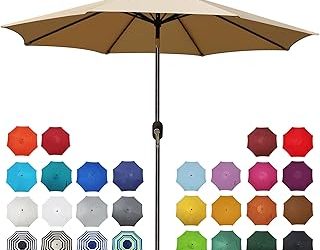
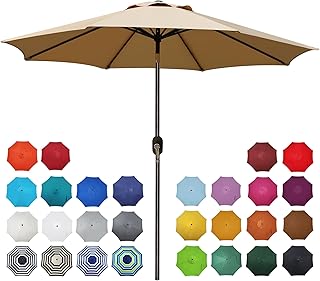
A well-executed conventional market umbrella — eight sturdy ribs, waterproof UV-treated canopy, smooth crank and tilt mechanism in a warm beige that flatters teak and wicker alike. Best suited to sheltered courtyards and patios rather than exposed coastal or open-plain sites.
9 FT Patio Umbrella with Push Button Tilt and Crank (Navy)
Straightforward value in a saturated navy that holds up visually against grey composite decking. The eight-rib frame and tilt function cover the fundamentals competently, making this a sensible choice for seasonal use or as a second umbrella over a secondary seating zone.
Frequently Asked Questions
What wind speed will actually damage a patio umbrella?
Most unrated umbrellas begin failing around 20 to 25 MPH. Frames rated to 30 to 35 MPH hold considerably longer, but no umbrella is designed to stay open in sustained high wind — the rating describes survival, not recommended operation.
Should I close my umbrella when I go inside?
Yes, and this habit prevents more damage than any specification. Gusts arrive faster than forecasts, and a closed canopy presents almost no surface area to catch them.
Are cantilever umbrellas less stable than center-pole models?
Not inherently, but they’re less forgiving. The offset arm creates a lever that demands a much heavier, wider base than a center-pole umbrella needs.
Does the vent hole make the umbrella less shady?
Negligibly. The overlapping canopy tiers still block direct sun while letting hot air rise out, which also makes the space beneath noticeably cooler.
Final Thoughts
If wind is your primary concern, the PURPLE LEAF Cantilever earns its place with a verified 35 MPH frame rating and genuine canopy substance. The EliteShade 3-Tier is the smarter buy for table-mounted shade thanks to its layered ventilation, while the Midtown Umbrellas 9 Ft is the pick for anyone who wants a canopy that still looks new in five years.