Key takeaways
- Growth Speed vs. Longevity: Fast-growing vines like Thunbergia and Wisteria deliver coverage within months, but slower growers like Jasmine reward patience with decades of bloom. Decide whether you want instant shade or a long-term investment.
- Fragrance Factor: Not all pergola vines smell. Climbing Jasmine stands alone in this group for scent, releasing a sweet, heady fragrance on warm evenings—ideal if your pergola doubles as a dining or lounging area.
- Structural Weight: Heavy woody vines such as Wisteria demand robust pergola construction with reinforced joints. Lighter climbers like Thunbergia put minimal stress on frames and suit leaner modern structures.
- Climate Hardiness: Jasmine and Wisteria tolerate cooler zones, while Thunbergia thrives in heat and humidity. Cross-check your USDA zone before ordering—plants outside their range rarely reach their advertised potential.
- Live Plants vs. Seeds: Starter plants skip germination uncertainty and give you a visible head start. Seeds cost less per unit and suit gardeners who enjoy the process, but expect a full growing season before meaningful coverage.
What's inside
Choosing the right climbing plant for a pergola is a decision that shapes your outdoor space for years—yet most buyers grab the first seed packet they find without considering growth habit, maintenance demands, or how quickly coverage actually appears. A mismatched plant can leave a bare frame for two summers or, worse, overwhelm a structure within a single growing season.
This 2026 roundup cuts through the noise. We evaluated the most popular pergola-ready plants currently available, weighing vigor, fragrance, bloom quality, and real-world garden performance so you can build a canopy worth sitting under.
As an Amazon Associate we earn from qualifying purchases.


How to Choose a Pergola Plant (2026)
- Growth Speed vs. Longevity: Fast-growing vines like Thunbergia and Wisteria deliver coverage within months, but slower growers like Jasmine reward patience with decades of bloom. Decide whether you want instant shade or a long-term investment.
- Fragrance Factor: Not all pergola vines smell. Climbing Jasmine stands alone in this group for scent, releasing a sweet, heady fragrance on warm evenings—ideal if your pergola doubles as a dining or lounging area.
- Structural Weight: Heavy woody vines such as Wisteria demand robust pergola construction with reinforced joints. Lighter climbers like Thunbergia put minimal stress on frames and suit leaner modern structures.
- Climate Hardiness: Jasmine and Wisteria tolerate cooler zones, while Thunbergia thrives in heat and humidity. Cross-check your USDA zone before ordering—plants outside their range rarely reach their advertised potential.
- Live Plants vs. Seeds: Starter plants skip germination uncertainty and give you a visible head start. Seeds cost less per unit and suit gardeners who enjoy the process, but expect a full growing season before meaningful coverage.
The Best Pergola Plants (2026) Reviewed
Climbing Jasmine Seeds
Star jasmine remains the designer’s default for a reason: glossy evergreen foliage and clusters of white blooms that perfume an entire patio. This seed pack yields perennial vines that cling readily to pergola slats and return stronger each year. The tradeoff is patience—germination and establishment take time—but the payoff is a lush, fragrant canopy that practically maintains itself once rooted.
Thunbergia Grandiflora (Blue Trumpet Vine)
For gardeners who want dramatic coverage before summer ends, Thunbergia is hard to beat. These two live plants arrive ready to climb, producing broad trumpet-shaped blooms in an uncommon blue-violet that contrasts beautifully against natural wood tones. Best suited to warm-climate pergolas, the vine’s fast habit demands occasional pruning but rewards with near-instant privacy screening.
Wisteria Live Plants 3-Pack
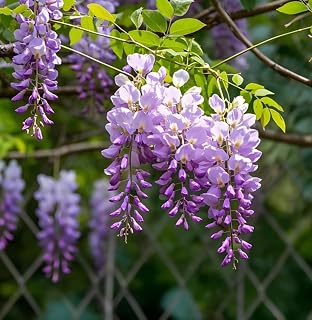
Nothing reads “established garden” quite like cascading wisteria. These 1-to-2-foot starter plants ship live and begin training to your pergola immediately. Wisteria floribunda produces the long, dramatic racemes seen in traditional Japanese and English garden settings. Give it strong structural support and annual pruning, and it will transform a bare frame into a showpiece within two to three seasons.
Wisteria Seeds (20 Heirloom Non-GMO)
Budget-minded growers who enjoy starting from scratch will appreciate these heirloom wisteria seeds. Non-GMO and hardy, they produce the same floribunda variety as live starts but at a fraction of the cost. Expect slower establishment and the possibility of inconsistent germination—plant extras if timeline matters to you—but the long-term result is identical once the vine matures.
Wisteria Live Plants 2-Pack
A smaller live-plant bundle for tighter budgets or narrower pergola spans. These two Wisteria floribunda starters perform identically to the three-pack option but suit gardeners working with limited planting pockets. Pair one at each end of a pergola for symmetrical coverage that converges at center—a classic arrangement that maximizes visual impact without overcrowding the base.
Frequently Asked Questions
How long before a pergola vine provides real shade?
Fast growers like Thunbergia can shade a pergola within the first summer. Wisteria typically takes two to three seasons to build a dense canopy. Jasmine is slower still, often requiring three to four years for full pergola coverage.
Do I need to reinforce my pergola for climbing vines?
Wisteria absolutely warrants reinforced construction—its woody trunk and heavy canopy can warp lightweight frames. Jasmine and Thunbergia impose minimal additional load and generally suit standard pergola builds without modification.
Can I grow these vines in containers on a patio?
All five plants can start in large containers, but Wisteria and Jasmine eventually need in-ground planting to reach full size. Thunbergia adapts most successfully to long-term container growing with consistent watering and feeding.
Which option is best for a beginner gardener?
Thunbergia live plants offer the lowest barrier to entry: fast growth, forgiving care, and visible results within weeks. Jasmine seeds suit patient beginners who prioritize fragrance, while Wisteria rewards those willing to learn proper pruning techniques.
Final Thoughts
For fragrance and year-round greenery, climbing jasmine is unmatched. Wisteria live plants deliver the most iconic pergola aesthetic with manageable effort, and Thunbergia remains the fastest path to shade and privacy. Any of these three will earn its place above your outdoor seating—choose the one that matches your climate, timeline, and patience level.