Key takeaways
- Size for air changes, not the box claim: A “1,000 sq ft” rating usually means one full cleaning per hour. For allergy relief you want four or more, so divide the stated coverage by four and buy for that number. A 1,000 sq ft unit is a genuinely excellent 250 sq ft bedroom machine.
- True HEPA plus meaningful carbon: HEPA media handles dander and the dust it clings to. Odor is a separate job, and it needs actual carbon mass, not a thin gray sheet. Look for a dedicated deodorization layer if litter boxes or kennels are in the picture.
- A washable pre-filter is non-negotiable with pets: Fur and lint will blind a HEPA filter in months. A rinseable mesh screen you clean monthly protects the expensive media underneath and quietly cuts your annual running cost in half.
- Check the quiet setting, not the top speed: The number that matters is the sleep-mode decibel level, because a purifier only helps while it’s running. Anything above a soft hush gets switched off at bedtime, which is precisely when you need eight uninterrupted hours of filtration.
- Price the filters for three years: Replacement media, shipping cadence, and whether the unit nags you with a sensor-driven reminder all matter more than the sticker price. Also consider footprint and finish: a slim white tower disappears beside a nightstand, a wide-body unit needs a real corner.
What's inside
Pet dander is not a dust problem, it’s a physics problem. The proteins that trigger sneezing, itchy eyes, and 2 a.m. congestion ride on particles small enough to stay suspended for hours, and they settle into exactly the surfaces we spend the most money on: bouclé armchairs, wool rugs, linen drapery, upholstered headboards. You can vacuum every other day and still lose the battle, because the moment a dog jumps off the sofa, the whole load goes airborne again. Most shoppers respond by buying a purifier sized for a bedroom and parking it in an open-plan great room, then concluding the category doesn’t work.
This guide takes the opposite approach: match the machine to the room’s actual volume and the way you live in it. Below are the purifiers worth specifying in 2026 for dander, cat allergen, litter odor, and the wet-dog smell that clings to fabric. We look at real air changes per hour rather than headline square footage, carbon capacity for odor, pre-filter maintenance you’ll actually keep up with, and whether the unit reads as furniture or as an appliance you’ll want to hide.
As an Amazon Associate we earn from qualifying purchases.



How to Choose a Pet Allergy Air Purifier (2026)
- Size for air changes, not the box claim: A “1,000 sq ft” rating usually means one full cleaning per hour. For allergy relief you want four or more, so divide the stated coverage by four and buy for that number. A 1,000 sq ft unit is a genuinely excellent 250 sq ft bedroom machine.
- True HEPA plus meaningful carbon: HEPA media handles dander and the dust it clings to. Odor is a separate job, and it needs actual carbon mass, not a thin gray sheet. Look for a dedicated deodorization layer if litter boxes or kennels are in the picture.
- A washable pre-filter is non-negotiable with pets: Fur and lint will blind a HEPA filter in months. A rinseable mesh screen you clean monthly protects the expensive media underneath and quietly cuts your annual running cost in half.
- Check the quiet setting, not the top speed: The number that matters is the sleep-mode decibel level, because a purifier only helps while it’s running. Anything above a soft hush gets switched off at bedtime, which is precisely when you need eight uninterrupted hours of filtration.
- Price the filters for three years: Replacement media, shipping cadence, and whether the unit nags you with a sensor-driven reminder all matter more than the sticker price. Also consider footprint and finish: a slim white tower disappears beside a nightstand, a wide-body unit needs a real corner.
The Best Pet Allergy Air Purifiers of 2026, Reviewed
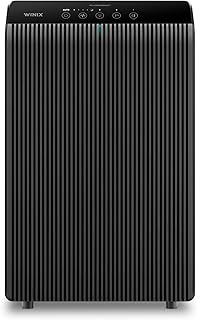
WINIX 5510 True HEPA Air Purifier
The 5510 is the one I’d put in a living room with a shedding retriever: 1,881 sq ft in an hour means roughly four air changes in a 450 sq ft space, and the high-deodorization carbon filter is thick enough to handle open-plan kitchen and pet odors at once. App control plus auto mode makes it genuinely set-and-forget, though the wide chassis wants a corner rather than a tight nightstand gap.
PuroAir 240 HEPA Air Purifier
PuroAir’s CarbonTech layer is the standout here, and it shows in rooms where the issue is smell as much as sneezing, think litter closets, mudrooms, and home offices where the cat sleeps on the desk. At 1,000 sq ft per hour it’s a strong bedroom or studio machine, and the clean cylindrical form reads more like a small speaker than an appliance.
LEVOIT Vital 100S-P
The Vital 100S-P was designed around pets specifically, with a washable pre-filter and side air intakes that resist clogging from floor-level fur. AHAM-verified performance and a genuinely quiet sleep mode make it the most reliable pick for a bedroom you sleep in with a dog on the bed.
KNKA APH4000
KNKA delivers the most coverage per dollar in this group, with 1,695 sq ft per hour, an AQI display, and a dedicated pet mode that ramps fan speed when dander spikes. The washable pre-filter and AHAM verification give it credibility that most value-tier purifiers can’t claim.
Frequently Asked Questions
Will an air purifier actually reduce my pet allergy symptoms?
It reduces airborne allergen load, which is the fraction driving nighttime congestion and eye irritation. It won’t touch the dander embedded in your rug or sofa cushions, so pair filtration with regular washing of soft goods for the real improvement.
Where should I place the unit?
In the room you occupy longest, usually the bedroom, with at least a foot of clearance on the intake side and away from curtains or under-bed dead air. Corners are fine; tucked behind furniture is not.
How often do filters need replacing?
Plan on six to twelve months for HEPA and carbon in a pet home, faster during shedding season. Rinse the pre-filter monthly and you’ll reach the longer end of that range.
Do I need one purifier per room?
For allergy relief, yes, in the two or three rooms where you spend real time. Closed doors stop airflow, so a single unit cannot serve a bedroom and a living room.
Final Thoughts
For a large open living space with a shedding dog, the WINIX 5510 has the airflow and carbon capacity to keep up. For a bedroom you want to sleep soundly in, the LEVOIT Vital 100S-P is the more considered choice, with the PuroAir 240 the pick if odor is your primary complaint.