Key takeaways
- Elevate it, don’t floor it: Set the unit 2–3 feet off the ground on a nightstand, low shelf, or dedicated side table. Mist released at floor level settles into rugs and baseboards instead of dispersing; elevation lets it mix into the air you actually breathe.
- Respect the clearance halo: Leave roughly 12 inches on every side and a clear vertical path above the nozzle. Walls, upholstered headboards, artwork, and window treatments within that halo will collect moisture and, over months, show it.
- Keep it out of the sensor’s blind spots: Corners, alcoves, and spots beside heat registers or drafty doors give the humidistat a distorted reading. A central-ish position along an interior wall produces the most accurate humidity control.
- Match tank size to trip count, not room size alone: A 2.5L tank on a bedside table is a nightly ritual; an 8L tank on a console is a weekly one. Decide how often you want to walk to the sink before you decide on capacity.
- Audit the surface underneath: Solid wood, veneer, and untreated stone are vulnerable to condensation rings and overspray. Use a tray, a coaster, or a sealed surface, and skip placing units directly on electronics or media cabinets.
What's inside
Humidifiers get bought for their specs and then placed wherever there happens to be an outlet. That mismatch is why so many people conclude the machine underperformed: a unit parked on the floor beside a radiator, tucked behind a curtain, or shoved against a headboard will read the room wrong, dampen the wrong surfaces, and leave the air it was supposed to fix largely untouched. Placement is not an afterthought to the purchase. It is half the purchase.
This guide approaches humidifiers the way we approach any object that has to live in a finished room: where it goes, what it touches, and whether it earns its footprint. Below are the models we recommend for bedrooms, nurseries, and open-plan living areas in 2026, followed by a placement framework, honest notes on each unit, and answers to the questions that come up once the box is open.
As an Amazon Associate we earn from qualifying purchases.



How to Choose a/an Place To Keep Humidifier (2026)
- Elevate it, don’t floor it: Set the unit 2–3 feet off the ground on a nightstand, low shelf, or dedicated side table. Mist released at floor level settles into rugs and baseboards instead of dispersing; elevation lets it mix into the air you actually breathe.
- Respect the clearance halo: Leave roughly 12 inches on every side and a clear vertical path above the nozzle. Walls, upholstered headboards, artwork, and window treatments within that halo will collect moisture and, over months, show it.
- Keep it out of the sensor’s blind spots: Corners, alcoves, and spots beside heat registers or drafty doors give the humidistat a distorted reading. A central-ish position along an interior wall produces the most accurate humidity control.
- Match tank size to trip count, not room size alone: A 2.5L tank on a bedside table is a nightly ritual; an 8L tank on a console is a weekly one. Decide how often you want to walk to the sink before you decide on capacity.
- Audit the surface underneath: Solid wood, veneer, and untreated stone are vulnerable to condensation rings and overspray. Use a tray, a coaster, or a sealed surface, and skip placing units directly on electronics or media cabinets.
The Best Place To Keep Humidifier (2026)s Reviewed
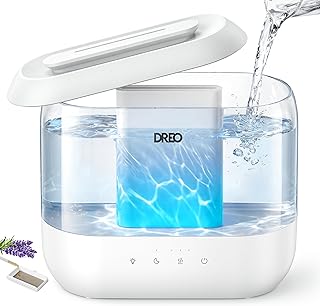
DREO 8L Smart Humidifier (HM717S)
Designed for a console or a low credenza in a great room, the 8L tank and 80-hour runtime cover up to 600 square feet without constant refilling, and warm mist gives you a real option in dry winter months. The 1500+ RGB lighting and app, voice, and Alexa control make it a piece you can place in a living space and manage without crossing the room.
Homvana 3.6L Top-Fill Cool Mist Humidifier
At 23dB it is the quietest pick here, which matters when the correct placement is within a few feet of a pillow. The grey finish reads as a considered object rather than an appliance, and the 2-in-1 diffuser function means one item on the nightstand instead of two.
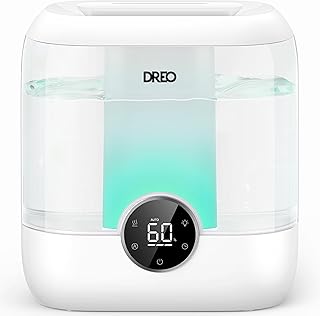
DREO 6L Smart Humidifier (Warm & Cool Mist, Silver)
The smart humidity sensor is the reason to buy this one: place it thoughtfully and it will hold a target level rather than running blindly, with 60 hours of runtime and 500ml/h output for larger bedrooms. The silver casing suits contemporary and mid-century rooms where matte white plastic looks out of place.
Levoit Top Fill Humidifier, 2.5L
The best choice when your only viable spot is a small nightstand or a nursery shelf, thanks to a compact 2.5L footprint, 28dB operation, and 25-hour runtime. Top-fill access and auto shut-off make it genuinely low-maintenance in a room you would rather not fuss with at 2 a.m.
DREO 6L Humidifier (HM524)
A straightforward, non-connected alternative with the same 6L capacity, 60-hour runtime, and precise humidity control, minus the app layer. The built-in nightlight and easy-refill design make it a sensible bedside or dresser-top unit for anyone who wants fewer things asking to be paired with a phone.
Frequently Asked Questions
Should a humidifier go near the bed or across the room?
Across the room, or at minimum three feet from the bed, angled away from bedding. Direct mist onto sheets and a headboard creates damp fabric and a false sense that the room is humid enough.
Can I keep it on hardwood or a wool rug?
Not directly. Elevate the unit and use a waterproof tray. Prolonged fine mist settling on wood finishes or natural fibers invites cupping, staining, and mildew.
Is a closet, bathroom, or windowsill ever a good spot?
No. Enclosed and already-humid spaces waste output, and windowsills combine cold glass with condensation, which is how you end up with sill damage and mold.
How far from a radiator or vent should it sit?
Several feet at least. Heat sources and airflow skew the humidistat reading and cause the unit to cycle incorrectly, which is one of the most common reasons a capable humidifier seems ineffective.
Final Thoughts
For open living areas where a console can host the unit properly, the DREO 8L HM717S is the most capable choice on this list; for bedrooms, the DREO 6L Smart Humidifier gives you sensor-driven control at a placement-friendly size, while the Homvana 3.6L remains the pick when the spot you have is a nightstand and quiet is non-negotiable.