Key takeaways
- Elevation: Aim for two to three feet off the floor. A low console table, bench, or sturdy stool lets mist disperse and evaporate before it settles, which is exactly what prevents damp carpet and warped baseboards.
- Clearance: Leave at least twelve inches between the unit and any wall, curtain, or upholstered surface. Mist needs open air on all sides, and a nozzle pointed into drapery is a mildew problem waiting to happen.
- Material sensitivity: Keep it off untreated wood, veneer, leather, and anything with a natural finish you care about. If a wood surface is the only option, add a tray or stone coaster underneath and angle the outlet away.
- Distance from the bed: Three feet is the sweet spot for a nightstand setup. Close enough to feel the benefit, far enough that you’re not breathing concentrated mist or waking up to damp bedding.
- Airflow, not vents: Position it in the room’s natural circulation path but away from direct HVAC vents, radiators, and ceiling-fan downdrafts, which will scatter output before it does any good.
What's inside
Most people buy a humidifier to solve one problem and end up creating another. The dry-air symptoms fade, but suddenly there’s a chalky white film on the nightstand, a damp ring on the hardwood, or a machine that gurgles just loudly enough to keep you awake. Nine times out of ten the appliance isn’t the issue. Placement is. A humidifier is the rare piece of home tech whose performance is dictated almost entirely by where it sits in a room, and most of us default to the nearest outlet without a second thought.
This guide approaches the humidifier the way we’d approach any other object in a considered room: as something that has to work with the architecture, the furniture, and the way air actually moves. Below you’ll find our current picks for bedrooms, nurseries, plant corners, and open-plan spaces, plus the placement rules that keep mist in the air instead of on your surfaces. Every model here was chosen with real-world positioning in mind, from tank capacity and noise floor to whether the thing can sit on a dresser without soaking it.
As an Amazon Associate we earn from qualifying purchases.




How to Choose the Right Spot for Your Humidifier (2026)
- Elevation: Aim for two to three feet off the floor. A low console table, bench, or sturdy stool lets mist disperse and evaporate before it settles, which is exactly what prevents damp carpet and warped baseboards.
- Clearance: Leave at least twelve inches between the unit and any wall, curtain, or upholstered surface. Mist needs open air on all sides, and a nozzle pointed into drapery is a mildew problem waiting to happen.
- Material sensitivity: Keep it off untreated wood, veneer, leather, and anything with a natural finish you care about. If a wood surface is the only option, add a tray or stone coaster underneath and angle the outlet away.
- Distance from the bed: Three feet is the sweet spot for a nightstand setup. Close enough to feel the benefit, far enough that you’re not breathing concentrated mist or waking up to damp bedding.
- Airflow, not vents: Position it in the room’s natural circulation path but away from direct HVAC vents, radiators, and ceiling-fan downdrafts, which will scatter output before it does any good.
The Best Humidifiers by Placement (2026), Reviewed
Levoit 2.5L Top Fill Humidifier
This is the nightstand pick, full stop. At 28dB it disappears into a quiet bedroom, and the top-fill design means you can refill it in place without lifting a sloshing tank over your furniture, which is the single biggest cause of accidental water damage. The 25-hour runtime and auto shut-off make it genuinely low-maintenance for nurseries.
Homvana 3.6L Top-Fill Cool Mist Humidifier
At 23dB it’s the quietest unit here, and the muted grey shell reads more like an object than an appliance, which matters when it’s living on a shelf in a visible corner. The 2-in-1 diffuser function is a real dual-purpose win for a small bedroom where surface space is already spoken for.
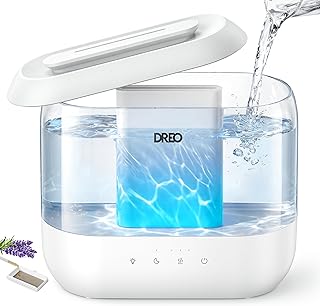
DREO HM311 4L Humidifier
The 36-hour runtime is the headline, but the wide, stable base is what earns it a spot on a low dresser or plant stand without any wobble anxiety. The built-in nightlight makes it a smart choice for a nursery corner where you’d otherwise need a second fixture.
ROSEKM 2.0L Cool Mist Humidifier
The 360-degree nozzle is the reason to buy this one: it lets you fine-tune direction after you’ve placed it, so a tight bookshelf or awkward alcove stops being a dead zone. Filterless and matte black, it’s the most discreet option for a home office or reading nook.
8L Top-Fill Whole House Humidifier
For open-plan living or a large primary bedroom, this is the capacity play. Put it near the room’s center of circulation rather than in a corner, elevated on a bench, and it will handle square footage the smaller units simply can’t reach without constant refilling.
Frequently Asked Questions
Should a humidifier go on the floor?
Only if it’s a large-capacity unit designed for it, and even then, prefer a hard surface over carpet. Floor placement concentrates moisture at ground level where it settles instead of dispersing, which is how you end up with damp rugs and musty subfloor.
How far from the bed is safe?
About three feet. Closer than that and you risk damp sheets and an over-humidified pocket of air around your face. Angle the mist outlet away from the headboard rather than toward it.
Can I put one near plants?
Yes, and tropical plants love it. Set the unit slightly above pot level and a foot or two back so mist drifts across the foliage rather than saturating soil, which invites fungus gnats and root rot.
Why is there white dust on my furniture?
That’s mineral residue from hard tap water, not a defect. Switch to distilled or filtered water and move the unit away from surfaces you want to keep clean. Elevation helps here too, since higher placement gives mist time to evaporate.
Final Thoughts
For most bedrooms, the Levoit 2.5L is the easiest unit to place well thanks to its quiet operation and spill-proof top fill. If you want something that reads as decor rather than hardware, the Homvana 3.6L is the more considered choice, and for large or open-plan spaces the 8L top-fill model gives you the capacity to actually humidify the room you’re standing in. Get the position right and any of the three will feel like it was always meant to be there.