Key takeaways
- Tank capacity vs. runtime: Match the tank to how often you’re willing to refill. A 2L unit is a nightly ritual; 4L to 8L gets you a day and a half or more of continuous output, which is what a tropical plant group actually needs to hold a stable reading.
- Humidistat, not just mist levels: Manual fog settings overshoot and swing. A built-in sensor or external probe holds a target percentage, which protects both your plants and your walls, floors, and window frames from condensation.
- Top-fill and wide openings: The single biggest predictor of whether you’ll keep using it. Pour-through lids and tanks you can reach into with a hand beat carry-to-the-sink designs every time, and they make descaling a two-minute job.
- Noise floor under 30 dB: Plant shelves usually share space with a bed, a desk, or a sofa. Anything above the low thirties becomes background hum you’ll notice at 11 p.m.
- Material and finish: Matte black and warm off-white read as objects rather than appliances. Look for BPA-free tanks, and if you use distilled or filtered water you’ll avoid the fine white dust that ultrasonic units leave on nearby surfaces.
What's inside
Indoor plants rarely fail because of light. They fail because the air in a heated or air-conditioned room sits somewhere around 25 to 35 percent relative humidity, while a calathea, an alocasia, or a philodendron evolved in air closer to 60. The symptoms show up slowly and get misread as a watering problem: crisping leaf margins, aerial roots that never quite anchor, new growth that unfurls smaller than the last leaf. Meanwhile the plant sits in a beautifully styled corner, doing worse than it looks.
A humidifier fixes the actual variable, but the wrong one turns a considered room into a clutter of white plastic, mineral dust on the shelf below, and a tank you resent refilling. This guide looks at plant humidifiers the way we look at any piece of furniture: footprint, materials, maintenance, and whether it earns its place in the sightline. Below are the models worth building a plant corner around in 2026, plus the specs that actually matter once the box is open.
As an Amazon Associate we earn from qualifying purchases.




How to Choose a Plant Humidifier (2026)
- Tank capacity vs. runtime: Match the tank to how often you’re willing to refill. A 2L unit is a nightly ritual; 4L to 8L gets you a day and a half or more of continuous output, which is what a tropical plant group actually needs to hold a stable reading.
- Humidistat, not just mist levels: Manual fog settings overshoot and swing. A built-in sensor or external probe holds a target percentage, which protects both your plants and your walls, floors, and window frames from condensation.
- Top-fill and wide openings: The single biggest predictor of whether you’ll keep using it. Pour-through lids and tanks you can reach into with a hand beat carry-to-the-sink designs every time, and they make descaling a two-minute job.
- Noise floor under 30 dB: Plant shelves usually share space with a bed, a desk, or a sofa. Anything above the low thirties becomes background hum you’ll notice at 11 p.m.
- Material and finish: Matte black and warm off-white read as objects rather than appliances. Look for BPA-free tanks, and if you use distilled or filtered water you’ll avoid the fine white dust that ultrasonic units leave on nearby surfaces.
The Best Plant Humidifier (2026)s Reviewed
Levoit NeoClassic 450
The most well-rounded pick here: 4.2L top-fill capacity, a 42-hour runtime, and a 21 dB output that genuinely disappears into a quiet room. The dishwasher-safe tank is the detail that matters over a full season, since it removes the excuse that lets biofilm build up.
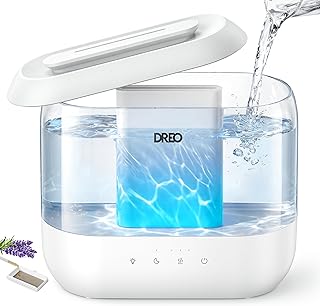
Dreo HM311
A 4L tank with a 36-hour runtime and a clean, low-slung profile that sits well under a shelf or beside a plant stand. At 28 dB it’s a strong bedroom option, and the wide-mouth refill and simple interior make upkeep uncomplicated.
VIVOSUN AeroStream H05
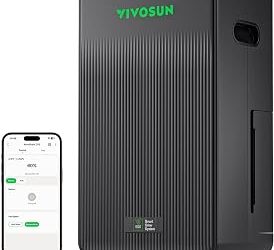
Built for growers rather than decorators, and it shows in the best way: a remote humidity probe, VPD-based control, and smart WiFi adjustment over a 5L reservoir. If you’re running a dedicated grow shelf or a cabinet of high-humidity species, this is the level of precision that separates thriving from surviving.
Coolfiqu 6L Warm & Cool Mist
Warm mist is the underrated feature for winter, when cool output can drop the air temperature around a sensitive plant. The 6L tank, auto humidity control, and 360-degree nozzle make it a capable whole-corner unit, with oil diffusion if you want the room to read as considered rather than clinical.
ROSEKM 2.0L Cool Mist
The right answer for a single statement plant, a nightstand fern, or a nursery where footprint beats capacity. Filterless, quiet, with auto shut-off and a directional nozzle, in a matte black body that doesn’t fight a dark wood surface.
Frequently Asked Questions
What humidity level do most houseplants want?
Aim for 50 to 60 percent for common tropicals like monstera, pothos, and philodendron. Calathea, anthurium, and most ferns prefer 60 to 70. A cheap hygrometer placed at plant height, not across the room, is worth buying alongside the humidifier.
Will a humidifier damage my furniture or walls?
Only if it runs unregulated. Keep the unit a couple of feet from walls and wood surfaces, angle the nozzle away from anything porous, and use a humidistat so output stops at your target rather than saturating the room.
Do I need distilled water?
Not strictly, but hard tap water in an ultrasonic unit produces white mineral dust on leaves and nearby shelving. Distilled or filtered water eliminates it and slows scale buildup inside the tank.
How often should I clean it?
Rinse and refill daily, and descale weekly with a diluted white vinegar soak. Standing water is where bacteria establish, so a model you can actually reach into is the one that stays clean.
Final Thoughts
For most rooms, the Levoit NeoClassic 450 is the pick that balances runtime, near-silence, and genuinely easy maintenance. Choose the Dreo HM311 if you want a lower-profile unit for a bedroom plant grouping, and step up to the VIVOSUN AeroStream H05 when you’re managing a dedicated grow shelf and want measured control rather than guesswork.