Key takeaways
- Footprint before features: Measure your furniture group and add three feet of circulation on every side. A 10×10 comfortably covers a bistro set or four loungers; a six-seat dining table with pulled-out chairs wants 13×13. Undersized canopies read as temporary no matter how good they look.
- Frame and leg profile: Powder-coated steel with a square or hexagonal leg resists twisting far better than round tubing of the same weight. Check the truss spacing at the peak — more cross-bracing means less canopy flutter, which is the single biggest cause of premature seam wear.
- Vented roof design: A double-tier or vented top lets rising heat escape and dramatically reduces uplift in wind. Single-layer flat tops trap air underneath and turn the whole structure into a sail.
- Netting and wall systems: Decide whether you want a screen house (fully enclosed, bug-proof, warmer) or a canopy with removable mesh (airier, more flexible). Look for full-length zippers on at least two sides and sewn-in hems rather than clip-on panels.
- Pack-down and anchoring: Wheeled roller bags matter if the gazebo moves seasonally; backpack carriers matter if it travels. Either way, budget for proper anchors — weight bags for hard surfaces, screw stakes for lawn. No frame is stable unaided.
What's inside
Outdoor living has quietly become the most-used room in the house, and it’s also the least finished. Most patios and decks arrive with a slab, a set of chairs, and nothing overhead — which means the space works beautifully for about two hours a day and then surrenders to glare, drizzle, or mosquitoes. A pop up gazebo is the fastest way to close that gap without pouring footings or calling a contractor, but the category is crowded with frames that flex in a light breeze, canopies that take 40 minutes and two arguments to raise, and netting that snags the first time you unzip it.
This guide approaches pop up gazebos the way we’d approach any piece of furniture: by construction quality, proportion, and how well it lives with what you already own. Below you’ll find our current picks for 2026, plus the specifications that actually predict longevity — frame gauge, roof venting, anchoring hardware — and the ones that are mostly marketing. Whether you’re shading a dining set, screening a hot tub, or building a soft-edged outdoor room for entertaining, there’s a size and structure here that fits.
As an Amazon Associate we earn from qualifying purchases.


How to Choose a Pop Up Gazebo in 2026
- Footprint before features: Measure your furniture group and add three feet of circulation on every side. A 10×10 comfortably covers a bistro set or four loungers; a six-seat dining table with pulled-out chairs wants 13×13. Undersized canopies read as temporary no matter how good they look.
- Frame and leg profile: Powder-coated steel with a square or hexagonal leg resists twisting far better than round tubing of the same weight. Check the truss spacing at the peak — more cross-bracing means less canopy flutter, which is the single biggest cause of premature seam wear.
- Vented roof design: A double-tier or vented top lets rising heat escape and dramatically reduces uplift in wind. Single-layer flat tops trap air underneath and turn the whole structure into a sail.
- Netting and wall systems: Decide whether you want a screen house (fully enclosed, bug-proof, warmer) or a canopy with removable mesh (airier, more flexible). Look for full-length zippers on at least two sides and sewn-in hems rather than clip-on panels.
- Pack-down and anchoring: Wheeled roller bags matter if the gazebo moves seasonally; backpack carriers matter if it travels. Either way, budget for proper anchors — weight bags for hard surfaces, screw stakes for lawn. No frame is stable unaided.
The Best Pop Up Gazebos of 2026, Reviewed
COOS BAY 11×11 Pop Up Gazebo with Mesh Netting
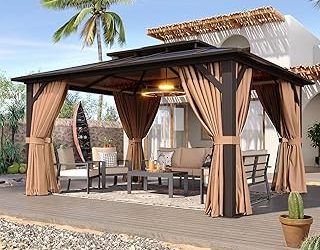
At 121 square feet, this hits the sweet spot for most patios: generous enough for a full dining set, restrained enough that it doesn’t dominate a modest yard. The UPF 50+ water-resistant top and integrated netting make it a genuine three-season shelter, and the neutral beige reads as intentional rather than utilitarian.
CROWN SHADES 13×13 Pop Up Gazebo
The largest footprint in our lineup and the one we’d choose for entertaining, with a two-tone beige and coffee canopy that plays well with teak and wicker. The wheeled STO-N-Go bag is the underrated detail here — it’s the difference between storing the gazebo each fall and leaving it out to weather.
11’x11′ Canopy Tent with Double Ventilated Roof
A well-specified all-rounder: the double-vented roof sheds heat and reduces wind load, while the mosquito netting and waterproof top cover the two failure points buyers complain about most. The included backpack carrier makes it the most portable option at this size.
East Oak 10×10 Pop Up Screen Tent
A true screen house rather than a canopy with mesh added, which shows in the tension of the panels and the quality of the zippers. Ideal for decks and lakeside patios where insects, not sun, are the limiting factor — though the UPF 50+ top handles both.
VEVOR 10×10 Six-Sided Screen Tent
The six-sided geometry gives it a pavilion-like presence that squared canopies can’t match, and the six removable wind cloths let you dial in privacy and shade through the day. Two mesh windows keep airflow moving when the sides are down.
Frequently Asked Questions
Can I leave a pop up gazebo up all season?
Most can stay up through fair weather if properly anchored, but take the canopy down for storms and never leave one standing under snow load. Frames fail from accumulated stress, not single events.
How do I anchor one on a deck or concrete patio?
Use weight bags or plates at each leg — 30 to 40 pounds per leg is a reasonable minimum — and add guy lines to railings or planters if your site is exposed. Never drill into decking to secure a temporary structure.
Is “water resistant” good enough for real rain?
For showers, yes. Water-resistant polyester with sealed seams handles typical rainfall; sustained downpours will eventually wick through, and any flat canopy can pool water, so keep the peak tensioned.
Can one person set these up?
Push-button and one-push frames are manageable solo, though the final leg extension is easier with two people. Attaching netting and walls is comfortably a one-person job.
Final Thoughts
For most homes, the COOS BAY 11×11 offers the best balance of coverage, UV protection, and visual restraint. If you entertain, step up to the CROWN SHADES 13×13 or the Driftalia 13×13, whose one-push setup and vented roof make a large canopy far less of a project — and if bugs are your real problem, the East Oak screen tent solves it outright.