Key takeaways
- Match the climate: Evaporative cooling performs best in dry air, roughly 50% relative humidity or lower. In humid coastal summers the temperature drop narrows considerably, so treat these as personal-space coolers rather than whole-room air conditioners.
- Tank size equals runtime: A 2-gallon reservoir typically carries a workday; 3-gallon or dual-tank designs stretch toward overnight use. If you want to sleep without refilling, buy capacity, not features.
- Airflow and reach: Look at oscillation sweep and rated air speed together. A 120° sweep spreads relief across a desk and seating area, while a narrow 70° throw suits a single chair or bedside placement.
- Noise you can live with: Fan speed drives both cooling and volume. Check that the lowest setting still moves usable air, since that is the mode you’ll run during calls and at night.
- Maintenance access: Pads, filters, and ice compartments need regular rinsing to avoid mildew and musty output. Front-loading tanks and removable pads save real time; sealed, awkward housings do not.
What's inside
Windowless rooms are where most cooling plans fall apart. Casement and sliding sashes refuse standard hose kits, HOA rules block anything hanging outside, and a rented studio rarely tolerates a bracket screwed into the frame. The workaround most people find is a “ventless portable air conditioner,” which is really an evaporative cooler: it pulls warm air across a water-soaked media pad and returns it several degrees cooler and noticeably moister. Understanding that distinction upfront is the difference between a purchase you keep and one you return in a week.
This guide sorts the current crop of ventless units by the things that actually shape daily use, including tank volume and unattended runtime, oscillation width, noise at the speed you’ll realistically run, and how easy the pad and filter are to rinse. Below you’ll find our shortlist, a buying checklist, and honest notes on where each model earns its footprint in a bedroom, home office, or open kitchen corner.
As an Amazon Associate we earn from qualifying purchases.


How to Choose a Ventless Portable Air Conditioner (2026)
- Match the climate: Evaporative cooling performs best in dry air, roughly 50% relative humidity or lower. In humid coastal summers the temperature drop narrows considerably, so treat these as personal-space coolers rather than whole-room air conditioners.
- Tank size equals runtime: A 2-gallon reservoir typically carries a workday; 3-gallon or dual-tank designs stretch toward overnight use. If you want to sleep without refilling, buy capacity, not features.
- Airflow and reach: Look at oscillation sweep and rated air speed together. A 120° sweep spreads relief across a desk and seating area, while a narrow 70° throw suits a single chair or bedside placement.
- Noise you can live with: Fan speed drives both cooling and volume. Check that the lowest setting still moves usable air, since that is the mode you’ll run during calls and at night.
- Maintenance access: Pads, filters, and ice compartments need regular rinsing to avoid mildew and musty output. Front-loading tanks and removable pads save real time; sealed, awkward housings do not.
The Best Ventless Portable Air Conditioners (2026), Reviewed
3-in-1 Evaporative Cooler with 4 Ice Packs
The four included ice packs let you push output colder than water alone, which makes this a smart pick for a small office or nursery corner. Its 70° oscillation and 7-hour timer keep the profile tidy and predictable rather than sprawling.
24″ Windowless Portable AC with Remote
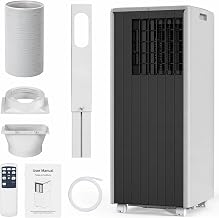
At 24 inches tall with a 2-gallon tank, 120° sweep, and a 15-hour timer, this is the most balanced all-rounder here for a bedroom or study. The ultra-quiet low speed is the standout, since it stays unobtrusive during calls and sleep.
Dual-Tank Windowless Cooler for 24-Hour Cooling
Two reservoirs mean you can top one off while the other runs, which effectively removes the daily refill interruption. Pair that with a 28-foot remote and smart timer and it becomes the easiest model to leave running in a bedroom overnight.
4-in-1 Evaporative Cooler with 3-Gallon Tank
The largest tank in this roundup, plus six fan speeds, gives you the most granular control over airflow and the longest stretch between fills. Best suited to open-plan living areas where you want sustained circulation, not a narrow cold stream.
8000 BTU 4-in-1 Ventless Floor Unit
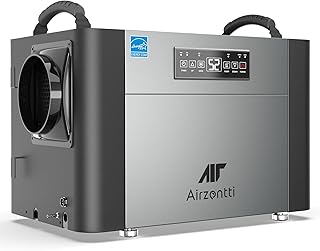
This one adds a dedicated dehumidifier function and sleep mode, which helps offset the moisture that evaporative cooling normally introduces. Verify the intended venting setup before buying, as 8000 BTU compressor-style output and true ventless operation are different performance claims.
Frequently Asked Questions
Do ventless units actually cool a room?
They lower the temperature of the air passing through them, typically by several degrees, and cool you further through airflow across skin. They will not hold an entire room at a set temperature the way a compressor-based AC does.
Where should I place one?
Position it near an open door or window so it draws in drier air, and aim it at the space you occupy. A cracked window helps rather than hurts, since evaporative cooling depends on air exchange.
Will it make the room feel damp?
In dry conditions the added humidity is a comfort bonus. In already-humid rooms, run shorter cycles, keep air moving, or choose a model with a dehumidifier mode.
How much upkeep is involved?
Empty and rinse the tank weekly, clean the filter monthly during heavy use, and let the pad dry out before storage. Ten minutes of care prevents the musty smell that ruins these units.
Final Thoughts
For most rooms, the 24-inch windowless model with remote hits the best balance of quiet operation, tank capacity, and wide oscillation. Choose the dual-tank version if uninterrupted overnight cooling matters most, or the 3-gallon 4-in-1 if you’re cooling an open living space and want the longest run between refills.