Key takeaways
- Motor type: A reversible DC motor is the single upgrade worth prioritizing. It draws roughly a third of the energy of an older AC unit, offers six or more speeds instead of three, and stays near-silent on the low settings you will actually sleep with.
- Blade span versus room size: A 52-inch sweep suits most bedrooms and mid-size living rooms up to about 400 square feet. Move to 60 inches for open-plan spaces or vaulted ceilings, where a smaller fan simply stirs the air above your head.
- Mount height and clearance: Standard eight-foot ceilings need a low-profile or flush mount to keep blades at a safe height. Reserve downrod styles for nine feet and above, where the drop reads as deliberate rather than cramped.
- Light quality, not just brightness: 3CCT selectable lighting lets you shift between warm, neutral, and daylight tones. Full-spectrum LEDs render wood and textiles far more accurately, which matters if the fan is the only fixture in the room.
- Finish and visual weight: Slim three-blade profiles disappear into minimalist ceilings. Walnut or oak blades add warmth to white rooms, while caged industrial designs, like the TCL drop-rod fan, work best where you want the fixture to read as a feature.
What's inside
Ceiling fans occupy an odd spot in home design: they hang at eye level in your most-used rooms, yet most people shop for them last, under deadline, in a heatwave. The result is a ceiling full of compromise. Budget listings blur together, spec sheets repeat the same three acronyms, and the difference between a fan you forget about in a good way and one that hums through every quiet evening is rarely visible in the thumbnail.
The good news for 2026 is that the features that used to sit in premium territory, brushless DC motors, selectable color temperature, real timber blades, have drifted into genuinely affordable range. This guide focuses on that sweet spot: fans that move air properly, stay quiet at low speed, and look intentional in a finished room. Below you will find our current shortlist, followed by a practical buying framework and honest notes on each pick.
As an Amazon Associate we earn from qualifying purchases.



How to Choose a Price Ceiling Fan (2026)
- Motor type: A reversible DC motor is the single upgrade worth prioritizing. It draws roughly a third of the energy of an older AC unit, offers six or more speeds instead of three, and stays near-silent on the low settings you will actually sleep with.
- Blade span versus room size: A 52-inch sweep suits most bedrooms and mid-size living rooms up to about 400 square feet. Move to 60 inches for open-plan spaces or vaulted ceilings, where a smaller fan simply stirs the air above your head.
- Mount height and clearance: Standard eight-foot ceilings need a low-profile or flush mount to keep blades at a safe height. Reserve downrod styles for nine feet and above, where the drop reads as deliberate rather than cramped.
- Light quality, not just brightness: 3CCT selectable lighting lets you shift between warm, neutral, and daylight tones. Full-spectrum LEDs render wood and textiles far more accurately, which matters if the fan is the only fixture in the room.
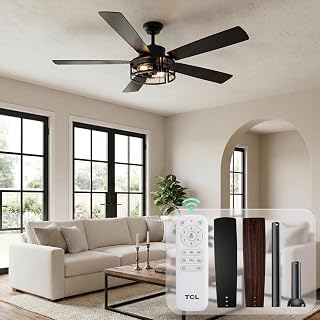
- Finish and visual weight: Slim three-blade profiles disappear into minimalist ceilings. Walnut or oak blades add warmth to white rooms, while caged industrial designs, like the TCL drop-rod fan, work best where you want the fixture to read as a feature.
The Best Price Ceiling Fan (2026)s Reviewed
52″ Modern Ceiling Fan with Lights and Remote
This is the sensible default: a 52-inch DC fan with 3CCT lighting, remote control, and a genuinely quiet low speed, rated for covered outdoor use as well as indoors. Nothing about it is flashy, which is precisely why it slots into apartments, rentals, and neutral bedrooms without renegotiating the rest of the room.
Passky 52″ Black Low Profile Ceiling Fan
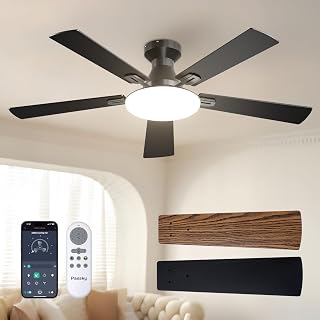
Flush-mount fans usually sacrifice airflow for clearance, but the Passky keeps a full 52-inch sweep in a hugger body, with app control and a memory function that recalls your last light setting. The matte black housing is the practical pick for eight-foot ceilings where a downrod would feel oppressive.
VONLUCE 52″ Wood Ceiling Fan, Nickel
Three solid wood blades against brushed nickel give this one a warmer, more considered look than the painted-MDF alternatives at similar prices. Six speeds, a timer, and full-spectrum 3CCT light make it a strong fit for living rooms where the fan runs year-round.
60″ Walnut Wood Ceiling Fan with Remote
The 60-inch span is the reason to buy this: in open-plan or high-ceilinged rooms it circulates air the 52-inch models cannot reach. Three walnut blades and a quiet DC motor keep the farmhouse styling restrained rather than themed.
52″ Smart Outdoor Wood Ceiling Fan, Dark Walnut
Built for patios and covered porches, this one adds Alexa, Google, and app control to a weather-ready dark walnut build. Voice scheduling is more useful outdoors than most people expect, since you rarely have a remote within reach on a terrace.
Frequently Asked Questions
Is a DC motor fan worth the extra cost?
Yes, in almost every case. Lower running costs, noticeably quieter operation, and finer speed control add up quickly for a fixture that may run several hours a day for years.
Which direction should the blades turn?
Counterclockwise in summer to push cool air downward, clockwise on low in winter to circulate warm air trapped near the ceiling. All the fans here reverse from the remote.
Can these fans be installed outdoors?
Only in covered, sheltered locations such as porches or patios. Fans rated for damp conditions should never be exposed to direct rain or standing moisture.
Do I need an electrician?
If a fan-rated ceiling box and wiring are already in place, most homeowners can manage the swap. New wiring, box replacement, or ceiling reinforcement should go to a licensed electrician.
Final Thoughts
For most rooms, the 52″ Modern Ceiling Fan with Lights and Remote delivers the best balance of airflow, quiet running, and neutral styling for the money. Choose the Passky 52″ Low Profile if your ceilings sit at eight feet, and step up to the 60″ Walnut model when you are cooling an open-plan space that needs real reach.