Key takeaways
- Watts versus your pedestal: A 1500W heater draws roughly 12.5 amps, which is most of a 15-amp circuit. On 30-amp service, running a heater alongside the microwave or air conditioner will trip a breaker. Look for a 750W low setting so you have headroom.
- Tip-over and overheat protection: Non-negotiable in a vehicle. A heater that cuts power the moment it leaves vertical is the baseline; overheat sensors that shut down when airflow is blocked by a blanket or cushion are equally important.
- Footprint and mounting: Low-profile bases stay put better than tall towers in narrow aisles. Wall-mounted units disappear from the floor plan entirely, which in a small rig is worth more than any feature list.
- Noise floor: You will sleep three feet from this thing. Ratings in the low-to-mid 30dB range are genuinely quiet; anything with a loud fan cycling on a thermostat will wake you every twenty minutes.
- Fuel type and ventilation: Electric is the safe default when you have shore power. Propane radiant heaters work off-grid but consume oxygen and produce moisture, so they require cracked ventilation, a working CO detector, and never run while sleeping.
What's inside
An RV interior is a study in constraint. Every surface earns its keep, every inch is negotiated, and the thermal envelope around you is measured in fractions of an inch of aluminum and foam rather than the studded, insulated walls of a house. That means the heater you choose does not behave the way it would in a bedroom. Heat leaves faster, cold floors pull warmth downward, and the same 1500W appliance that feels generous in a den can struggle against a single-pane window at 3 a.m. Add a 30-amp pedestal, furniture crowded shoulder to shoulder, and the very real possibility of the whole room shifting while you drive, and the calculus changes entirely.
This guide looks at portable heaters through that lens: footprint, tip-over behavior, noise at close range, and whether the controls make sense when you are half asleep in a bunk. We have gathered electric ceramic units, a wall-mounted option that frees up floor space, a rig-specific cabin heater, and one propane radiant model for boondocking without hookups. Below, the picks, followed by what actually matters when you compare them.
As an Amazon Associate we earn from qualifying purchases.




How to Choose an RV Space Heater (2026)
- Watts versus your pedestal: A 1500W heater draws roughly 12.5 amps, which is most of a 15-amp circuit. On 30-amp service, running a heater alongside the microwave or air conditioner will trip a breaker. Look for a 750W low setting so you have headroom.
- Tip-over and overheat protection: Non-negotiable in a vehicle. A heater that cuts power the moment it leaves vertical is the baseline; overheat sensors that shut down when airflow is blocked by a blanket or cushion are equally important.
- Footprint and mounting: Low-profile bases stay put better than tall towers in narrow aisles. Wall-mounted units disappear from the floor plan entirely, which in a small rig is worth more than any feature list.
- Noise floor: You will sleep three feet from this thing. Ratings in the low-to-mid 30dB range are genuinely quiet; anything with a loud fan cycling on a thermostat will wake you every twenty minutes.
- Fuel type and ventilation: Electric is the safe default when you have shore power. Propane radiant heaters work off-grid but consume oxygen and produce moisture, so they require cracked ventilation, a working CO detector, and never run while sleeping.
The Best RV Space Heaters (2026), Reviewed
Xtreme Heaters Boat Cabin RV Space Heater
Purpose-built for exactly this application, with a squat, stable base and a top-mounted air intake that resists blockage from bedding or gear. The 750/1500W split plus tip-over and overheat shutoff makes it the most sensible default for anyone running on a shared 30-amp pedestal.
GiveBest Smart Wall Heater
Getting the heater off the floor solves a problem no amount of features can fix in a tight rig. The 1500W PTC element, adjustable thermostat, 24-hour timer, and Alexa compatibility mean you can schedule warmth before you climb out of bed, and it stays out of the walkway permanently.
DREO Space Heater with Thermostat (2026 Upgraded)
The 34dB rating is the headline here, and it earns it, which matters when the heater sits within arm’s reach of your pillow. Five modes, a 12-hour timer, remote, and the gold finish make it the most design-forward pick of the group without sacrificing PTC ceramic warm-up speed.
Mr. Heater Little Buddy Propane Heater
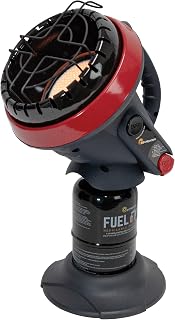
The off-grid answer: 3,800 BTU of radiant propane heat with no electrical draw at all, ideal for dry camping or shoulder-season mornings before the sun hits. Treat ventilation and a functioning CO detector as mandatory, and never leave it running unattended or overnight.
DREO Oscillating Space Heater
The 70-degree oscillation spreads warmth across an open floor plan instead of baking one corner, which suits larger fifth wheels and Class A layouts. ECO mode, a 12-hour timer, and remote control round it out for a genuinely low-fuss electric option.
Frequently Asked Questions
Can I run a 1500W heater on 30-amp RV service?
Yes, but not simultaneously with high-draw appliances. Budget roughly 12.5 amps for the heater and stagger use of the air conditioner, microwave, and water heater to avoid tripping the pedestal breaker.
Is it safe to leave an electric heater on overnight?
Modern PTC ceramic units with tip-over and overheat protection are designed for continuous thermostat-controlled operation, but keep at least three feet of clearance on all sides and plug directly into an outlet rather than an extension cord.
Do space heaters cause condensation in an RV?
Electric heaters do not add moisture, though warming interior air can reveal existing condensation on cold windows. Propane heaters release water vapor as a combustion byproduct, so ventilation is essential.
Should I choose a tower or a compact heater?
Compact and low-profile units are more stable in narrow spaces. A tower like the Lasko 751320 makes sense in larger rigs where wide oscillation and a built-in handle are more useful than a small footprint.
Final Thoughts
For most rigs, the Xtreme Heaters cabin model is the safest, most rig-appropriate starting point, with a stable base and a low setting that plays well with limited amperage. If floor space is your real constraint, mount the GiveBest wall heater and reclaim the aisle. And for anyone sleeping just feet from the unit, the 34dB DREO with thermostat is the one that will not wake you.