Key takeaways
- Measure the path, not just the wall: Note overall width including arms, then check your doorway, hallway turn, and stairwell diagonal. Boxed or knock-down sofas solve tight entries that assembled ones never will.
- Look for visible legs: Exposed wood or metal legs let light and floor show underneath, which reads as more room. Skirted, floor-hugging bases do the opposite in a small footprint.
- Match seat depth to how you sit: Around 21 to 23 inches suits upright lounging and dining-adjacent layouts. Anything deeper is lovely for sprawling but pushes the whole piece further into your walkway.
- Decide if it needs a second job: A convertible back, futon fold, or reversible ottoman turns one purchase into guest bedding or extra seating, which matters most when there’s no spare room.
- Choose fabric for real life: Removable, washable covers are the single best hedge in a small home where the sofa is also the dining chair, desk, and movie seat. Chenille and corduroy hide wear well; teddy fabric is cozy but shows lint.
What's inside
Small-space living has stopped being a compromise and started being a design brief. The trouble is that the furniture market hasn’t fully caught up: “apartment-size” gets stamped on 84-inch sofas, listed widths quietly exclude the arms, and a chunky silhouette can visually swallow a 12-by-14 room even when it technically fits. Add a narrow stairwell or a 30-inch apartment door and the shortlist gets short fast.
This guide covers six compact sofas worth considering in 2026, from a 48-inch mid-century loveseat to a reversible sectional that still tucks into a studio. Below you’ll find the measurements that actually matter, honest notes on where each piece performs best, and answers to the questions that come up most when square footage is the constraint.
As an Amazon Associate we earn from qualifying purchases.


How to Choose a Sofa For Small Spaces (2026)
- Measure the path, not just the wall: Note overall width including arms, then check your doorway, hallway turn, and stairwell diagonal. Boxed or knock-down sofas solve tight entries that assembled ones never will.
- Look for visible legs: Exposed wood or metal legs let light and floor show underneath, which reads as more room. Skirted, floor-hugging bases do the opposite in a small footprint.
- Match seat depth to how you sit: Around 21 to 23 inches suits upright lounging and dining-adjacent layouts. Anything deeper is lovely for sprawling but pushes the whole piece further into your walkway.
- Decide if it needs a second job: A convertible back, futon fold, or reversible ottoman turns one purchase into guest bedding or extra seating, which matters most when there’s no spare room.
- Choose fabric for real life: Removable, washable covers are the single best hedge in a small home where the sofa is also the dining chair, desk, and movie seat. Chenille and corduroy hide wear well; teddy fabric is cozy but shows lint.
The Best Sofas For Small Spaces (2026) Reviewed
55″ 3-in-1 Boneless Sleeper Sofa
The frameless build is the whole point here: it ships compressed, needs no assembly, and converts between sofa, lounger, and bed, which makes it the obvious answer for walk-ups and awkward stairwells. Expect a firmer, floor-adjacent sit than a sprung sofa, and treat the corduroy black finish as a deliberate style choice rather than a neutral.
Welzona 51″ Teddy Loveseat
At 51 inches with tool-free setup and an all-wood frame, this is the piece I’d put in a bedroom reading corner or a narrow den where a full sofa would crowd the circulation path. The washable covers are the practical win; the teddy texture is what gives it presence without visual bulk.
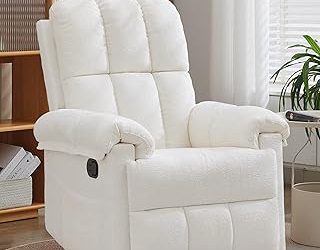
DOPEDIO 71″ Chenille Loveseat Recliner
Reclining function and spring cushions put this closer to a proper sofa experience than most compact options, and the removable cover keeps it livable long-term. At 71.25 inches it sits at the upper edge of “small,” so measure the recline clearance behind it before committing.
Vesgantti 48″ Mid-Century Loveseat
The smallest footprint on this list and the most architectural, with tapered solid wood legs and a clean blue upholstery that works under a window or across from a fireplace. This is upright, conversational seating rather than a napping sofa, which is exactly what tight floor plans usually need.
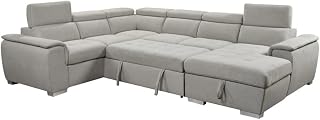
73.6″ Convertible Sectional with Reversible Ottoman
An L-shaped layout without the permanence: the ottoman moves to either side, so the sofa adapts if you rearrange or move apartments. It seats three comfortably, and detaching the ottoman gives you a standalone perch when guests arrive.
Frequently Asked Questions
What width counts as a small-space sofa?
Roughly 72 inches and under, with true loveseats landing between 48 and 60 inches. Leave at least 30 to 36 inches of walkway on the primary traffic side.
Can a sofa bed work in a studio apartment?
Yes, if you account for the open depth as well as the closed footprint. The Flamaker futon is a good example: it folds flat for sleeping, adds cup holders and removable armrests, and stays loveseat-sized when upright.
Is a sectional a mistake in a small living room?
Not if it’s compact and reconfigurable. A reversible-chaise sectional under 75 inches can float off the wall to define zones in an open studio, which often uses space better than a sofa-plus-chair pairing.
How do I keep a small sofa from feeling cramped?
Anchor it on a rug large enough that the front legs sit on it, keep the back height at or below windowsill level, and skip oversized throw pillows that eat usable seat depth.
Final Thoughts
For pure design impact in the tightest room, the Vesgantti 48″ loveseat is the pick. If you need three seats and flexibility, the 73.6″ convertible sectional delivers both without dominating the floor plan, and the 55″ boneless sleeper remains the most practical choice for difficult deliveries and occasional overnight guests.