Key takeaways
- Measure the sprawl, not the pet: Dogs lengthen out when they truly relax. Measure your animal nose-to-tail in their loosest sleeping position and add four to six inches of interior width. A 24-inch model suits cats and toy breeds; 28 inches covers small dogs and large cats; 51 inches handles medium and large dogs who like to stretch diagonally.
- Support tier matters more than plushness: High-density memory foam holds its shape under repeated weight and matters enormously for seniors, large breeds, and any dog with joint history. Fiber-fill and cushion-style bases feel luxurious on day one but flatten. If your pet is over seven years old or over 50 pounds, treat orthopedic foam as non-negotiable.
- Choose fabric for your actual household: Linen and corduroy read as furniture and resist snagging. Faux fur delivers warmth and visual softness but collects hair visibly. Cotton velvet is the most design-forward option and the least forgiving. Waterproof liners underneath the cover are the quiet feature that extends a piece’s life by years.
- Confirm the cover comes off completely: A removable, machine-washable cover with a full-perimeter zipper is the difference between a five-year piece and a one-season one. Spot-clean-only upholstery is a poor bet in any home with a shedding animal.
- Read the silhouette as decor: Raised pine legs lift a piece off the floor and let it sit alongside your existing furniture rather than under it. Bolstered arms and a backrest give anxious animals something to brace against, which is why these models get used while flat mats get ignored.
What's inside
Pet furniture has spent years being the thing you hide when guests arrive. The typical dog bed is a shapeless slab in a color that matches nothing, and the typical cat perch reads more like gym equipment than furniture. Meanwhile the actual problem persists: your animal wants to be on the sofa, at your height, in the middle of the room. Buyers end up choosing between a piece that looks intentional and one that their pet will actually use, and the compromise usually loses on both counts.
Pet sofas are the category that finally closes that gap. They borrow real furniture language — armrests, backrests, exposed wood legs, upholstery-grade fabric — while giving cats and dogs the raised, bounded, semi-enclosed shape they instinctively settle into. Below are the models worth considering in 2026, spanning a 24-inch cat lounger to a 51-inch memory foam couch rated for 130-pound dogs, plus the sizing, fabric, and support details that separate a design object from a purchase you regret in four months.
As an Amazon Associate we earn from qualifying purchases.




How to Choose a/an Sofa Pets (2026)
- Measure the sprawl, not the pet: Dogs lengthen out when they truly relax. Measure your animal nose-to-tail in their loosest sleeping position and add four to six inches of interior width. A 24-inch model suits cats and toy breeds; 28 inches covers small dogs and large cats; 51 inches handles medium and large dogs who like to stretch diagonally.
- Support tier matters more than plushness: High-density memory foam holds its shape under repeated weight and matters enormously for seniors, large breeds, and any dog with joint history. Fiber-fill and cushion-style bases feel luxurious on day one but flatten. If your pet is over seven years old or over 50 pounds, treat orthopedic foam as non-negotiable.
- Choose fabric for your actual household: Linen and corduroy read as furniture and resist snagging. Faux fur delivers warmth and visual softness but collects hair visibly. Cotton velvet is the most design-forward option and the least forgiving. Waterproof liners underneath the cover are the quiet feature that extends a piece’s life by years.
- Confirm the cover comes off completely: A removable, machine-washable cover with a full-perimeter zipper is the difference between a five-year piece and a one-season one. Spot-clean-only upholstery is a poor bet in any home with a shedding animal.
- Read the silhouette as decor: Raised pine legs lift a piece off the floor and let it sit alongside your existing furniture rather than under it. Bolstered arms and a backrest give anxious animals something to brace against, which is why these models get used while flat mats get ignored.
The Best Sofa Pets (2026)s Reviewed
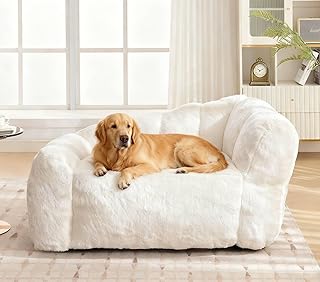
51″ Memory Foam Dog Sofa in Faux Fur
The most capable option here, rated to 130 pounds with genuine memory foam beneath a faux fur surface that large breeds burrow into readily. The beige colorway is warm rather than stark, though expect to keep a lint roller nearby.
51″ Linen Dog Sofa with Backrest and Armrests
Same generous footprint, considerably more restrained styling — the durable linen weave and defined arms let this pass for a scaled-down loveseat. My pick for open-plan living rooms where the piece has nowhere to hide.
Gray Cat Sofa Bed with Pine Wood Legs
The strongest design statement of the group: cotton velvet upholstery, a proper cushion, and turned pine legs that elevate it into real furniture territory. Sized for cats and small dogs, and the removable cover keeps the velvet manageable.
FUKUMARU Corduroy Dog Couch Bed, 28″
Corduroy is an inspired choice — textural, forgiving, and quietly retro — layered over an orthopedic base with a waterproof, washable cover. At 28 inches it’s the sweet spot for small dogs and substantial cats.
Cute Dog Couch for Medium and Large Dogs, Grey (Size L)
A fluffier, more casual take with a washable removable cover and a soft grey that disappears into most palettes. Best for pets who prefer nesting depth over firm structural support.
Frequently Asked Questions
Will my pet actually use a sofa-style bed?
Most do, and faster than with flat beds — the raised edges and enclosed shape satisfy a real instinct. Place it where your pet already chooses to sleep and add a familiar blanket for the first week.
Can cats and dogs share one?
Cats often claim the smallest available piece regardless of who bought it. If you have both, the 24-inch cat lounger alongside a larger dog model prevents the daily negotiation.
How do these hold up to shedding?
Corduroy and linen release hair most easily. Faux fur and velvet require regular vacuuming with an upholstery attachment. Prioritize a fully removable cover over any specific fabric.
Are they suitable for senior or arthritic pets?
Only the memory foam and orthopedic models. Low entry height matters too — a senior dog should be able to step on, not jump.
Final Thoughts
For large dogs, the 51″ linen sofa with armrests offers the best balance of support and living-room credibility, while the faux fur version wins on sheer capacity and warmth. If you’re furnishing for a cat or small dog, the pine-legged grey cat sofa is the piece you’ll stop apologizing for, with the FUKUMARU corduroy model close behind for its orthopedic base and waterproof cover.