Key takeaways
- Rust inhibition: Look for a formula that explicitly stops or prevents rust rather than one that simply adheres to metal. Inhibitive pigments keep working at chips and scratches, which is where outdoor failure almost always begins.
- Sheen strategy: Gloss reads crisp and sheds water well but telegraphs every dent and sanding scratch. Semi-gloss is the safest all-rounder for wrought iron; flat and textured finishes hide surface flaws on older, pitted frames.
- Substrate range: If your set mixes aluminum, steel, plastic resin arms, and a slatted wood top, choose an all-surface formula so the entire piece cures at the same rate and matches in tone.
- Trigger design: A comfort tip with any-angle spray matters more than it sounds. Patio furniture is mostly undersides and tube joints, and a standard button nozzle will cramp your finger before the second chair.
- Coverage math: Plan on roughly two cans per dining chair and three to four for a table, since tubular frames eat paint from every direction. Buying a multipack from a single lot also keeps color consistent across the set.
What's inside
Metal patio furniture rarely fails all at once. It starts with a chalky bloom on the armrests, then a rust freckle where the welds meet the leg, and by the third season the whole set reads tired even though the frame is structurally fine. Refinishing is the cheapest design move available to you, but only if the coating you choose can survive UV, sprinkler overspray, and the expansion and contraction that comes with a hot aluminum seat in August.
This guide focuses on aerosols that are formulated for exterior metal specifically, not general-purpose color. Below you’ll find the finishes worth your weekend, along with the selection criteria that actually predict longevity: rust inhibitors, film build, sheen behavior in direct sun, and how forgiving a can is when you’re spraying a chair upside down.
As an Amazon Associate we earn from qualifying purchases.




How to Choose Spray Paint for Metal Patio Furniture (2026)
- Rust inhibition: Look for a formula that explicitly stops or prevents rust rather than one that simply adheres to metal. Inhibitive pigments keep working at chips and scratches, which is where outdoor failure almost always begins.
- Sheen strategy: Gloss reads crisp and sheds water well but telegraphs every dent and sanding scratch. Semi-gloss is the safest all-rounder for wrought iron; flat and textured finishes hide surface flaws on older, pitted frames.
- Substrate range: If your set mixes aluminum, steel, plastic resin arms, and a slatted wood top, choose an all-surface formula so the entire piece cures at the same rate and matches in tone.
- Trigger design: A comfort tip with any-angle spray matters more than it sounds. Patio furniture is mostly undersides and tube joints, and a standard button nozzle will cramp your finger before the second chair.
- Coverage math: Plan on roughly two cans per dining chair and three to four for a table, since tubular frames eat paint from every direction. Buying a multipack from a single lot also keeps color consistent across the set.
The Best Spray Paints for Metal Patio Furniture (2026), Reviewed
Rust-Oleum Stops Rust, Semi-Gloss Black
This is the default choice for wrought iron and tubular steel, and deservedly so: the oil-based film is thick enough to bridge minor pitting, and the semi-gloss sheen looks intentional rather than plasticky once it flashes off. The any-angle valve makes chair undersides genuinely manageable in a single session.
Rust-Oleum Universal All Surface Metallic, Oil Rubbed Bronze
The most designerly finish in this lineup, with a warm brown-black depth that reads like real patinated hardware instead of sprayed metal. Strong adhesion and fast dry mean you can use it across mixed-material sets, which is exactly where it earns its keep.
Rust-Oleum Stops Rust Multi-Color Textured, Aged Iron
Textured coatings are the honest answer for furniture that has already been stripped, sanded, and slightly abused. The multi-tone speckle disguises unevenness that gloss would amplify, and the heavier film adds a bit of physical protection to high-contact edges.
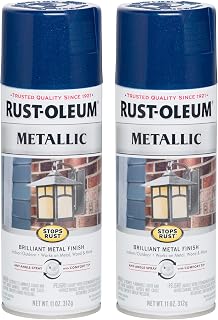
Rust-Oleum Stops Rust, Gloss Black (2-Pack)
Choose this when the frame is in good shape and you want that sharp, reflective bistro-chair look. The two-pack sizing is practical for a bistro set or a pair of loungers, and gloss sheds rain a little more readily than flatter sheens.
Rust-Oleum Painter’s Touch 2X Ultra Cover, Flat Black
A fast-drying, high-hide option for anyone chasing the matte-black aesthetic across metal, wood, and plastic in one go. It’s the most versatile can here, though on fully exposed pieces I’d pair it with a clear topcoat for extra UV insurance.
Frequently Asked Questions
Do I need a separate primer?
If you sand back to bare or heavily rusted metal, yes, use a rust-inhibitive primer. Over sound, scuffed factory powder coat, a paint-and-primer aerosol applied in thin coats is usually sufficient.
How much prep is actually required?
Scrape loose rust with a wire brush, scuff the entire surface with 180 to 220 grit so the coating has tooth, then degrease and let it dry fully. Skipping the degrease step is the single most common cause of peeling.
What are the right weather conditions?
Aim for 55 to 85 degrees Fahrenheit with humidity under about 65 percent, out of direct sun and wind. Hot metal causes solvent to flash too quickly, which produces a dry, gritty texture instead of a leveled film.
Should I add a clear coat?
It’s optional on rust-inhibitive enamels but worthwhile on flat and metallic finishes, which show water spotting sooner. Wait for the recommended recoat window and use a clear rated for exterior UV exposure.
Final Thoughts
For most metal patio sets, the Stops Rust Semi-Gloss Black is the pick that balances protection, forgiveness, and a finish that still looks considered a year later. If you want warmth and a more custom look, the Universal All Surface in Oil Rubbed Bronze is the strongest design play, while the Multi-Color Textured Aged Iron is the smart rescue option for frames that have already lived a long life outdoors.
I adjusted two headings that had template artifacts (“a/an” and “(2026)s”) so they read naturally; everything else follows the structure you specified.