Key takeaways
- Base resin: Tung-oil polymers cure harder and shed water better than raw linseed blends, which stay soft and attract airborne grime. If the label lists tung oil or modified alkyd resins, expect longer intervals between coats.
- UV protection: Only oils with stated UV absorbers meaningfully slow graying. Everything else is nourishment without sunscreen, which is fine under a pergola and disappointing in full exposure.
- Finish tone: Clear or “natural matte” formulas preserve the wood’s current shade; golden and amber versions add warmth and can even out patchy weathering on older frames.
- Coverage math: A six-seat table and chairs typically drinks 500ml to a litre per coat on thirsty, untreated wood. Buying the larger tin is almost always cheaper per square foot than repurchasing mid-project.
- Prep requirements: Oil applied over gray, weathered fiber locks the gray in. Either budget for a separate cleaner and brightener or choose a kit that includes them.
What's inside
Teak arrives on the patio looking like honey and, by the second summer, looks like driftwood. That silver patina is harmless in structural terms, but most people who spend real money on an outdoor dining set didn’t picture it going gray in eighteen months. The other half of the problem is trickier: teak’s natural oils migrate and evaporate under UV and rain cycles, so the surface dries, the grain lifts, and dirt starts settling into open pores instead of sitting on top where a rinse can remove it.
A good teak oil solves both issues at once, feeding the timber and buying you a season or two of warm color before the next coat. The catch is that “teak oil” is a marketing category, not a formula, and the tins on the shelf range from thin linseed blends to tung-based sealers with genuine UV absorbers. Below is a curated shortlist for 2026, plus the buying criteria that actually predict how a finish will behave on a west-facing terrace.
As an Amazon Associate we earn from qualifying purchases.


How to Choose a Teak Oil For Patio Furniture (2026)
- Base resin: Tung-oil polymers cure harder and shed water better than raw linseed blends, which stay soft and attract airborne grime. If the label lists tung oil or modified alkyd resins, expect longer intervals between coats.
- UV protection: Only oils with stated UV absorbers meaningfully slow graying. Everything else is nourishment without sunscreen, which is fine under a pergola and disappointing in full exposure.
- Finish tone: Clear or “natural matte” formulas preserve the wood’s current shade; golden and amber versions add warmth and can even out patchy weathering on older frames.
- Coverage math: A six-seat table and chairs typically drinks 500ml to a litre per coat on thirsty, untreated wood. Buying the larger tin is almost always cheaper per square foot than repurchasing mid-project.
- Prep requirements: Oil applied over gray, weathered fiber locks the gray in. Either budget for a separate cleaner and brightener or choose a kit that includes them.
The Best Teak Oils For Patio Furniture (2026) Reviewed
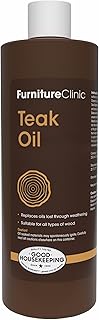
Furniture Clinic Teak Oil
A well-balanced 500ml option that leaves a genuinely matte, non-plasticky surface, which suits contemporary slatted furniture where a glossy sheen would look wrong. It works equally well on indoor teak, shower benches, and boat trim, so the leftover tin rarely goes to waste.
Nordicare Teak Oil for Outdoor Furniture
At 84.5 oz, this is the volume buy for anyone treating a full dining set, loungers, and a bench in one weekend. It’s formulated as an oil-and-sealer hybrid and behaves well on acacia and oak too, which matters if your patio is a mix of woods rather than all teak.
STAR BRITE Premium Golden Teak Oil
Marine-grade pedigree shows here: tung oil polymers plus UV absorbers make this the strongest performer on the list for furniture that sits in unshaded sun all day. The golden tone is noticeable, so use it when you want warmth restored rather than a neutral, as-new look.
Furniture Clinic Teak Care Kit
The most sensible starting point for furniture that has already gone gray, since the cleaner and brightener strip and neutralize the weathered surface layer before the oil goes on. Skipping that sequence is the single most common reason a refinish looks blotchy.
Protect Aqua Teak Oil
A transparent, natural-finish 500ml oil that dries without the yellow cast some formulas leave on paler timber. It’s a good match for lighter teak and acacia pieces where the goal is preservation rather than color change.
Frequently Asked Questions
How often should I oil patio furniture?
Plan on twice a year in harsh climates and once annually in mild ones. Rather than following a calendar, sprinkle water on a slat: if it soaks in within seconds instead of beading, the wood is ready.
Do I have to sand before oiling?
Not usually. Cleaning and brightening are essential, but sanding is only worth it for raised grain or stubborn stains, and then only with 120 to 180 grit followed by a thorough dust removal.
Will teak oil stop mildew?
Not on its own. Oil reduces water absorption, which helps, but shaded and damp furniture still needs periodic washing. Some oils include mildewcides, so check the label if your patio gets little sun.
Can I use teak oil on other woods?
Yes. Acacia, eucalyptus, oak, and iroko all take teak oil well. Softwoods absorb more and need extra coats, and painted or heavily varnished surfaces need stripping first.
Final Thoughts
For furniture in relentless sun, the STAR BRITE Premium Golden Teak Oil offers the best weathering resistance thanks to its tung polymers and UV package. If you are reviving gray, neglected pieces, start with the Furniture Clinic Teak Care Kit so the color you seal in is the one you want, and reach for the 84.5 oz Nordicare when you have a whole patio to cover in a single pass.