Key takeaways
- Measure the real clearance: “Wall hugger” is a category, not a standard. Zero-clearance models sit within roughly an inch of the wall, while others still want three to five. Check the spec, then add space for the power cord.
- Power vs. manual: Power reclining gives you infinite stopping points and easier operation for anyone with limited grip or mobility. Manual is cheaper, needs no outlet, and has fewer parts to fail. Dual motor separates back and footrest for true lounging positions.
- Footprint over aesthetics: A 39-inch wide overstuffed chair reads generous in a photo and enormous in a small room. Tape out the width and full reclined depth on your floor before committing.
- Upholstery and climate: Genuine leather ages beautifully and wipes clean but feels cold in winter. Faux leather is easy to maintain at a lower price. Chenille and breathable woven fabrics stay comfortable in warm rooms and resist that sticky feeling.
- Frame rating and warranty: Look for a stated weight capacity, ideally 300 lb or higher, and clarity on how long the mechanism and motor are covered. A five-year frame warranty tells you more than a marketing claim.
What's inside
Anyone who has measured a living room twice before buying furniture knows the frustration: you find a recliner you love, then discover it needs eight inches of breathing room behind it to actually recline. In apartments, condos, RVs, and any room where the sofa wall is the only wall, that clearance requirement quietly disqualifies most of the market. Wall hugger recliners solve this by pivoting the seat forward as the back drops, so the mechanism works within an inch or two of the baseboard instead of demanding a floating footprint.
This guide looks at the wall hugger recliners worth considering in 2026, judged on the things that matter once the box is open: how much clearance they genuinely need, whether the motor feels smooth or jerky, upholstery that holds up to daily sitting, and thoughtful details like USB-C ports and adjustable headrests. Below you will find current picks across power and manual designs, leather and fabric, plus compact widths for tight corners.
As an Amazon Associate we earn from qualifying purchases.


How to Choose a Wall Hugger Recliner (2026)
- Measure the real clearance: “Wall hugger” is a category, not a standard. Zero-clearance models sit within roughly an inch of the wall, while others still want three to five. Check the spec, then add space for the power cord.
- Power vs. manual: Power reclining gives you infinite stopping points and easier operation for anyone with limited grip or mobility. Manual is cheaper, needs no outlet, and has fewer parts to fail. Dual motor separates back and footrest for true lounging positions.
- Footprint over aesthetics: A 39-inch wide overstuffed chair reads generous in a photo and enormous in a small room. Tape out the width and full reclined depth on your floor before committing.
- Upholstery and climate: Genuine leather ages beautifully and wipes clean but feels cold in winter. Faux leather is easy to maintain at a lower price. Chenille and breathable woven fabrics stay comfortable in warm rooms and resist that sticky feeling.
- Frame rating and warranty: Look for a stated weight capacity, ideally 300 lb or higher, and clarity on how long the mechanism and motor are covered. A five-year frame warranty tells you more than a marketing claim.
The Best Wall Hugger Recliners Reviewed
KISLOT Wall Hugger Power Recliner
A well-rounded faux leather pick with USB charging built into the side panel, sized to work in RVs and home theater setups as easily as a bedroom corner. The brown finish is warmer and less glossy than most budget faux leather, and the power mechanism moves at a controlled pace rather than lurching.
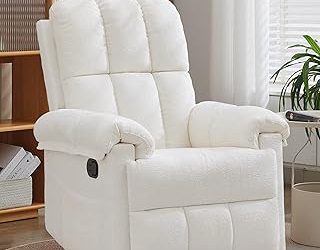
EONIX Zero Clearance Wall Hugger Power Recliner (Small, Cream White)
The strongest choice for genuinely tight spaces, with one-button synchronized backrest and footrest movement and a frame tested to 400 lb. The compact scale and soft cream upholstery make it disappear into light, minimal interiors instead of dominating them.
EONIX Dual Motor Zero Clearance Wall Hugger Recliner
Stepping up to dual motors means the power headrest and footrest adjust independently, so you can sit upright with neck support or drop into a near-flat lounge. Breathable upholstery plus USB and USB-C ports make this the most future-proofed pick for small rooms and RVs.
Watson & Whitely Genuine Leather Wall Hugger Power Recliner
Real leather at a wall hugger footprint is rare, and this cream version brings a more furnished, less recliner-shaped silhouette to the room. Power headrest and both USB and Type-C ports round out a chair that works as a proper living room seat rather than a utility lounger.
Massage Recliner Chair with Heat, Leather Wall Hugger (Grey)
At 39 inches wide, this is the plush, overstuffed option for people who want a chair to sink into, with heat and massage on a manual mechanism that keeps the price sensible. Best in rooms that can absorb the extra width.
Frequently Asked Questions
How much space does a wall hugger recliner actually need?
Zero-clearance models need roughly one to three inches, mainly to accommodate the power cord and any decorative trim. Standard wall huggers typically want four to six inches. Always trust the manufacturer’s stated figure over the category label.
Do wall hugger recliners recline as far as regular ones?
Most reach a comfortable TV-watching or napping position but stop short of fully flat. Dual motor designs get closest, since the backrest can drop independently of the footrest.
Are power recliners worth the extra cost?
If the chair will be used daily, or by anyone with shoulder, back, or grip limitations, yes. Power models stop anywhere in the range and need no physical effort. For occasional use, a manual mechanism is perfectly serviceable.
Can these be used in an RV or motorhome?
Yes, and several here are designed for it. Confirm your available wall length, check that the power model can run on your inverter or shore power, and prefer lighter frames for easier installation.
Final Thoughts
For most rooms, the EONIX Dual Motor Zero Clearance model is the pick that solves the most problems at once: minimal wall gap, independent headrest control, and modern charging. Choose the smaller single-motor EONIX if space is truly at a premium, or the Watson & Whitely genuine leather recliner if you want the chair to read as furniture first and recliner second.