Key takeaways
- Match capacity to the room, not the label: A 6L tank is the sweet spot for a bedroom or open living area, giving you roughly a full night plus a day between refills. If you are treating a whole floor or an open-plan 2,000-plus sq ft space, step up to something like the Yokekon 18L rather than running two small units.
- Warm-only or dual mode: True warm mist boils water and is the better choice for winter bedrooms and anyone sensitive to white dust. Dual-mode ultrasonic units give you cool output for shoulder seasons, which makes them the more flexible year-round buy.
- Refill and cleaning access: Top-fill designs let you pour from a pitcher without flipping a sloshing tank over the floor. Look for a wide opening you can reach into with a hand and a cloth, since anything narrower will get skipped.
- Sensors and sleep behavior: A built-in hygrometer with auto mode keeps the room at a target level instead of oversaturating windows. Check that indicator lights fully dim or shut off, and look for auto shut-off when the tank runs dry.
- Material and silhouette: Warm mist units live in plain sight, so finish matters. Stainless and matte white read as intentional next to linen and light oak, while glossy black plastic tends to look like an appliance parked in a bedroom.
What's inside
Dry indoor air rarely announces itself. It shows up sideways: a hairline check running along the edge of a walnut console, a fiddle-leaf fig dropping leaves in a room that gets perfect light, static crackling off a wool rug every time you cross it. Modern homes are sealed tighter than ever, and once forced-air heat kicks on in October, relative humidity can slide into the twenties and stay there until spring. Cool mist units help, but many of them leave a room feeling clammy at the ankles, which is the last thing you want in a bedroom in February.
Warm mist is the fix worth knowing about. By heating water before releasing it, these units add moisture that reads as comfortable rather than damp, and the boiling step cuts down on what gets aerosolized into the room. This guide covers what actually matters when you shop in 2026, from tank capacity and refill design to how a unit looks sitting on a nightstand at 11 p.m., plus honest notes on five models worth your attention.
As an Amazon Associate we earn from qualifying purchases.




How to Choose a Warm Air Room Humidifier (2026)
- Match capacity to the room, not the label: A 6L tank is the sweet spot for a bedroom or open living area, giving you roughly a full night plus a day between refills. If you are treating a whole floor or an open-plan 2,000-plus sq ft space, step up to something like the Yokekon 18L rather than running two small units.
- Warm-only or dual mode: True warm mist boils water and is the better choice for winter bedrooms and anyone sensitive to white dust. Dual-mode ultrasonic units give you cool output for shoulder seasons, which makes them the more flexible year-round buy.
- Refill and cleaning access: Top-fill designs let you pour from a pitcher without flipping a sloshing tank over the floor. Look for a wide opening you can reach into with a hand and a cloth, since anything narrower will get skipped.
- Sensors and sleep behavior: A built-in hygrometer with auto mode keeps the room at a target level instead of oversaturating windows. Check that indicator lights fully dim or shut off, and look for auto shut-off when the tank runs dry.
- Material and silhouette: Warm mist units live in plain sight, so finish matters. Stainless and matte white read as intentional next to linen and light oak, while glossy black plastic tends to look like an appliance parked in a bedroom.
The Best Warm Air Room Humidifiers (2026) Reviewed
Coolfiqu 6L Warm & Cool Mist Humidifier
The 360-degree nozzle is the standout here, letting you aim output away from a headboard or bookshelf instead of pointing mist straight up into the ceiling. Top-fill access, auto humidity control, and an oil diffuser tray make it a genuinely low-maintenance pick for a bedroom or a plant corner.
Dreo 6L Smart Humidifier
This is the one to buy if you want to stop thinking about humidity altogether. The smart sensor plus app and voice control means you can set a target and let it hold, and a 60-hour runtime at low output means most weeks need only a couple of refills. The silver finish is restrained enough to sit on an open shelf.
Vicks Warm Mist Humidifier
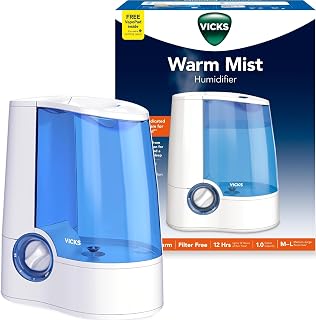
A deliberately simple, filter-free workhorse with a one-gallon tank, auto shut-off, and a soft night light. The VapoPad and VapoSteam compatibility makes it the obvious choice for cold season, and there is no app or sensor to troubleshoot at 2 a.m.
Levoit 6L Warm and Cool Mist Humidifier
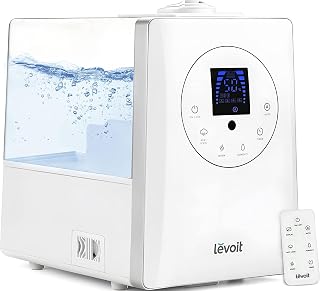
Levoit’s tuning is the quietest of this group, which is why it keeps showing up in nurseries and light-sleeper bedrooms. Auto mode, a built-in sensor, a timer, and dual warm-cool output make it the most complete all-rounder if you only want to own one unit.
Livatro 3L Stainless Steel Humidifier
A stainless interior means no plastic tank haze and a far easier wipe-down, which is the real reason warm mist units get abandoned. At 3L it is sized for a bedroom or study rather than a great room, and the sleep mode and auto shut-off cover the basics cleanly.
Frequently Asked Questions
Is warm mist actually better than cool mist?
For winter comfort, generally yes. Warm mist does not chill the room, disperses well in heated air, and avoids the white mineral dust that ultrasonic units can scatter onto dark furniture. Cool mist wins on energy use and is safer around curious toddlers.
How much humidity should I aim for?
Between 40 and 50 percent relative humidity keeps wood furniture stable and skin comfortable without condensation on window glass. If you see fogging on the panes, dial the target down.
Do these use a lot of electricity?
Warm mist models draw more than cool mist because they heat water, typically in the range of a small lamp to a low-wattage kettle running intermittently. Auto mode meaningfully reduces that by cycling off once your target is met.
Can I use tap water and essential oils?
Distilled water extends the life of the heating element and cuts scale buildup. Only add oils to a dedicated diffuser tray, never to the tank, since oils degrade plastic and void most warranties.
Final Thoughts
For most rooms, the Levoit 6L is the safest recommendation: quiet, sensor-driven, and equally at home in a nursery or a primary bedroom. Choose the Dreo 6L if you want app and voice control with a genuinely long runtime, or the Vicks warm mist unit if you would rather have a simple, filter-free tank that just works through cold season.