Key takeaways
- Clean on an overcast day. Direct sunlight dries the cleaner before it can work, leaving uneven patches that require a second round.
- Never use steel wool or abrasive pads on teak. The scratches compromise the grain and create entry points for moisture and mold.
- Test any product on the underside or a hidden edge first. Even teak-safe formulas can react differently on wood that’s been previously varnished or sealed.
- Rinse thoroughly between steps. Cleaner or brightener residue left behind will interfere with oil absorption and cause blotchy results.
What's inside
Teak has earned its reputation as the gold standard for outdoor furniture — it’s dense, naturally oil-rich, and built to shrug off rain, sun, and salt air for decades. But “low-maintenance” is not the same as “no maintenance.” Left untended, even premium teak turns an ashy silver-gray, collects grime in its grain, and eventually develops surface cracks that no amount of sanding can fully reverse. A deliberate cleaning and protection routine keeps that warm honey-brown tone alive and extends the life of your patio set by years.
This guide walks you through exactly how to clean teak patio furniture at home — what products to reach for, what order to work in, and which mistakes actually cause damage. Whether your pieces are brand-new or have weathered a few seasons without attention, you’ll find a clear, step-by-step path to restoring them without hiring a specialist.
As an Amazon Associate we earn from qualifying purchases.



Why Teak Looks Dull in the First Place
That silvery patina everyone associates with aged teak isn’t rot — it’s UV oxidation of the wood’s surface oils. Teak’s natural extractives (mainly tectoquinone) protect it structurally, but the outermost layer still dries out under prolonged sun exposure. Dirt, pollen, and mildew settle into the open grain during wet months, compounding the faded look. A proper cleaning cycle lifts that surface contamination and reopens the wood’s pores so a protective finish can actually bond.
Step 1: Dry Clean the Surface First
Before any liquid touches the wood, brush off loose debris with a soft-bristle brush or dry microfiber cloth. Pushing wet dirt around on damp wood embeds it deeper into the grain and leaves streaks. For furniture that hasn’t been touched in a while, a quick pass with a shop vacuum on a low setting works well for clearing out the gaps between slats.
Step 2: Apply a Dedicated Teak Cleaner
Generic deck cleaners are too harsh or too weak — teak-specific formulas are pH-balanced to dissolve grime without stripping the wood’s natural oils. Products like the Furniture Clinic Teak Cleaner (a 17oz concentrate that tackles dirt and old finishes) or STAR BRITE Premium Outdoor Teak Cleaner are formulated for this exact job. Apply the cleaner with a soft brush, working in the direction of the grain, and let it sit for two to three minutes. For neglected pieces, the Bayes High Performance Teak Cleaner & Restorer is worth considering — it combines cleaning and initial restorative action in a single step, which cuts down your labor on badly weathered sets.
Step 3: Brighten and Restore the Tone
After cleaning, a brightener lifts the remaining oxidation and brings back teak’s natural warmth. The Furniture Clinic Teak Care Kit bundles a cleaner, a brightener, and an oil in one package, which is a practical choice if you’re starting from scratch and want a matched system. Follow the brightener with a rinse using a garden hose — avoid pressure washers, which tear at the wood fibers and leave a fuzzy texture that’s difficult to sand smooth. For teak pieces that double as shower benches or wet-area furniture, the EcoDecors Teak Cleaner & Teak Sealer Kit is specifically built for high-moisture environments.
Step 4: Seal or Oil the Wood
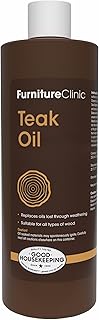
Cleaning without follow-up protection means you’ll be doing it all over again in a few months. Teak oil replenishes surface moisture and slows UV graying, while sealers create a more durable barrier. Furniture Clinic Teak Oil dries to a natural matte finish that doesn’t peel or flake — it simply absorbs and fades gradually, making touch-ups painless. Apply a thin coat with a lint-free cloth, let it penetrate for fifteen minutes, then wipe off any excess. Two coats are usually enough for a season; three if the furniture sits in full sun year-round.
Tips
- Clean on an overcast day. Direct sunlight dries the cleaner before it can work, leaving uneven patches that require a second round.
- Never use steel wool or abrasive pads on teak. The scratches compromise the grain and create entry points for moisture and mold.
- Test any product on the underside or a hidden edge first. Even teak-safe formulas can react differently on wood that’s been previously varnished or sealed.
- Rinse thoroughly between steps. Cleaner or brightener residue left behind will interfere with oil absorption and cause blotchy results.
Frequently Asked Questions
How often should I clean teak patio furniture?
Once a year is the sweet spot for most climates. If your furniture sits under trees, near a pool, or in a humid coastal area, bump it to twice a year — spring and early fall — to stay ahead of mildew and pollen buildup.
Can I use a pressure washer on teak?
A pressure washer on the lowest setting held at least twelve inches away is technically safe, but it’s risky. Too close or too powerful, and you’ll raise the wood grain, leave visible marks, and strip away more oil than intended. A garden hose and a brush will get you ninety percent of the results with none of the risk.
Will teak oil prevent the wood from turning gray permanently?
No finish stops UV graying entirely — it only slows it significantly. Expect a warm, golden tone to hold for most of a season with oil applied correctly. Sealers last longer between applications than oil, but they can develop a subtle film that some owners find less attractive on natural teak. Choose based on whether you prefer ease of maintenance or that raw-wood look.
Is teak cleaner safe for other hardwoods?
Most teak-specific cleaners work on ipe, mahogany, and eucalyptus as well, though you should always test on a hidden area first. Avoid using them on softwoods like pine or cedar — the chemistry is too aggressive for those species.
Conclusion
Keeping teak looking its best is less about elbow grease and more about choosing the right products and applying them in the right sequence: clean, brighten, then protect. A few hours of attention once a year preserves the investment you’ve made in furniture that was designed to outlast everything else on your patio — and the result is a space that genuinely feels curated rather than neglected.