Key takeaways
- Bulk meat, garden harvests, Costco runs: chest. The Frigidaire EFRF7003 (7 cu ft) for families, TABU 5.0 for couples.
- Small apartment or kitchen overflow: upright. The Igloo 3.5 cu ft is the pick.
- Deep-cold storage for fish or long-term meat: DEMULLER 4.0 chest, rated down to -12°F.
- Flexible fridge-or-freezer use: Midea 3.5 cu ft convertible chest.
- Tightest budget, small household: Kismile 3.2 or the smaller DEMULLER chest.
- Drinks and a few frozen items in a bedroom or office: a mini fridge with freezer section, like the Frostorm 3.2 cu ft, rather than a true freezer.
Pick a chest freezer if you want the most frozen storage for the least money, store food for months at a time, and have floor space for a wide, low cabinet; pick an upright freezer if you want shelves, easy access to everything without digging, and a smaller footprint. Chest freezers generally use less energy per cubic foot and keep food cold longer when the power goes out. Uprights are easier to organize and fit better in kitchens, apartments and narrow utility rooms.
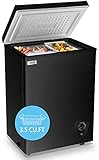
For small households, the Kismile 3.2 cu ft chest, DEMULLER 4.0 cu ft chest, Midea 3.5 cu ft convertible chest and TABU 5.0 cu ft chest cover the chest side at roughly $170–$230, while the Frigidaire EFRF7003 at 7 cu ft is the step up for bulk buyers. On the upright side, the Igloo 3.5 cu ft upright is the straightforward choice. The Frostorm 3.2 cu ft is a mini fridge with a freezer section rather than a dedicated freezer, so it suits drinks-and-snacks use more than long-term storage.
Our top picks


As an Amazon Associate we earn from qualifying purchases at no extra cost to you. Ratings are shown as listed on Amazon.
Chest vs Upright: Head-to-Head
| Factor | Chest freezer | Upright freezer |
|---|---|---|
| Usable space per cu ft | Higher; no shelves or door bins eating space | Lower; shelves and door take room |
| Energy use | Usually lower; cold air stays in when lid opens | Usually higher; cold air spills out the door |
| Power outage holding time | Longer | Shorter |
| Organization | Baskets; items at bottom are hard to reach | Shelves and door bins; eye-level access |
| Footprint | Wide and low | Narrow and tall |
| Defrosting | Mostly manual defrost | Manual or frost-free, depending on model |
| Price per cu ft | Lower | Higher |
The Models Compared
| Model | Style | Capacity | Notable feature | Typical price |
|---|---|---|---|---|
| Kismile Chest Freezer | Chest | 3.2 cu ft | Small black cabinet | $190–$230 |
| Midea Chest Freezer | Chest (convertible) | 3.5 cu ft | Fridge/freezer convertible, LED light | $200–$240 |
| DEMULLER Small Chest | Chest | Small | Digital control accurate to 1°F, 2 baskets | $160–$190 |
| DEMULLER 4.0 Chest | Chest | 4.0 cu ft | Down to -12°F, 2 baskets | $170–$200 |
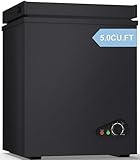
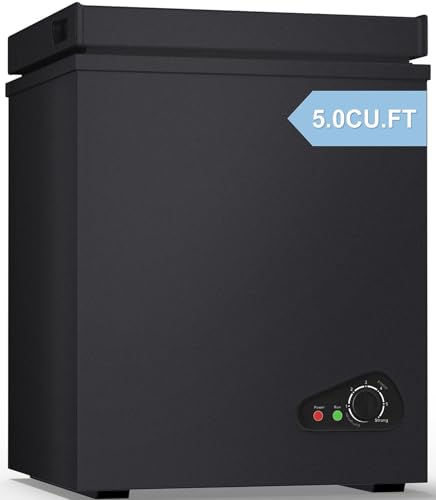
| TABU Chest Freezer | Chest | 5.0 cu ft | Compact deep freezer | $180–$220 |
| Frigidaire EFRF7003 | Chest | 7 cu ft | Adjustable thermostat, defrost drain | $370–$420 |
| Igloo Upright Deep Freezer | Upright | 3.5 cu ft | Quick freezing, LED light, removable basket | $180–$220 |
| Frostorm Mini Fridge with Freezer | Upright fridge/freezer | 3.2 cu ft | Single door with freezer section | $130–$150 |
Decision Factor 1: How Much Space You Really Get
A chest freezer is essentially an open box. Every cubic foot can hold food, and you can stack items tightly. An upright of the same rated capacity loses space to shelves, door bins and the gap between items and the shelf above. In practice, a 5 cu ft chest like the TABU often holds noticeably more than a 5 cu ft upright.
A rough rule: plan on about 1.5 cu ft of freezer space per person if you buy in bulk, and less if you just want overflow storage. A couple stocking up on meat would be well served by the DEMULLER 4.0 or TABU 5.0. A family of four or five who buys half a cow or freezes garden produce should look at the 7 cu ft Frigidaire EFRF7003 or larger.
Decision Factor 2: Energy and Outage Protection
Cold air sinks. When you open a chest freezer lid, most of the cold air stays put. When you open an upright door, it spills out at your feet and the compressor works to replace it. That is the main reason chest freezers tend to use less electricity per cubic foot.
The same physics helps during power outages. A full freezer generally keeps food frozen for about 48 hours if you keep it closed, and about 24 hours if half full, according to USDA guidance. Chest models, with their thick walls and top-opening lid, tend to sit at the better end of that range.
Decision Factor 3: Access and Organization
This is where uprights win. With shelves at eye level you can see what you have, which reduces forgotten food and freezer burn. In a chest freezer, the item you need is often at the bottom. Removable baskets help: the DEMULLER models include two, and the Frigidaire EFRF7003 includes a removable vinyl-coated wire basket. Even so, a deep chest takes some bending and rearranging.
If you have back or mobility problems, an upright like the Igloo 3.5 cu ft is the more comfortable daily option.
Decision Factor 4: Footprint and Placement
A compact chest freezer of 3–5 cu ft typically needs around 2 to 3 feet of width and about 2 feet of depth, plus clearance to lift the lid. An upright of similar capacity takes less floor area but more height. Uprights fit better in kitchens and closets; chests fit well in basements, garages and under a counter-height workbench.
If you plan to use either in a garage, confirm the operating temperature range in the manual. Many compact freezers are rated only for spaces that stay within normal indoor temperatures.
Decision Factor 5: Temperature Control and Flexibility
Precise control matters if you store meat long term. The DEMULLER small chest lists a digital control panel accurate to 1°F, and the DEMULLER 4.0 can go down to -12°F, colder than the standard 0°F target. The Midea 3.5 cu ft is convertible between fridge and freezer, which is useful if you want a beverage fridge in summer and a freezer for holiday stock-ups. The Igloo upright offers a quick-freeze function for bringing fresh food down to temperature faster.
Decision Factor 6: Defrosting
Most chest freezers, including all the compact models here, are manual defrost. Expect to defrost once or twice a year, or when frost reaches about a quarter inch. A defrost drain, like the one on the Frigidaire EFRF7003, makes that job much easier. Some full-size uprights are frost-free, which saves work but slightly increases freezer burn risk and energy use; compact uprights are usually manual defrost too.
Final Recommendation by Use Case
- Bulk meat, garden harvests, Costco runs: chest. The Frigidaire EFRF7003 (7 cu ft) for families, TABU 5.0 for couples.
- Small apartment or kitchen overflow: upright. The Igloo 3.5 cu ft is the pick.
- Deep-cold storage for fish or long-term meat: DEMULLER 4.0 chest, rated down to -12°F.
- Flexible fridge-or-freezer use: Midea 3.5 cu ft convertible chest.
- Tightest budget, small household: Kismile 3.2 or the smaller DEMULLER chest.
- Drinks and a few frozen items in a bedroom or office: a mini fridge with freezer section, like the Frostorm 3.2 cu ft, rather than a true freezer.
FAQ
Which lasts longer, chest or upright?
Both have similar compressor technology, and lifespan depends more on build quality and placement than style. Good airflow around the cabinet and regular defrosting help any freezer last longer.
Can I keep a chest freezer in the garage?
Often yes, but only within the manufacturer’s rated temperature range. Very cold garages can stop the compressor from running enough.