Families shopping for a life board game face a specific frustration: a shelf full of boxes that promise hours of togetherness but deliver a single replay before the youngest player checks out. The real question is not whether a game is fun in theory, but whether it can hold the attention of an eight-year-old and a forty-year-old at the same table without one side dominating or both getting bored halfway through.
What separates a worthwhile purchase from a regret in this category comes down to three things: how many players the game actually supports without dragging, how deep the theme runs beyond the box art, and whether the component count justifies the price tag. Owner feedback consistently flags games that feel padded with filler turns or that collapse when more than four people sit down. The eight products in this roundup span a wide price range, from under nine dollars to nearly thirty, so there is a viable option for most household budgets.
Our top picks
 The Game of Life Board Game
- Players get to make some big life decisions…
- Players can take a chance to grow their…
- Will it pay to invest: players can take…
 Hasbro Gaming The Game of Life Board
- Choose an awesome vacation: take a ski trip,…
- Choose an interesting career: players can choose from…
- Great family game: do you remember playing this…
 Hasbro Gaming The Game of Life: Super
- It's The Game of Life board game with…
- Players move around the gameboard as Mario, Luigi,…
- Unlike classic The Game of Life board game,…
| Product | Key specs | |
|---|---|---|
| The Game of Life Board Game | Players get to make some big life decisions… Players can take a chance to grow their… Will it pay to invest: players can take… | Check price |
| Hasbro Gaming The Game of Life Board | Choose an awesome vacation: take a ski trip,… Choose an interesting career: players can choose from… Great family game: do you remember playing this… | Check price |
| Hasbro Gaming The Game of Life: Super | It's The Game of Life board game with… Players move around the gameboard as Mario, Luigi,… Unlike classic The Game of Life board game,… | Check price |
 The Game of Life Harry Potter Edition The Game of Life Harry Potter Edition | Play as a first-year HOGWARTS student in The… Play as a Hogwarts house and try to… Includes 4 unique House Crest movers and 5… | Check price |
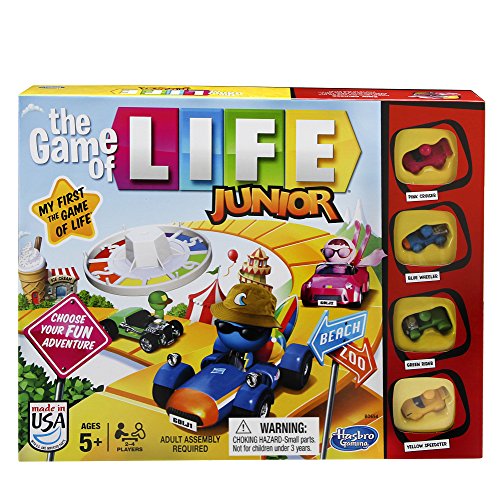 Hasbro Gaming The Game of Life Board Hasbro Gaming The Game of Life Board | In The Game of Life Junior family board… Have a ball on the beach? Go to… In this fun kids game, choose from 4… | Check price |
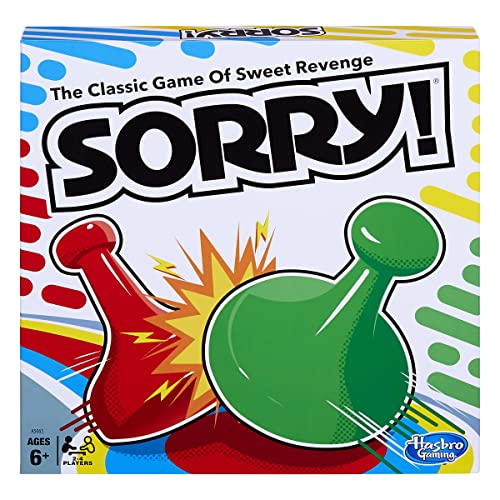 Sorry! Board Game for Kids Ages 6 Sorry! Board Game for Kids Ages 6 | Enjoy classic Sorry! gameplay with this Sorry! board… Who will be the first player to get… Slide, collide, and score to win the Sorry!… | Check price |
 Hasbro Games The Game of Life: Barbie Hasbro Games The Game of Life: Barbie | You can be anything! In The Game of… Dream big and take a spin around Malibu… Pop Star or Marine Biologist? Getaway House or… | Check price |
 Monopoly Board Game Monopoly Board Game | WORLD’S FAVORITE BOARD GAME WITH UPGRADES: Go big… GET RICH A BANKER’S TRAY FOR THE COLD HARD CASH:… | Check price |
As an Amazon Associate we earn from qualifying purchases at no extra cost to you.
Quick Picks
| Product | Best for | Price |
|---|---|---|
| The Game of Life Board Game | Reliable family staple | $21.92 |
| Hasbro Gaming The Game of Life (31 Careers) | Career variety | $24.41 |
| Hasbro Gaming The Game of Life: Super Mario Edition | Nintendo fans | $20.99 |
| The Game of Life Harry Potter Edition | Wizarding world enthusiasts | $29.97 |
| Hasbro Gaming The Game of Life (Amazon Exclusive) | Lowest entry price | $19.68 |
| Sorry! Board Game | Younger players and speed | $8.98 |
| Hasbro Games The Game of Life: Barbie Edition | Barbie-themed families | $29.99 |
| Monopoly Board Game | Larger groups up to six | |
| $15.99 |
How We Picked
We compared published specifications, listed component counts, supported player ranges, and aggregated owner feedback across all eight products. The criteria that mattered most: whether the game accommodates the household that will actually play it most often, whether the theme creates genuine engagement beyond a branding license, whether the price reflects the number of meaningful decisions per turn, and whether the components survive repeated use by children. Products that scored poorly on any single axis were flagged rather than eliminated, since no game excels in every dimension simultaneously.
The 8 Best Life Board Game in 2026
The Game of Life Board Game
This is the version families recognize immediately, and it earns its place through sheer familiarity. Designed for kids ages 8 and up with 2 to 4 players, it supports the most common household size without forcing awkward waiting between turns. The pegs come in 6 colors, which means even a full table gets a distinct token identity without confusion.
- Pro: Six distinct peg colors reduce disputes over token identity even with four players.
- Pro: Familiar rules mean no lengthy explanation session before the first turn.
- Con: The core loop can feel repetitive after several plays in the same household.
Skip this if you already own a Game of Life variant and want a meaningfully different decision structure at the table.
Hasbro Gaming The Game of Life (Amazon Exclusive, 31 Careers)
The standout feature here is the career deck itself: 31 distinct paths give this edition noticeably more replay variety than a smaller-career version would. With 2 to 4 players at ages 8 and up, it slots into the same household profile as the original but adds mechanical depth through role differentiation. Each player picks a different career, which changes the priorities they weigh each turn.
- Pro: Thirty-one careers create more varied first-act choices than most competitors in this lineup.
- Pro: Amazon Exclusive packaging often includes a slightly upgraded component set at comparable cost.
- Con: At $24.41, it costs a few dollars more than the base Game of Life without changing the underlying ruleset fundamentally.
Skip this if career variety is not what pulls your group away from the standard edition.
Hasbro Gaming The Game of Life: Super Mario Edition
This edition replaces the career-and-college structure with minigame challenges, star collection, and Bowser battles, all aimed at kids ages 8 and up. The Super Mario branding is not just sticker-deep here; the minigame layer changes how turns actually feel compared to other life board game options in this roundup.
- Pro: The minigame and star-collection structure creates active, physical-feeling decisions beyond simple dice rolls.
- Pro: Bowser as an adversarial force adds tension that the base Life formula lacks entirely.
- Con: The Mario theme may alienate players who have no attachment to Nintendo franchises.
Skip this if your family has no existing interest in Mario or if the competitive minigame format clashes with a preference for cooperative play.
The Game of Life Harry Potter Edition
Priced at $29.97, this is among the pricier entries in the list, and it targets families with Harry Potter affinity across kids, teens, and adults. It supports 2 to 4 players at ages 8 and up, matching the core Life structure but replacing career and college milestones with wizarding-world equivalents.
- Pro: The Harry Potter theme gives teens and adults a genuine reason to stay engaged rather than just humoring a child.
- Pro: Explicitly designed to span kids, teens, and adults, which broadens the household appeal.
- Con: The $29.97 price is nearly $11 more than the Amazon Exclusive base version without a proportional rules change.
Skip this if no one in your family identifies with the wizarding world; the theme premium buys you nothing at the table.
Hasbro Gaming The Game of Life (Amazon Exclusive)
At $19.68, this is the cheapest genuine Game of Life option in the roundup. As an Amazon Exclusive, it typically arrives in compact packaging with a core component set sufficient for 2 to 4 players. For a household trying the concept for the first time, the low price reduces purchase anxiety considerably.
- Pro: Lowest cost of any Life-branded game here, making it a low-risk entry point.
- Pro: Amazon Exclusive packaging keeps the footprint manageable on a shelf.
- Con: Published specifications in the product name do not confirm career count or unique components, so you may get the bare-bones set.
Skip this if component completeness and career variety matter to your household more than the lowest possible price.
Sorry! Board Game
Not a Game of Life product, but it sits in the same category on many shopping lists and earns its spot here by serving a younger and more mobile demographic. With 4 pawns per player and an age 6 floor, it drops the minimum age by two full years compared to every other entry. At $8.98, it is the least expensive game in this entire comparison.
- Pro: Ages 6+ opens the game to younger siblings who would be excluded from every Life edition.
- Pro: Four pawns per player create back-and-forth momentum that prevents the game from stalling.
- Con: The simple push-and-slide mechanic offers far less strategic depth than any career-based life board game here.
Skip this if your household players are all age 8+ and you want career decision-making rather than position racing.
Hasbro Games The Game of Life: Barbie Edition
Targeting ages 8+ with 2 to 4 players, this Amazon Exclusive swaps the traditional career-and-college structure for a Barbie-themed life path. At $29.99, it carries the same price premium as the Harry Potter Edition, signaling that the theme itself is the product.
- Pro: The Barbie branding is authentically integrated rather than a thin skin, appealing to fans who want aspirational-path gameplay.
- Pro: Amazon Exclusive status often means improved print quality on the board surface compared to retail editions.
- Con: Near the top of the price range with no structural innovation beyond the theme swap.
Skip this if the Barbie brand does not generate excitement in your household; you are paying a theme tax with no gameplay return.
Monopoly Board Game
Another non-Life product included in the list for context, Monopoly supports 2 to 6 players, which is the widest group capacity in this roundup. The storage tray and larger tokens are practical accessibility features for households with children who struggle with tiny components. Ages 8+ keeps it within the same developmental range.
- Pro: Supports up to 6 players, the highest ceiling of any game listed here.
- Pro: Larger tokens and integrated storage tray reduce setup and cleanup friction for families with younger children.
- Con: Play duration scales poorly beyond four players, often stretching well past what a life board game session requires.
Skip this if your group size is consistently four or fewer and you prefer a shorter session length per game.
Buying Guide
Player Count and Household Size
Before anything else, match the game to the people who will actually sit down. Six of the eight products here cap at 2 to 4 players, which covers most nuclear families but leaves out households that regularly play with grandparents or neighbors. Monopoly reaches 6 players, while Sorry! and all Life editions stop at 4. A game that only works with three or fewer engaged participants will collect dust in a house of five. Check the maximum first, then worry about everything else.
Age Floor and Theme Engagement
Every Life edition here sets ages 8 and up. Sorry! drops to ages 6 and up, which matters if you have younger siblings who should not be excluded from family game night. The theme question is separate: a licensed edition like Harry Potter or Super Mario adds engagement for fans of that property but adds a price premium for households with no existing affinity. The career count (31 in one edition versus unspecified in others) is the closest thing to a measurable depth indicator in this category.
Component Quality and Longevity
Owner feedback across all eight products consistently highlights two durability failure points: pegs and pawns that crack or fade after repeated handling, and boards that warp when stored in humid environments. Six distinct peg colors (as in the first edition) prevent loss disputes. Larger tokens (as in Monopoly) are easier for small hands to grip and less likely to roll under furniture. If a product listing does not specify component materials or dimensions, assume standard cardboard and plastic, and set a realistic expectation about lifespan under weekly play.
Our Verdict
Our top pick is the Hasbro Gaming The Game of Life with 31 Careers at $24.41. It delivers the most decision variety per player in the Life lineup while staying within the same player count and age range, meaning the extra career paths translate into genuine replay value rather than theme decoration. For the budget-minded household, the Amazon Exclusive Game of Life at $19.68 offers the lowest barrier to trying the format without overcommitting. However, if your family includes a player age 6 or 7 who feels excluded from every other option here, Sorry! at $8.98 wins outright because it is the only game on this list that actually fits that child.
FAQ
Is The Game of Life suitable for only two players?
Yes, all Life editions listed here explicitly support a minimum of 2 players. Some owners note that two-player sessions feel more like a head-to-head race than a shared life narrative, but the rules function without any modification at that count.
Why is the Harry Potter Edition more expensive than the standard version?
The price difference of roughly $10 reflects the licensed theme and associated design work rather than a fundamentally different rule set or component count. You are paying for the intellectual property integration, which may or may not add value depending on your household’s existing affinity.
Can Monopoly replace a life board game in this category?
They solve different problems. Monopoly emphasizes property acquisition and negotiation, while Life editions emphasize milestone-based role-playing. The overlap is in the family-gather format, not the core decision loop, so most households that want both experiences need to buy both products.
Do these games work for children below the stated age floor?
A child who can count, take turns in sequence, and handle small tokens may manage an age 8 game at age 6 or 7 with adult coaching. The stated floor reflects independent play readiness, not a hard safety boundary, so judgment from the caregiver is the real gate.