Key takeaways
- Material safety: Glass is inert and does not leach chemicals, even when reheating; if health is your top concern, choose glass sets like the Rubbermaid Brilliance Glass or Snuvid containers. Quality plastics should be BPA-free at minimum.
- Lid design: Airtight, leak-proof lids keep food fresh and prevent spills in a bag. Vented lids (Vtopmart, 9.5-cup air-vent set) let you microwave without popping the lid off entirely.
- Oven and microwave safety: Borosilicate and tempered glass containers can go from freezer to oven; plastic cannot. If you meal-prep and reheat, glass’s temperature range is a major advantage.
- Weight and durability: Plastic is lighter and won’t shatter if dropped, better for kids’ lunches and travel. Glass is heavier but resists staining, odor, and scratches that harbor bacteria over time.
- Set size and stackability: Match the piece count to your needs and check that containers nest to save space. Sets like the Rubbermaid 9-piece and HKHD 5-pack offer a range of sizes for different foods.
Open almost any kitchen cabinet and you will find the same quiet chaos: a jumble of food storage containers, some glass, some plastic, lids that never match. But beyond the organizational headache lies a real question that more households are asking in 2026: which material is actually healthier for storing food? Concerns about chemicals leaching from plastic, especially when reheating, have pushed many cooks toward glass, while plastic’s light weight and low cost keep it popular. The truth is nuanced, and the right choice depends on how you use your containers.
This comparison weighs glass against plastic on health, durability, and everyday practicality, then rounds up the best glass food storage sets for those making the switch. If you have wondered whether it is worth replacing your plastic tubs, or which glass set to buy, read on for a clear-eyed breakdown and our top container picks.
Our top picks


As an Amazon Associate we earn from qualifying purchases at no extra cost to you. Ratings are shown as listed on Amazon.
⚡ Save on Your Next PC — Amazon Prime
Prime members get fast free shipping on the systems above, plus early access to Prime Day & Black Friday PC deals. New members get a 30-day free trial.
Watch: Comparison: Glass vs. Plastic Food Storage Containers – Which is Healthier? — Video Review
How to Choose
- Material safety: Glass is inert and does not leach chemicals, even when reheating; if health is your top concern, choose glass sets like the Rubbermaid Brilliance Glass or Snuvid containers. Quality plastics should be BPA-free at minimum.
- Lid design: Airtight, leak-proof lids keep food fresh and prevent spills in a bag. Vented lids (Vtopmart, 9.5-cup air-vent set) let you microwave without popping the lid off entirely.
- Oven and microwave safety: Borosilicate and tempered glass containers can go from freezer to oven; plastic cannot. If you meal-prep and reheat, glass’s temperature range is a major advantage.
- Weight and durability: Plastic is lighter and won’t shatter if dropped, better for kids’ lunches and travel. Glass is heavier but resists staining, odor, and scratches that harbor bacteria over time.
- Set size and stackability: Match the piece count to your needs and check that containers nest to save space. Sets like the Rubbermaid 9-piece and HKHD 5-pack offer a range of sizes for different foods.
The Best Picks Reviewed
Rubbermaid Brilliance Glass Food Storage Containers, Set of 9
At $65.99, the Rubbermaid Brilliance is the premium all-rounder. The BPA-free set of nine spans multiple sizes with genuinely leak-proof, airtight latching lids, and the glass is oven, microwave, freezer, and dishwasher safe. It is the pick for someone ready to replace their entire plastic collection with a coordinated, do-everything glass system.
Snuvid 4 Pack 63oz Large Glass Storage Containers with Lids
The Snuvid set ($29.98) focuses on large 8-cup capacity, ideal for meal prep, batch cooking, and storing leftovers of soup or casserole. The generous size means fewer containers for big-batch cooks, and the glass handles reheating without worry. A strong value for anyone who cooks in volume.
Vtopmart 5 Pack Glass Food Storage Containers with Air Vent Lids
The Vtopmart 5-pack ($35.99) solves the microwave problem with clever air-vent lids: flip the vent open to reheat without removing the lid, then seal it airtight for storage. The glass bodies resist stains and odors, and the set stacks neatly. A smart choice for cooks who reheat leftovers daily.
HKHD 5-Pack 36oz Glass Food Storage Containers
At $23.99, the HKHD 5-pack is the budget entry into glass storage. The 36-ounce containers are a versatile everyday size for single meals and leftovers, and the grey lids give the set a tidy, uniform look. For someone dipping a toe into glass without a big outlay, this is the practical starting point.
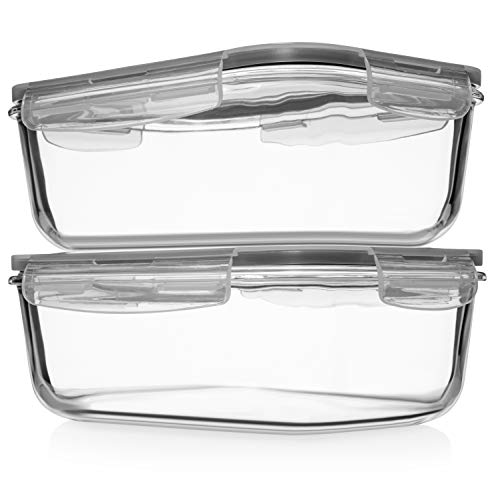
Razab 2 Pcs 63 Oz Large Glass Food Storage Containers
The Razab pair ($19.99) offers two extra-large 63-ounce glass containers, perfect for storing a whole batch of pasta, salad, or marinating meat. The oversized capacity fills a gap that most sets miss, and the clear glass makes it easy to see what is inside. A useful add-on to any storage collection.
Frequently Asked Questions
Is glass really healthier than plastic for food storage?
Glass is inert, meaning it does not leach chemicals into food even when heated, which is its main health advantage over plastic. Quality BPA-free plastics are considered safe for cold storage, but many people prefer glass for reheating and for acidic or hot foods, where any leaching risk is highest.
Can I put glass containers straight from the freezer into the oven?
Tempered and borosilicate glass containers tolerate temperature changes well, but you should still avoid extreme, sudden shifts to prevent thermal shock. Let a frozen container sit briefly before placing it in a preheating oven, and check the manufacturer’s guidance, most quality glass sets are freezer-to-oven rated.
Does plastic still have advantages?
Yes. Plastic is lighter, cheaper, and won’t shatter if dropped, making it practical for children’s lunches, picnics, and travel. Its main drawbacks are staining, odor retention, and the inability to go in the oven. Many households keep both, glass for reheating and long storage, plastic for on-the-go.
Do glass containers stain or hold odors like plastic?
No, and that is a key benefit. Glass is non-porous, so it resists the tomato-sauce stains and lingering garlic or curry smells that plague plastic containers over time. It also does not develop the tiny scratches where bacteria can accumulate, keeping it more hygienic across years of use.
Final Thoughts
For pure health and longevity, glass wins: it is inert, stain-resistant, and safe from freezer to oven. Plastic still earns a place for its light weight and shatter resistance in lunches and travel. If you are making the switch, the Rubbermaid Brilliance set is the complete solution, the Snuvid and Razab options cover big-batch storage, and the HKHD 5-pack is an easy budget start. Match the material to the task, and your leftovers, and your peace of mind, will be better for it.