Key takeaways
- Slice evenly: Uniform 1/4-inch slices dry at the same rate; uneven pieces leave some snacks leathery and others still moist.
- Rotate stackable trays: Swap top and bottom trays halfway through to counter the uneven airflow of nesting designs.
- Pre-treat fruit: A quick dip in lemon water keeps apples and bananas from browning during the long dry.
- Cool before storing: Let dried snacks reach room temperature, then store in airtight jars to prevent condensation and mold.
Store-bought dried fruit and jerky are convenient, but they often arrive loaded with added sugar, oil, and preservatives you never asked for. A home food dehydrator flips that equation, letting you turn fresh apples, mangoes, herbs, and lean beef into snacks with a single ingredient list you control. The technology is simple, low, steady heat plus airflow removes moisture over several hours, but choosing the right unit means understanding trays, temperature control, and how much you actually plan to make.
This guide walks through the decisions that matter, from stackable versus shelf designs to wattage and material, so you buy a dehydrator you will still use in a year. We reference models spanning about $36 for a compact starter to $144 for a stainless six-tray unit, so you can find the right fit for your kitchen and budget.
Our top picks




As an Amazon Associate we earn from qualifying purchases at no extra cost to you. Ratings are shown as listed on Amazon.
⚡ Save on Your Next PC — Amazon Prime
Prime members get fast free shipping on the systems above, plus early access to Prime Day & Black Friday PC deals. New members get a 30-day free trial.
Watch: How to Choose a Food Dehydrator for Healthy Snacks — Video Review
Stackable Trays vs Shelf Designs
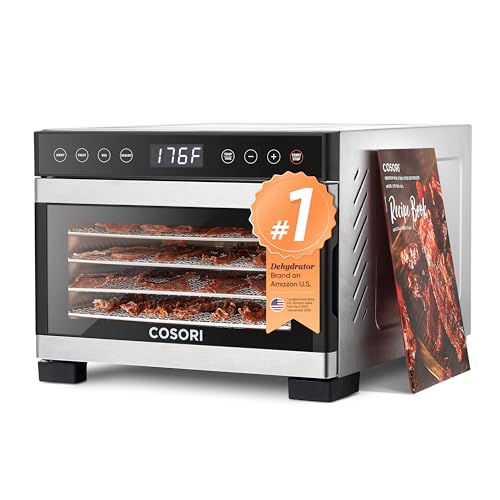
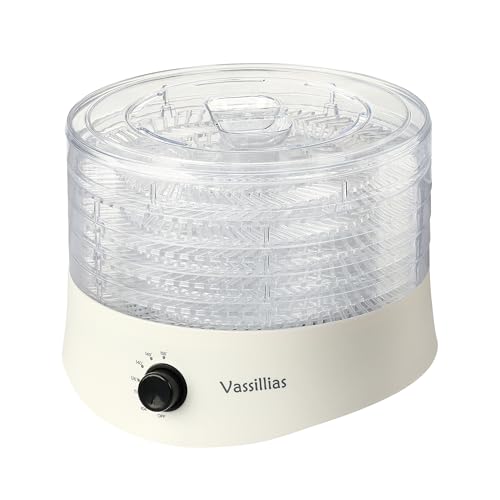
Dehydrators come in two layouts. Stackable models like the FOHERE 5-tray use round, nesting trays with the fan at the base or top, and they are affordable and compact but can dry unevenly, requiring you to rotate trays. Shelf-style units such as the NESCO Snackmaster Pro or the Cosori stainless models slide trays in horizontally like a small oven, delivering more even airflow and easier loading. If you dehydrate frequently, a shelf design usually justifies its higher price.
Why Temperature Control Matters
Different foods need different heat. Herbs dry best around 95°F to preserve their oils, fruit leathers want roughly 135°F, and jerky must reach 160°F to be food-safe. A dehydrator with an adjustable thermostat, like the OSTBA 5-tray with its 160°F control or the Cosori 165°F models, lets you match the temperature to the food. Cheap single-temperature units force a compromise that can scorch herbs or under-dry jerky.
Capacity and Tray Count
Tray count determines how much you can process in one run. A 5-tray unit like the FOHERE or OSTBA handles a couple of trays of apple slices plus some herbs comfortably for a family. If you batch-make jerky or preserve a garden harvest, step up to the six-tray Cosori with 6.5 square feet of drying space. Remember that stackable designs let you add trays, while shelf units are fixed.
Materials and Cleaning
BPA-free plastic trays keep the price down and are fine for most snacking, while stainless-steel trays, as on the pricier Cosori models, resist staining and odors and feel more durable over years of use. Whatever you choose, confirm the trays are dishwasher safe or easy to hand wash, because sticky fruit leather and jerky marinade are the main cleanup challenge.
Tips
- Slice evenly: Uniform 1/4-inch slices dry at the same rate; uneven pieces leave some snacks leathery and others still moist.
- Rotate stackable trays: Swap top and bottom trays halfway through to counter the uneven airflow of nesting designs.
- Pre-treat fruit: A quick dip in lemon water keeps apples and bananas from browning during the long dry.
- Cool before storing: Let dried snacks reach room temperature, then store in airtight jars to prevent condensation and mold.
Frequently Asked Questions
How long does it take to dehydrate food?
It depends on the food and thickness. Herbs may finish in 2 to 4 hours, fruit slices take 6 to 12 hours, and jerky typically runs 4 to 8 hours at 160°F. Higher-wattage units with even airflow finish faster.
Is a dehydrator better than an oven?
Yes for most snacks. A dedicated dehydrator holds low temperatures an oven cannot, uses far less energy over long runs, and circulates air evenly, producing more consistent results without tying up your oven for half a day.
What wattage do I need?
For occasional snacking, 350W to 400W as on the OSTBA and Cosori 5-tray is plenty. Frequent, large batches benefit from higher wattage and better fans, which dry more trays evenly at once.
Can I make jerky safely at home?
Yes, as long as the dehydrator reaches at least 160°F to kill bacteria. Use lean cuts, marinate in the fridge, and confirm the meat is fully dry and leathery before storing.
Conclusion
The right dehydrator comes down to how often and how much you will make. For occasional healthy snacks, an affordable 5-tray unit with adjustable temperature around $40 to $50 is all most people need. Serious preservers and jerky makers should invest in a stainless six-tray shelf model for even drying and long-term durability. Whichever you choose, temperature control is the feature worth paying for.