Key takeaways
- Measure the recline arc, not the chair: A recliner’s listed dimensions describe it closed. Check the required wall distance and the fully extended depth before you commit, and add four inches of breathing room so the footrest isn’t grazing a coffee table.
- Power for daily use, manual for occasional: Motorized mechanisms give you infinite stopping points and no pull-handle torque, which matters for anyone with limited mobility or a shoulder that complains. Manual three-position chairs are lighter, cheaper, and never need an outlet nearby.
- Match upholstery to household traffic: Chenille reads warm and soft in a bedroom or study but holds pet hair. Faux leather wipes clean in seconds, making it the pragmatic pick for family rooms. Faux fur is a texture statement, best in low-traffic corners.
- Take weight capacity and seat width seriously: A 26-inch seat feels generous; anything under 20 inches will feel like a car seat after an hour. Confirm the rated load, especially on folding frames, and treat 400 to 500 pounds as the benchmark for heavy-duty use.
- Decide which extras you’ll actually use: USB ports, cup holders, vibration massage, and swivel bases are genuinely useful when they align with how you sit. Paying for a feature set you’ll never touch is the most common recliner regret.
What's inside
Recliners have spent decades apologizing for themselves. The category built its reputation on bulk: overstuffed arms, a mechanism that demanded a foot of wall clearance, and upholstery that read more sports bar than living room. Meanwhile the actual buying decision has gotten harder, not easier. Power or manual. Zero gravity or three-position. Chenille, faux fur, faux leather, mesh. Seat widths that swing from apartment-scale to 33 inches. Most shoppers end up choosing on photos alone, then discover the chair either swallows the room or can’t fully open once it’s in place.
This guide approaches recliners the way a designer would: as a piece of furniture with a footprint, a material story, and a job to do. Below are six chairs that earn their space, spanning compact swivel seating for RVs and bedrooms, wall-hugging rockers built for tight living rooms, oversized power seating with real capacity, and folding zero-gravity loungers for the porch. For each one, what matters is the geometry, the fabric, and who it’s genuinely right for.
As an Amazon Associate we earn from qualifying purchases.




How to Choose a Consumer Reports Best Recliner Chair (2026)
- Measure the recline arc, not the chair: A recliner’s listed dimensions describe it closed. Check the required wall distance and the fully extended depth before you commit, and add four inches of breathing room so the footrest isn’t grazing a coffee table.
- Power for daily use, manual for occasional: Motorized mechanisms give you infinite stopping points and no pull-handle torque, which matters for anyone with limited mobility or a shoulder that complains. Manual three-position chairs are lighter, cheaper, and never need an outlet nearby.
- Match upholstery to household traffic: Chenille reads warm and soft in a bedroom or study but holds pet hair. Faux leather wipes clean in seconds, making it the pragmatic pick for family rooms. Faux fur is a texture statement, best in low-traffic corners.
- Take weight capacity and seat width seriously: A 26-inch seat feels generous; anything under 20 inches will feel like a car seat after an hour. Confirm the rated load, especially on folding frames, and treat 400 to 500 pounds as the benchmark for heavy-duty use.
- Decide which extras you’ll actually use: USB ports, cup holders, vibration massage, and swivel bases are genuinely useful when they align with how you sit. Paying for a feature set you’ll never touch is the most common recliner regret.
The Best Consumer Reports Best Recliner Chair (2026)s Reviewed
MCombo Swivel Recliner with Ottoman (4828)
The smartest small-space play here: a 360-degree swivel base with a separate ottoman, which means the chair itself never needs rear clearance to recline. Vibration massage and a compact textile shell make it a natural fit for RVs, bedrooms, and reading corners where a full wall-hugger would dominate.
Oversized Power Recliner with Zero Gravity and USB Port
Built for genuine scale, with a 26-inch seat width and a power mechanism that carries you into a legs-above-heart zero-gravity position. The faux fur is a deliberate texture choice rather than a neutral one, so treat it as a statement chair in a media room instead of a background piece.
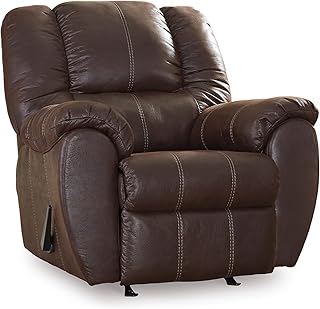
Ashley McGann Rocker Recliner
Signature Design’s walnut faux leather rocker is the most room-friendly option on this list, needing just 12 inches of wall distance while still rocking and reclining through three positions. Wipe-clean upholstery and restrained tailoring let it sit alongside real furniture without looking like an accessory.
NEWBULIG Zero Gravity Folding Recliner
A folding patio recliner with integrated cup holder trays that collapses flat for storage between seasons. It’s the right call for balconies, poolsides, and camping trips where a permanent chair makes no sense, and it moves indoors easily during a long winter.
Electric Chenille Recliner with Remote
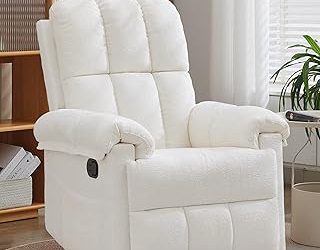
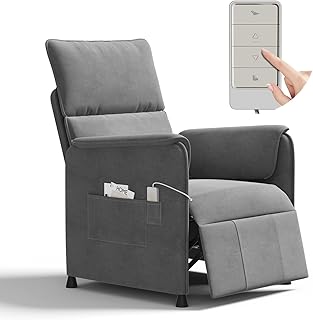
Chenille and a thick seat cushion give this power recliner a softer, more domestic presence than typical home theater seating, and the remote makes fine positional adjustments effortless. In grey, it reads as a modern armchair first and a recliner second.
Frequently Asked Questions
Does zero gravity recline actually feel different?
Yes. Raising your legs to or above heart level redistributes weight off the lower spine, which many people find noticeably easier on the back than a standard reclined angle held for an hour or more.
How much space do I need behind a recliner?
Traditional mechanisms often want 12 to 18 inches. Wall-hugger designs like the McGann narrow that to around 12 inches, and swivel-plus-ottoman setups such as the MCombo need essentially none.
Is faux leather durable enough for a family room?
For everyday spills and sticky hands, it’s the easiest surface to maintain. Keep it away from direct sun and sharp claws, and wipe rather than saturate it.
Can a folding zero-gravity chair be used indoors?
Absolutely. Oversized models like the Suteck XXL, with a removable cushion and headrest plus high weight capacity, work well as flexible indoor seating that disappears when you need the floor back.
Final Thoughts
If square footage is the constraint, the MCombo swivel recliner with ottoman solves the clearance problem outright, while the Ashley McGann rocker recliner delivers the most polished look for a real living room. For scale and comfort without compromise, the oversized power recliner with zero gravity and USB charging is the one to beat.