Key takeaways
- Chairs: Look for ANSI/BIFMA-rated folding chairs at 300 lbs static per chair. Budget wood folding chairs often rate 220 lbs. If anyone in the household is over 225 lbs, avoid all-wood folding chairs with a single center rivet; choose a steel chair with a double-tube back support and a 16-gauge frame.
- Tables: A 4-foot rectangular plastic-top folding table typically rates 300-500 lbs distributed, while a 6-foot version rates 500-700 lbs. A plywood or MDF-top wood folding table often rates only 150-250 lbs and will sag if you place a 40-lb microwave or sewing machine in the middle without center support.
- Table height matters: Standard folding tables are 29 inches high, standard folding chairs are 17 to 18 inches at the seat. That 11 to 12-inch difference is the ergonomic sweet spot for dining. Card table sets are often 26 to 27 inches high — too low for adult dining chairs and will cause knee crowding.
The best folding table and chairs for most homes is a steel-frame set with a powder-coated tubular frame, high-density plastic or plywood top, and a double-lock mechanism on both table and chairs, because it holds 300+ lbs per chair, folds to under 4 inches thick, and balances weight, durability, and storage better than solid wood for dining, events, and extra guests.
Our top picks
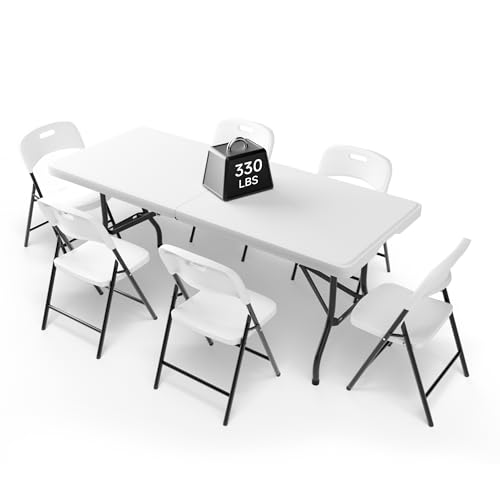


As an Amazon Associate we earn from qualifying purchases at no extra cost to you. Ratings are shown as listed on Amazon.
Steel vs Wood Frames: The Core Trade-Off
The frame material determines weight, wobble, folded size, and how long the set lasts in regular use. For folding furniture, steel and wood behave very differently.
| Feature | Steel Tubular Frame (Powder-Coated) | Solid Wood Frame (Beech/Rubberwood) | Wood with Steel Cross-Brace (Hybrid) |
|---|---|---|---|
| Typical Chair Weight | 7.5 – 10 lbs | 12 – 16 lbs | 10 – 13 lbs |
| Chair Weight Capacity | 300 – 350 lbs | 220 – 275 lbs | 275 – 300 lbs |
| Table Weight Capacity (6 ft rectangular) | 500 – 700 lbs distributed | 200 – 350 lbs distributed | 350 – 450 lbs distributed |
| Folded Chair Thickness | 2.0 – 2.8 inches | 3.5 – 5.5 inches | 3.0 – 4.5 inches |
| Folded Table Thickness | 3.0 – 3.75 inches | 4.5 – 6.0 inches | 3.5 – 4.5 inches |
| Wobble Resistance | High – cross-bracing + gravity locks | Moderate – depends on joint hardware | High – wood seat with steel legs |
| Moisture / Outdoor Use | Excellent – rust-resistant if coated | Poor to fair – swells, needs sealing | Fair – steel parts ok, wood needs care |
| Typical Price Range (4 chairs + 48″ table) | usually $150 – $300 | usually $300 – $600 | usually $220 – $400 |
| What Wears First | Plastic glides, lock spring | Loose hinge screws, finish chipping | Hinge screws on wood seat |
When steel wins: You need maximum capacity, frequent folding, rolling storage in a closet or garage, or you host events and need to carry sets up stairs. Steel is 30-40% lighter per chair and folds flatter.
When wood wins: The set stays set up as an everyday dining table in a small apartment or studio. Wood looks like real furniture, feels warmer, and doesn’t have the hollow sound of a resin top. Choose it only if you fold it occasionally, not daily.
Weight Limits: What the Numbers Actually Mean
Listed capacities are static, distributed loads. Real use is dynamic — people lean back, sit on the edge, or place a heavy dish in the center of the table.
- Chairs: Look for ANSI/BIFMA-rated folding chairs at 300 lbs static per chair. Budget wood folding chairs often rate 220 lbs. If anyone in the household is over 225 lbs, avoid all-wood folding chairs with a single center rivet; choose a steel chair with a double-tube back support and a 16-gauge frame.
- Tables: A 4-foot rectangular plastic-top folding table typically rates 300-500 lbs distributed, while a 6-foot version rates 500-700 lbs. A plywood or MDF-top wood folding table often rates only 150-250 lbs and will sag if you place a 40-lb microwave or sewing machine in the middle without center support.
- Table height matters: Standard folding tables are 29 inches high, standard folding chairs are 17 to 18 inches at the seat. That 11 to 12-inch difference is the ergonomic sweet spot for dining. Card table sets are often 26 to 27 inches high — too low for adult dining chairs and will cause knee crowding.
For dining use, check leg gauge. 18-gauge steel legs flex under 200 lbs lateral load; 16-gauge stays rigid. Thicker is not always better for portability — a 14-gauge commercial table can weigh 38 lbs versus 26 lbs for a 18-gauge residential model.
Lock Mechanisms Compared
The lock is what keeps the furniture from collapsing. There are three common systems:
1. Gravity Ring Lock (Most Common on Steel)
A sliding ring drops over the cross-brace when you open the legs. You lift it to fold. It is simple, reliable, and rarely jams, but it can be stiff for users with limited hand strength and can pinch fingers if you release it without holding the leg.
2. Push-Button / Spring Pin Lock
A spring-loaded pin clicks into a hole when fully open. Found on premium steel and hybrid sets. Easier for one-handed operation and gives an audible click. The spring is the failure point after 2-3 years of heavy use — it weakens and needs replacement.
3. Hinge-Top Lock Bar (Common on Wood)
A small wooden or metal bar flips over the center hinge to keep the table flat. On chairs, a rear wishbone brace locks the back leg. These locks require precise alignment. Wood expansion from humidity can make them stick or loosen, which is why wood folding sets develop wobble sooner.
Recommendation for families with kids: Choose double-lock chairs — a seat lock plus a leg brace lock. Single-lock chairs can fold if a child tips back and unweights the seat. For elderly guests, avoid push-button locks mounted underneath the seat edge where fingers get pinched; a large side lever is safer.
Folded Thickness and Storage Realities
Manufacturers list folded dimensions, but you need to plan for real storage.
- Per chair: Steel folding chairs fold to 2 to 2.8 inches. You can hang 4 on a 12-inch deep wall hook or store 6 flat against a closet wall in about 17 inches of depth. Wood chairs fold to 4 to 5.5 inches — 4 chairs need 20 to 22 inches of wall depth.
- Table: A 48-inch round or 4-foot rectangular steel/resin table folds to 3 to 3.75 inches thick and fits behind a sofa or beside a washer. Wood drop-leaf folding tables fold thicker (4.5 to 6 inches) but halve their length, so a 48-inch wood table becomes 24 inches long when folded.
- Cart and dolly fit: If you plan to stack more than 6 chairs, the folded stack height exceeds 18 inches and becomes unstable without a strap. Most standard doorways are 30 to 32 inches wide — a 6-foot table folded is 30 inches wide, so it barely clears without tilting.
Measure your intended storage spot before buying. A common mistake is buying a 6-foot table for a hall closet that is only 24 inches deep. For apartments, a 42-inch to 48-inch round or 34-inch square folding card table is far more storable than a 72-inch banquet table.
How Much Space Do You Actually Need?
Folding furniture saves storage space, not use space. When set up, you still need clearance.
- Seated clearance: Allow 36 inches from the table edge to the wall behind a chair so a person can push back and stand. The absolute minimum is 30 inches, but it feels cramped and chairs will scuff the wall.
- Between chairs: Leave 24 inches side-to-side from chair center to chair center, or about 6 to 8 inches between chair edges.
- Room-size fit: In a 10×12 ft room (120 sq ft), a 48-inch round folding table with 4 chairs needs a 9×9 ft footprint when in use (including pull-out space). A 6-foot rectangular table (30×72 inches) with 6 chairs needs 8×10 ft minimum. Both fit, but the 6-foot table leaves only a 12 to 18-inch walkway on the long side — tight for serving.
- For extra guests in a living room: A 34-inch square folding card table with 2 chairs fits in a 6×6 ft corner and works as a temporary dining spot for 2 to 3 people or a game table.
If you use the set daily in a small apartment, choose a height-adjustable folding table (22 to 29 inches) that can serve as both a low desk and a dining table, but ensure chairs still match — a 17-inch chair with a 22-inch table leaves no thigh clearance.
Decision Matrix: Pick by Your Situation
| Your Situation | Best Folding Table and Chairs Choice | Why |
|---|---|---|
| Small apartment, daily dining for 2-4 | 42″ to 48″ round hybrid: wood-top table with powder-coated steel legs + wood-seat steel-frame chairs | Looks like real dining furniture, folds flat enough for balcony closet, 275 lb chair capacity covers most adults |
| Extra guests / holidays, stored 90% of time | 6 ft steel/resin rectangular table + 6 steel folding chairs with vinyl seats | Lightest to carry, thinnest storage (under 3″ per chair), highest weight capacity, easy to wipe clean |
| Kids and pets, frequent spills | Steel frame, blow-molded high-density polyethylene top, metal chairs with polypropylene seats | Non-porous top resists stains, no fabric to hold pet hair, legs wipe clean, no wood to dent |
| Renters who move often | All-steel set that folds completely flat, no assembly | Entire set weighs 45-60 lbs total, fits in a car trunk, no tools needed, no wall damage from setup |
| Back pain / need comfort for 2+ hours | Steel chairs with padded 2-inch foam seat and contoured back + 48″ round table at 29″ height | Padded vinyl is firmer than fabric but supports longer sitting; avoid thin 0.5″ pads on wood chairs which bottom out |
| Outdoor / patio events | Powder-coated steel or aluminum frame with HDPE top, avoid MDF or particle board tops | Withstands humidity and sun; MDF swells and delaminates after one season outside |
Assembly, Moving, and Durability Realities
Most steel folding table and chairs sets ship fully assembled — you just unfold. Wood folding sets often require you to attach the hinge locks or tighten leg bolts on arrival, even if listed as “no assembly.” Have a Phillips screwdriver ready and re-tighten all hinge screws after the first week of use; they loosen as wood settles.
- Box weight and doorway: A boxed 6-foot steel table weighs 32 to 40 lbs and is 30.5 x 30 x 4 inches — it fits through a 28-inch apartment door only if turned on edge. A set of 4 steel chairs boxed is 32 to 38 lbs. Wood sets are 20% heavier per piece.
- What wears first: On steel, the plastic foot glides crack and the vinyl seat edge splits after 3-5 years. On wood, the hinge screws strip and the folding joint develops lateral play, causing wobble. You can extend life by adding felt glides for hard floors and by never dragging the table when folded — lift it, or the edge hinge bends.
- Noise and floor protection: Steel chairs on hard floors chatter. Add screw-in felt pads rated for metal tube legs, not stick-on pads which fall off. Wood chairs are quieter but need regular felt replacement as legs splinter.
- Cleaning: Resin tops need only soap and water; abrasive cleaners dull the surface. Wood tops need coasters and immediate wipe-up — a hot plate at 160°F can leave a white ring on a lacquered wood folding table that does not happen on HDPE.
Buying Checklist Before You Choose
- Measure in-use and stored footprints, including 36-inch pull-out clearance
- Confirm chair seat height 17-18 inches and table height 29 inches for dining comfort
- Check folded thickness and weight if you will carry up stairs or store in a closet
- Choose double-lock or gravity ring lock for stability; avoid single-bar wood locks for frequent use
- For daily use, prefer 1.5 to 2-inch padded vinyl or polypropylene over thin fabric which stains and sags
- Ensure table has center support for any span over 48 inches if you will place heavy items in the middle
FAQ
Are folding tables and chairs comfortable for everyday dining?
Steel folding chairs with a 15 to 16-inch deep seat and 1.5-inch foam are comfortable for 1 to 2 hours. For all-day use as a primary dining set, choose a hybrid chair with a wood or padded seat and a sculpted back, and add a thin seat cushion. All-plastic or thin wood slat seats become uncomfortable after 45 minutes.
How long does a folding set last?
A residential steel/resin set used weekly and stored indoors typically lasts 7 to 10 years before locks loosen. A solid wood folding set used daily lasts 5 to 7 years before joints need rebuilding. Outdoor storage or leaving sets unfolded on a damp patio shortens both by half.
Can I leave a folding table set up permanently?
Yes, but lock the braces and check them monthly. For a permanent setup, a hybrid or wood folding table with a leveling glide on the legs will wobble less than a basic banquet table, which is designed to be folded, not to stay open under constant load.