Key takeaways
- Choose solid wood if you want heirloom durability, stability for climbers, and the option to refinish.
- Choose molded plastic if you need lightweight, fully washable furniture for art projects, outdoor use, or frequent room changes.
- Choose engineered wood only if budget is tight and the set will stay in a dry, low-traffic corner. Check that edges are sealed and hardware is recessed.
The best toddler table and chairs for ages 1 to 4 has a 10 to 12-inch seat height paired with a 18 to 20-inch table height, solid wood or thick molded plastic construction, and a wide, low center of gravity that prevents tipping when a child leans or climbs.
Our top picks


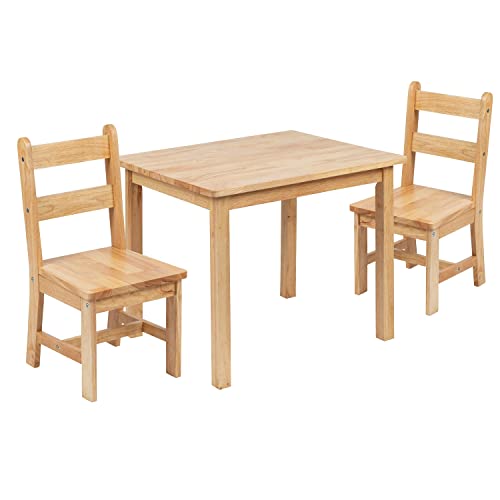
As an Amazon Associate we earn from qualifying purchases at no extra cost to you. Ratings are shown as listed on Amazon.
Correct Sizing by Age: Seat Height, Table Height, and Clearance
Buying by age label alone leads to mismatch. Use the child’s standing height and the seat-to-table relationship instead. The ideal gap between the seat and the underside of the table is 7 to 8 inches, enough for thighs to slide under without hunching shoulders.
| Age / Height Range | Recommended Seat Height | Recommended Table Height | Typical Weight Limit Per Chair |
|---|---|---|---|
| 1-2 years (30-34 in tall) | 10-11 inches | 18-19 inches | 50-75 lbs |
| 2-3 years (34-38 in tall) | 11-12 inches | 19-20 inches | 75-100 lbs |
| 3-4 years (38-42 in tall) | 12-14 inches | 20-22 inches | 75-110 lbs |
| 4-5 years (42-44 in tall) | 13-15 inches | 21-23 inches | 100-150 lbs |
To check fit at home, have your child sit with feet flat on the floor, knees at 90 degrees, and elbows resting comfortably on the table top without lifting shoulders. If feet dangle, the seat is too high. If knees hit the table apron, it is too low.
Plan for clearance, not just footprint. Most toddler sets are 24 x 24 inches for the table plus 12 x 12 inches per chair, but you need 14 to 18 inches of pull-out space behind each chair and at least 24 inches of walkway around the set if it sits in a playroom or kitchen corner. In a typical 10×12 ft bedroom or playroom, a 2-chair set uses about 12 sq ft when in use, leaving plenty of room for a bookshelf and rug. A 4-chair set needs closer to 20 sq ft and works better in an open living area.
Solid Wood vs. Plastic vs. Engineered Wood: What Actually Lasts
All three materials can be safe when certified to ASTM F963 and CPSIA standards, but they behave very differently after a year of daily use, spills, and being dragged across the floor.
| Feature | Solid Wood (Rubberwood, Birch, Beech) | Engineered Wood (MDF with Veneer/Laminate) | Molded Plastic (Polypropylene) |
|---|---|---|---|
| Stability and Tip Resistance | Heaviest (15-25 lbs per chair), lowest tip risk | Medium weight (10-16 lbs), stable if base is wide | Lightest (4-8 lbs), needs wider legs and non-slip feet |
| Durability | Resists dents, can be sanded and refinished | Chips at edges, swells with water exposure | Will not chip or swell, can crack under heavy adult weight |
| Cleaning | Wipe clean, needs coasters for markers/paint | Wipe clean, avoid soaking | Fully washable, best for crafts and snacks |
| Look and Finish | Natural wood grain, usually $120-$350 | Smooth painted finish, usually $60-$180 | Matte colors, usually $40-$120 |
| Longevity | 5+ years, often passed to siblings | 2-4 years before edge wear shows | 3-5 years, colors may fade in direct sun |
- Choose solid wood if you want heirloom durability, stability for climbers, and the option to refinish.
- Choose molded plastic if you need lightweight, fully washable furniture for art projects, outdoor use, or frequent room changes.
- Choose engineered wood only if budget is tight and the set will stay in a dry, low-traffic corner. Check that edges are sealed and hardware is recessed.
Safety Checklist for Tip-Resistant Design
For ages 1 to 4, tipping and entrapment are bigger risks than overall sturdiness. Look for these specifics before you buy:
- Wide stance and low center of gravity. Legs should splay slightly outward, not straight down. Chairs with a base that is wider than the seat by 2 to 3 inches on each side are far harder to tip when a child leans over the side.
- No cross-brace foothold. Avoid chairs with a horizontal stretcher bar midway up the legs that toddlers can use as a ladder to stand on the seat.
- Rounded edges and recessed hardware. Table corners should have a radius of at least 0.5 inches. Bolts should be countersunk and capped, not exposed.
- Non-slip feet. Rubber or silicone pads prevent sliding on hardwood and reduce tipping on tile. Plastic feet without pads will slide when a child pushes off the table.
- Non-toxic finishes. Look for Greenguard Gold, JPMA, or ASTM F963 certification and finishes labeled non-toxic, BPA-free, and phthalate-free. Water-based lacquers are more odor-free than oil-based.
- Chair weight vs. child weight. A chair that weighs less than 25% of the child’s weight will slide and tip more easily. For a 30 lb toddler, a 7 to 8 lb chair is the practical minimum for stability.
A house-style or curved-back chair looks cute but test the backrest height. If the backrest is taller than 24 inches on a small chair, it becomes top-heavy. The most stable designs keep the backrest no more than 10 inches above the seat.
Pick by Your Situation: Decision Matrix
There is no single best set. Match the set to your space and how it will be used daily.
| Your Situation | Best Choice | Why |
|---|---|---|
| Small apartment or kitchen nook | Round or oval table, 2 stackable plastic chairs | Round shape saves 4-6 inches in corners, stackable chairs tuck away and open floor space |
| Daily arts, crafts, and snacks | Molded plastic table with raised edge + plastic chairs | Raised lip contains spills and crayons, entire set can be wiped or rinsed |
| Shared sibling playroom (ages 1-4) | Solid birch or rubberwood rectangular table with 4 chairs | Rectangular top gives each child a defined side, heavier wood prevents tipping during rough play |
| Renter who moves often | Lightweight plastic or flat-pack engineered wood | Flat-pack boxes under 30 lbs fit through 28-inch doorways and in closets |
| Design-focused living room | Solid wood with natural finish and curved chairs | Blends with adult furniture, can be refinished to match decor later |
Assembly, Moving, and What Wears Out First
Product listings rarely mention the practical realities of living with toddler furniture.
- Box weight and doorway fit. Solid wood sets ship in one or two boxes weighing 28 to 45 lbs total. Engineered wood is similar. Plastic sets are lighter at 12 to 20 lbs and often come fully assembled. All will fit through a standard 30-inch interior doorway, but measure if you have a narrow 28-inch doorway or tight hallway turn.
- Assembly time. Expect 15 to 30 minutes for a wood set with 8 to 12 bolts and an Allen key. The table is usually pre-assembled; chairs take the most time. Plastic sets typically need no tools or just snap legs into place in under 5 minutes.
- What wears first. On wood sets, the first failure point is loose leg bolts from rocking. Tighten every 3 months. On engineered wood, the laminate at the table edge peels after repeated bumps from chairs. On plastic, the non-slip pads wear thin and should be replaced to prevent sliding.
- Floor protection. Wood chairs will scratch hardwood without felt pads. Add adhesive felt pads rated for at least 10 lbs shear strength and replace them when they compress. For rugs, choose a low-pile rug so chairs do not snag.
If you plan to use the table for water play or sensory bins, place a silicone mat under the table and avoid engineered wood entirely. Unsealed MDF will swell permanently after one major spill.
Storage and Growth: Making It Last to Age 4 and Beyond
A set with a 10-inch seat will be outgrown by age 3. If you want to buy once, choose an adjustable-height table or a set sized for age 2-4 (12-inch seat, 20-inch table) and add a footrest for younger toddlers so feet do not dangle.
Consider storage. Tables with a lower shelf or built-in bins keep paper and crayons off the floor but add 3 to 4 inches to overall height – check that chairs still tuck fully under the table. A table that allows chairs to tuck completely saves 10 to 12 inches of floor depth when not in use.
Weight limits matter if older siblings or adults occasionally sit. Most toddler chairs are tested to 75 to 110 lbs static load. If you need adult seating occasionally, look for solid wood chairs tested to 150 lbs or higher, which are usually listed as general market ranges $150-$350.
FAQ
What is the right table and chair height for a 2-year-old? For most 2-year-olds, a 11 to 12-inch seat with a 19 to 20-inch table gives the correct 7 to 8-inch thigh clearance and lets feet stay flat. If your child is tall for their age, size by height, not age.
Is wood or plastic safer for toddlers? Both are safe when certified, but wood is more tip-resistant due to weight, while plastic is easier to clean and has no splinter risk. For climbers, heavier wood with non-slip feet is the safer choice.
How much space do I need around a toddler table? Leave at least 18 inches behind each chair for pushing back and 24 inches of walkway on the primary traffic side. In a small room, a round 24-inch table with two chairs needs about a 5×5 ft zone to be usable.