Key takeaways
- Plastic or vinyl tablecloths laid directly on wood for weeks. They trap moisture and heat against the finish and can bond to it. Always put a flannel-backed pad or cloth underneath.
- Thin decorative placemats as heat protection. Woven cotton, bamboo, and vinyl mats under 0.1 inch conduct heat nearly as fast as bare contact.
- Setting pizza boxes or takeout bags on the table. Cardboard traps steam and a 200 degree pizza box is a classic source of white cloud marks.
- Sliding hot dishes across the surface. Heat plus friction scores the finish.
- Attacking a fresh heat mark with abrasives or heat guns. Let it cool completely and treat gently; aggressive fixes remove the finish.
Heat damage on a solid wood table shows up in two ways. The first is the white ring or cloudy patch left by a hot mug or a pizza box: heat and moisture have pushed into the finish. The second is a dark scorch where a casserole from a 400 degree oven sat on thinly finished wood and cooked the fibers themselves. People make it worse by rubbing a hot mark with abrasive cleaner, covering the table with a plastic cloth that traps heat, or trusting a thin decorative placemat to insulate. Protection comes down to an air gap or a dense barrier between hot items and the finish, and knowing the finish’s limit, which for most polyurethane and lacquer tops is roughly 150 to 200 degrees Fahrenheit.
What You Need
| Item | Why | Optional? |
|---|---|---|
| Cut-to-fit quilted or vinyl table pad with flannel backing ($15 to $25 for 52 by 70 or 54 by 72 inches) | A continuous insulating and waterproof layer under a tablecloth for everyday meals and gatherings | No, for daily use |
| Cork, silicone, or felt-backed wood trivets, at least 0.4 inch thick | Creates an air gap under pots, casseroles, and slow cookers | No |
| Cork-backed or felt-backed placemats and coasters | Handles plates and mugs at 120 to 180 degrees | No |
| Tablecloth (cotton or linen) | Adds a layer over the pad and hides it | Yes |
| Furniture polish or paste wax appropriate to the finish | Maintains the topcoat’s moisture barrier | Yes |
| Microfiber cloths | Cleaning and buffing | No |
| Infrared thermometer | Shows the true underside temperature of a dish before it touches the table | Yes |
| Fabric measuring tape and scissors | Sizing a cut-to-fit pad to your top | Yes |
Step-by-Step
Step 1: Identify the finish and its heat limit (5 minutes)
Check the manufacturer’s care card or look under the top. A glossy or satin film that feels like a hard plastic skin is polyurethane, lacquer, or varnish; it tolerates warm plates but marks from anything above about 150 to 200 degrees. A low-sheen finish that feels like bare wood is oil or hardwax oil; it marks from a hot mug and scorches easily. Unfinished or waxed pine is the most vulnerable. Knowing this sets how strict the rest of the routine must be.
Our top picks

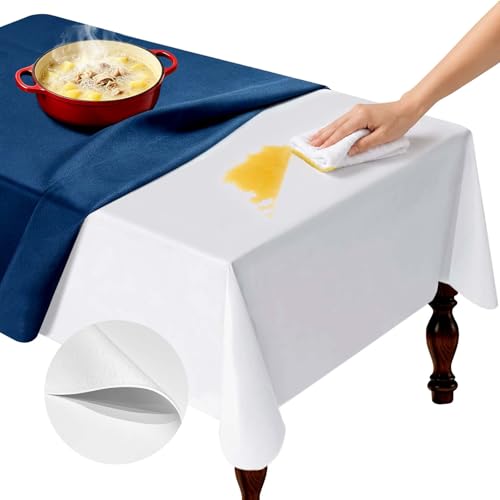
As an Amazon Associate we earn from qualifying purchases at no extra cost to you.
Step 2: Measure and fit a table pad (15 minutes)
Measure the top’s length and width. Buy a cut-to-fit pad slightly larger and trim it with scissors to sit about half an inch inside the edge so it does not show under a cloth, or exactly to the edge if you use it bare. Lay it flannel side down; the soft side protects the finish while the quilted or vinyl face takes the heat and spills. A standard 54 by 72 inch pad covers a six-seat table; two pads can be butted together for an eight-seat table of 80 to 96 inches.
Step 3: Set up a trivet station (5 minutes)
Keep three or four trivets in a drawer or basket within reach of the table so nobody is tempted to set a pot down “just for a second.” Choose trivets at least 0.4 inch thick; thin metal or fabric versions conduct heat straight through. Cork, silicone, and slatted wood create the air gap that matters. For slow cookers and chafing dishes that run for hours, use two trivets stacked or a wooden cutting board 1 inch thick.
Step 4: Build the placemat habit (2 minutes per meal)
Plates coming out of a warming drawer or dishwasher often reach 140 to 170 degrees, enough to cloud a lacquer finish over a long dinner. Cork-backed placemats at 0.1 to 0.2 inch thick handle this; bare woven placemats do not. Coasters under mugs and teapots are non-negotiable on oil-finished tables.
Step 5: Check surface temperatures before serving (1 minute)
With an infrared thermometer, aim at the bottom of a serving dish before it goes down: above 150 degrees means a trivet, above 250 means a trivet plus a board. Without one, the rule is simple: if you cannot hold the bottom of the dish against your palm for five seconds, it needs a trivet.
Step 6: Maintain the finish (20 minutes, quarterly)
A healthy topcoat resists heat and moisture far better than a dried-out one. Every three months, clean the table with a damp microfiber cloth and mild soap, dry it, and apply a thin coat of paste wax or a silicone-free furniture polish suited to the finish. On oil-finished tables, re-oil with the maker’s recommended product instead. Buff to a dull sheen. This layer is the last line of defense when a trivet is forgotten.
Mistakes to Avoid
- Plastic or vinyl tablecloths laid directly on wood for weeks. They trap moisture and heat against the finish and can bond to it. Always put a flannel-backed pad or cloth underneath.
- Thin decorative placemats as heat protection. Woven cotton, bamboo, and vinyl mats under 0.1 inch conduct heat nearly as fast as bare contact.
- Setting pizza boxes or takeout bags on the table. Cardboard traps steam and a 200 degree pizza box is a classic source of white cloud marks.
- Sliding hot dishes across the surface. Heat plus friction scores the finish.
- Attacking a fresh heat mark with abrasives or heat guns. Let it cool completely and treat gently; aggressive fixes remove the finish.
How Often
Use trivets and coasters at every meal and keep the pad on if the table sees hot dishes daily. Replace the pad when the vinyl cracks or the flannel wears through, typically every 3 to 5 years at $15 to $25. Wax film finishes quarterly; re-oil oil finishes every 3 to 6 months or when water stops beading. Look for early white marks monthly under good light. If you bought a new solid wood table in 2026, treat the first year as the most vulnerable; finishes keep hardening for months after manufacture.
When to Call a Pro or Replace
Shallow white heat marks on a film finish can often be treated at home: lay a cotton cloth over the mark and pass a warm iron on low, no steam, for 5 to 10 seconds at a time, or rub gently with non-gel toothpaste, then wax. If the mark remains after two attempts, or the finish has bubbled, a refinisher can spot repair for $75 to $200 or redo the whole top for $300 to $800. Black scorches that have charred the wood need sanding into the fibers, re-staining, and recoating, a professional job on any table worth more than $500. Solid wood is almost never worth replacing for heat damage; even a badly scorched top can be sanded and refinished.
FAQ
How hot is too hot for a wood dining table?
Most polyurethane and lacquer finishes start to cloud between 150 and 200 degrees Fahrenheit; oil finishes mark even lower. Plates from a warming drawer, mugs of coffee at 160 degrees, and any cookware from the oven all exceed the safe limit without a barrier.
Do table pads really protect against heat?
Yes, for plates, serving bowls, and mugs. A flannel-backed quilted or vinyl pad adds insulation and a waterproof layer. For pots and casseroles above 250 degrees, use a trivet on top of the pad; no pad alone is rated for direct oven-to-table contact.
Can a white heat mark be removed?
Often. It is moisture trapped in the finish, not damage to the wood. Try a warm iron over a cotton cloth in short passes, or gentle rubbing with non-gel toothpaste, then wax. Marks that have turned brown or black are scorches and need refinishing.
Is a tablecloth enough protection?
A cloth alone slows heat only slightly and does nothing against spills soaking through. Pair it with a flannel-backed pad underneath and trivets for anything hotter than a dinner plate.