Key takeaways
- Burr material matters less than burr alignment: a well-aligned steel or ceramic burr beats a wobbly one of either kind.
- Smaller burrs and short handles mean more turns and more wrist effort, especially at espresso fineness.
- External click dials save you from flipping the grinder over to adjust, which is the feature most people end up loving.
- Capacity is a real constraint: a 25 g hopper suits one or two cups, while a 60 g hopper suits a pot or a household.
- Match the grinder to your brew method first, then to your budget tier.
The best manual coffee grinder for most home kitchens is a stainless-burr model with an external dial and a steady handle, such as the TIMEMORE Chestnut C3S Pro, while the 1Zpresso K-Ultra is the pick if you chase espresso and filter detail and the CEVING Mini covers travel and tight budgets. The right choice comes down to three things: burr type, grind consistency, and how much effort every cup costs you.
This guide ranks real hand grinders from listing text and maker descriptions. We did not personally use these products, so every claim below is either general grinder knowledge or something the listing states. Where a detail is not confirmed, we say “check the listing” instead of guessing.
Our top picks


As an Amazon Associate we earn from qualifying purchases at no extra cost to you.
Key takeaways
- Burr material matters less than burr alignment: a well-aligned steel or ceramic burr beats a wobbly one of either kind.
- Smaller burrs and short handles mean more turns and more wrist effort, especially at espresso fineness.
- External click dials save you from flipping the grinder over to adjust, which is the feature most people end up loving.
- Capacity is a real constraint: a 25 g hopper suits one or two cups, while a 60 g hopper suits a pot or a household.
- Match the grinder to your brew method first, then to your budget tier.
Quick comparison of the best manual coffee grinders
| Grinder | Burr (per listing) | Adjustment | Capacity | Best for | Tier |
|---|---|---|---|---|---|
| 1Zpresso K-Ultra | Stainless conical | Fine external dial (check maker page for steps) | Check listing | Espresso plus filter detail | Premium |
| TIMEMORE Chestnut C3S Pro | Stainless S2C conical | External dial | Check listing | All-round daily use | Upper mid |
| TIMEMORE Chestnut C2S | Stainless S2C conical | External dial | 25 g | Pour-over and French press | Mid |
| KINGrinder K6 | Stainless | Many grind settings | Check listing | Dialing across brew methods | Upper mid |
| CEVING 60g Large Capacity | Burr (check listing) | 40 external settings | 60 g | Batches and households | Budget to mid |
| CEVING Mini | Ceramic conical | 40 adjustable settings | Compact | Travel, first grinder | Budget |
| Rsoilch Stainless Hand Crank | Stainless conical | 49 settings | Check listing | Decor-friendly wooden-handle look | Budget to mid |
Why a manual grinder at all?
A hand grinder gives you freshly ground coffee without a motor, a cord or a counter footprint. Coffee starts losing aroma soon after grinding, so grinding just before brewing is the single cheapest upgrade a drip or pour-over drinker can make. A manual grinder also costs less than an electric burr grinder of the same quality, because you pay for burrs and bearings instead of a motor and electronics.
The trade-off is labor. You will crank for every cup, and that labor grows with finer settings and bigger doses. Whether that is a pleasant morning ritual or an annoyance is the first honest question to ask yourself.
Burr type: conical steel, conical ceramic and what the shape does
Nearly every hand grinder uses conical burrs: a cone-shaped inner burr rotating inside a ring-shaped outer burr. Conical burrs are easier to turn by hand than flat burrs of the same diameter, which is why the hand-grinder world standardized on them.
- Stainless steel burrs are the usual choice on mid-priced and premium models. They stay sharp for a long time, hold tight tolerances, and generally give a more even particle spread. The TIMEMORE models name their “S2C” stainless conical burr, and the 1Zpresso and KINGrinder models use stainless burrs too, per their listings.
- Ceramic burrs are common on budget grinders such as the CEVING Mini. They do not rust and do not transfer heat, but they can chip if a stone or hard debris is in the beans, and tolerances on cheap units are looser.
- Burr size matters as much as material. A larger cone grinds more coffee per turn, so the same dose takes fewer rotations. Pocket-size grinders have small burrs and need many more turns.
Grind consistency: what to expect at each tier
Consistency means how closely the particles match in size. Boulders and dust together make a cup that tastes both sour and bitter at once. For coarse brewing such as French press and cold brew, almost any decent hand grinder gets close. Espresso is the hard test, because tiny differences in particle size change flow rate dramatically.
| Tier | Typical outcome | Good for | Struggles with |
|---|---|---|---|
| Budget ceramic mini | Acceptable for coarse and medium; wider spread at fine | French press, drip, travel | Espresso dialing |
| Mid stainless | Even medium grinds, usable fine settings | Pour-over, AeroPress, moka pot | Very fine espresso on some units |
| Premium stainless | Tight spread and fine steps | Espresso and filter | Nothing, but high cost |
If you only brew coarse or medium, you can buy lower and save the money for fresh beans. If you want espresso from a hand grinder, buy at the top of your budget, because that is where precise steps matter most.
Effort per cup: how to compare hand grinders before you buy
Effort per cup depends on dose, grind fineness, burr size, handle length and bearing quality. No listing gives a reliable effort number, so compare these clues instead.
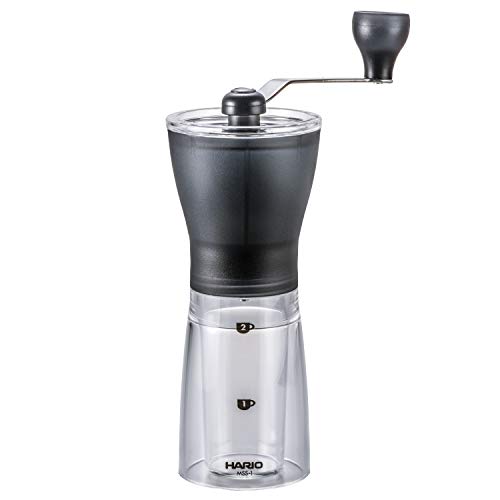
- Handle length and shape. Longer handles give more leverage. A straight handle like the KINGrinder K6 description mentions is comfortable for many hands, while folding or short handles are easier to pack but harder to turn.
- Bearings. Dual bearings or a double bearing design, which some listings mention, keep the burr from wobbling and reduce friction. Less wobble means a smoother turn and a more even grind.
- Burr cut and size. Steel burrs with a sharp cutting profile bite beans quicker. Cheaper ceramic burrs feel more like crushing.
- Dose size. A 25 g hopper filled to the top is a lot of turns. Grind only what you need.
- Grind fineness. Espresso takes more effort than French press from the very same grinder.
A practical rule: the finer you grind and the more cups you brew each morning, the more a premium, larger-burr grinder pays you back in time and comfort.
1. 1Zpresso K-Ultra: Best premium manual grinder for espresso and filter
- Stainless steel conical burr, per the listing
- Carrying case included, per the listing
- Listing highlights consistent grinding through an assembly designed for alignment
- Check the maker page for the number of adjustment steps and the dose capacity
- Premium tier
Best for: espresso drinkers and filter fans who want one hand grinder to cover every method with fine adjustment.
Skip if: you only brew French press, or you do not want to pay for precision you will not use.
Pros
- Stainless burr and a build aimed at keeping burrs aligned
- Suits espresso where small steps matter
- Travel case in the box
Cons
- Highest price tier on this list
- Overkill for coarse brewing
2. TIMEMORE Chestnut C3S Pro: Best all-round daily grinder
- Stainless steel S2C conical burr, per the listing
- Manual hand grinder with external adjustment
- Aluminum body style typical of the Chestnut line (check the listing)
- Check the listing for capacity and number of clicks
- Upper-mid tier
Best for: people who want one grinder for pour-over, AeroPress and a reasonable moka pot or espresso setup.
Skip if: you need a very large batch or the lowest price.
Pros
- Stainless burr with a widely discussed profile
- Comfortable daily-driver size
- Good balance between price and consistency
Cons
- Costs more than entry-level ceramic grinders
- Very fine espresso settings may need patience
3. TIMEMORE Chestnut C2S: Best step-down for pour-over and French press
- Stainless steel S2C conical burr, per the listing
- 25 g capacity, per the listing
- Hand grinder with adjustable settings
- Mid tier
Best for: one to two cups at a time, filter methods and French press.
Skip if: you brew for several people each morning, since 25 g is a single-serving hopper.
Pros
- Same burr family as the C3S Pro
- Lower price than the Pro
- Compact enough for a drawer
Cons
- Small hopper
- Fewer upgrades than the Pro model
4. KINGrinder K6: Best for dialing across brew methods
- Stainless burr, per the listing
- Straight handle design
- Listing says it supports grind settings for various brewing methods
- Check the listing for the exact steps and capacity
- Upper-mid tier
Best for: households that switch between moka pot, pour-over and espresso.
Skip if: you want a ceramic burr or a travel-size body.
Pros
- Steel burr and a stable handle
- Designed to cover several methods
- Similar tier to the TIMEMORE Pro
Cons
- Less known in some regions, so check support and returns
- Same price tier as better-known rivals
5. CEVING 60g Large Capacity Manual Coffee Grinder: Best for batches
- 60 g capacity, per the listing
- 40 external settings, per the listing
- Portable hand mill design
- Check the listing for burr material
- Budget-to-mid tier
Best for: a pot or two of coffee, or a small household that wants fewer refills of the hopper.
Skip if: you want espresso-level detail.
Pros
- Largest capacity on this list
- External dial
- Friendly price
Cons
- More grinding means more turns in one session
- Not the finest control for espresso
6. CEVING Mini Manual Coffee Grinder: Best travel and first hand grinder
- Ceramic conical burr, per the listing
- 40 adjustable settings, per the listing
- Portable hand coffee bean mill
- Budget tier
Best for: camping, office desks, and anyone trying out whether hand grinding suits them.
Skip if: you drink espresso or grind more than one cup at a time.
Pros
- Small and light
- Ceramic burr does not rust
- Low risk to try
Cons
- Small burr means more turns
- Coarser consistency than steel-burr rivals
7. Rsoilch Stainless Hand Crank: Best for a decorative wooden-handle look
- Stainless steel conical burr, per the listing
- 49 adjustable settings, per the listing
- All-aluminum body with wooden handle style, per the listing
- Budget-to-mid tier
Best for: kitchens where the grinder sits on display and a retro hand-crank look matters.
Skip if: you need a compact travel size or the finest espresso control.
Pros
- Stainless burr at a gentle price
- Many settings for the cost
- Good looks on an open shelf
Cons
- Crank styles can feel slower than side-handle designs
- Check listing for capacity
Also consider
- ELMWAY 25 g Stainless Conical Burr Hand Grinder: a 25 g stainless-burr model with a magnetic handle per the listing; a budget-friendly alternative to the TIMEMORE C2S.
- CIRCLE JOY Manual Coffee Grinder with 40 External Settings: stainless burr with an external dial; a cheaper path to external adjustment.
- CIRCLE JOY Mini Manual Coffee Grinder: ceramic conical burr, travel size, close in role to the CEVING Mini.
- HAMILADUO Stainless Conical Burr Manual Grinder: stainless burr with a double bearing design per the listing.
How we chose
This ranking is research-based. We did not personally use any of these grinders. We shortlisted real current models from product listings, kept only whole hand grinders (no replacement parts), limited each brand to two picks, and compared burr type, adjustment style, capacity and listed features. Where the listing did not state a number, we left it out and flagged it. Consider the “Sources” below for where to double-check before buying.
Buying guide: how to pick a manual coffee grinder
Start from your brew method
Espresso needs the finest and most repeatable steps, so buy premium. Moka pot, AeroPress and pour-over live comfortably at mid-tier. French press, cold brew and cowboy coffee tolerate budget burrs well.
Decide on capacity
Count your brew dose. A single 15 g to 20 g cup fits any grinder here. A 60 g pot needs a bigger hopper. If you brew for two people most mornings, a 25 g hopper is the minimum that feels sensible.
Check the adjustment style
- External dial: change grind without opening the grinder; best for switching methods.
- Internal ring: cheaper, but you must open the grinder to change it and it is harder to repeat.
Consider handle comfort and body size
A straight handle with a round knob suits most hands. If you have wrist pain, shorter, lighter grinders are harder, not easier, because they need more turns.
Budget tiers
| Tier | What you get | What you give up |
|---|---|---|
| Budget | Ceramic or basic steel burrs, many settings on paper | Tolerances and fine-espresso accuracy |
| Mid | Stainless burr, external dial, better bearings | Top-end fine steps |
| Premium | Tight alignment, fine steps, case, premium finish | Value for coarse brewing |
Maintenance
Brush the burrs after each use and wipe coffee oils with a dry brush. Avoid water on steel burrs unless the maker says it is safe. Do not grind oily dark beans heavily in a ceramic mini, because oil builds up quickly.
Grind size by brew method: where to start on any hand grinder
Every grinder labels its steps differently, so numbers from one model do not carry to another. Use the method and the look of the grounds as your guide, then note the click count that works for you and write it on a sticky note inside a cupboard.
| Brew method | Grounds should look like | Typical dose logic | If the cup tastes sour or bitter |
|---|---|---|---|
| Espresso | Fine table salt to powdered sugar | Weigh the dose; small changes matter | Sour: go finer. Bitter: go coarser. |
| Moka pot | Slightly coarser than espresso | Fill the basket level, do not tamp | Bitter or metallic: go coarser. |
| AeroPress | Fine to medium, like sand | Dose by recipe, adjust by taste | Sour: finer. Bitter: coarser. |
| Pour-over | Medium, like coarse sand | Roughly one part coffee to fifteen or sixteen parts water, adjust to taste | Slow drain and bitter: coarser. |
| Drip basket | Medium | Follow the machine guidance | Weak: finer or more coffee. |
| French press | Coarse, like sea salt | Coarser than you think | Muddy: coarser. |
| Cold brew | Extra coarse | Long steep, coarse grind | Cloudy: coarser. |
Change one variable at a time. If you adjust grind size, keep dose and water the same for that brew. That is the fastest way to learn what your grinder actually does.
Which manual grinder fits which kitchen?
| Your situation | Choose | Why |
|---|---|---|
| Espresso machine at home | 1Zpresso K-Ultra | Fine, repeatable steps and stainless burr |
| Pour-over every morning, one cup | TIMEMORE Chestnut C2S | 25 g hopper fits a single cup |
| Two people, mixed methods | TIMEMORE Chestnut C3S Pro or KINGrinder K6 | Steel burr and external dial |
| Weekend pot for a family | CEVING 60g | Large hopper, fewer refills |
| Camping or office desk | CEVING Mini | Small, light, ceramic burr |
| Open shelf display | Rsoilch Stainless Hand Crank | Wooden handle and aluminum body look |
| Sore wrists | Larger-burr model with a long handle | Fewer turns for the same dose |
Storing beans and grinders in a small kitchen
Hand grinders are among the easiest coffee tools to store. Most are about the size of a tall mug, and several fit in a drawer or a cup of the same diameter. Keep the beans in an airtight container away from the stove and sunlight, and grind only what you will brew within minutes. If you live in a damp climate, keep the grinder in a closed cabinet so moisture does not collect near the burrs.
For travel, empty the hopper, brush out the burrs and carry beans separately. A grinder with a loose handle should be stored with the handle removed, so it does not catch and strain the shaft in a bag.
Handle, grip and counter ergonomics
Most people crank from the wrong position at first. Hold the body in your non-dominant hand with your thumb on top, rest your elbow against your ribs and turn with a steady rhythm. If the grinder wobbles, brace it between your knees while seated or on a damp cloth on the counter. A calm, steady turn grinds faster than a burst of hard cranking and keeps grounds more even.
Common mistakes with hand grinders
- Grinding a full hopper when you only need one cup.
- Changing the dial while the burrs are empty and then ignoring the first few grams, which can come out inconsistent.
- Buying a tiny grinder for espresso.
- Forgetting to anchor the grinder. Hold it between the knees or on a non-slip pad to save wrist effort.
FAQ
What is the best manual coffee grinder overall?
For most people the TIMEMORE Chestnut C3S Pro balances burr quality, a practical external dial and a mid-to-upper price tier. The 1Zpresso K-Ultra is the better pick for espresso.
Are ceramic or stainless burrs better in a hand grinder?
Stainless steel burrs generally hold a sharper edge and tighter tolerance, so they dominate mid-tier and premium models. Ceramic burrs are fine for budget and coarse brewing.
How hard is it to grind by hand?
It depends on grind fineness and burr size. Coarse grinding goes quickly, espresso takes noticeably more effort, and larger-burr grinders reduce the number of turns.
Can a manual grinder make espresso?
Yes, but only if the grinder has fine and repeatable adjustment. Premium models are built for it. Budget minis usually cannot hold espresso settings reliably.
How do I clean a manual coffee grinder?
Remove the beans, brush out the burrs and body, and wipe with a dry cloth. Follow the maker instructions before using water or rice, and never soak steel burrs unless the maker says so.
Is a manual grinder worth it over blade grinders?
A burr hand grinder gives more even particles than a blade grinder, which chops beans at random. For the same budget, a hand burr grinder usually beats a blade grinder on cup quality.
Which one should you buy?
- Pick the 1Zpresso K-Ultra if espresso and filter precision are the goal.
- Pick the TIMEMORE Chestnut C3S Pro if you want one reliable daily grinder.
- Pick the TIMEMORE Chestnut C2S for single-cup pour-over on a smaller budget.
- Pick the KINGrinder K6 if you swap between several brew methods.
- Pick the CEVING 60g if you grind for several people.
- Pick the CEVING Mini for travel or a low-risk first try.
- Pick the Rsoilch if looks matter as much as function.
Sources
- Manufacturer listing text for each named grinder
- TIMEMORE maker page
- 1Zpresso maker page
- KINGrinder maker page
- Specialty Coffee Association brewing guidance
Last updated: November 2026
More from Amazon
Programs that pair well with the guide above. Offers and eligibility are set by Amazon and may change.
Collect the home and kitchen items you want in one registry that guests can shop from.
Create a wedding registrySet up recurring deliveries of everyday items on eligible products. Terms and savings are set by Amazon.
Explore Subscribe & SaveFree shipping on eligible items, Prime Video and more. Eligible new members can start with a free trial.
Start a Prime free trialAudiobooks and podcasts to listen to on the go. Eligible new members can start with a free trial.
Try Audible freeAs an Amazon Associate we earn from qualifying purchases.