Key takeaways
- Clearance and wall fit: Measure the distance from your wall to the front of the sofa, then compare it to the listed recline depth. Wall-hugger designs like the Watson & Whitely navy leather model need only a few inches behind them, which is often the difference between a sofa that works and one that floats awkwardly into the room.
- Upholstery honesty: Genuine leather ages beautifully but costs more; DuraPella and similar water-repellent blends handle kids and pets better than either leather or untreated fabric. Chenille reads warmer and softer in photos and in person, but it holds dust, so plan for a vacuum attachment.
- Power versus manual: Power recline adds infinite positioning, adjustable headrests, and a much easier stop-anywhere feel. It also means routing a cord and accepting that a motor is one more component that can eventually fail. Manual is simpler and cheaper; power is what most people prefer once they’ve lived with it.
- Console and storage strategy: A drop-down table or liftable console turns the middle seat into a surface, which is useful in a media room and wasteful in a small living room where you need three real seats. Removable armrest consoles offer a compromise worth looking for.
- Foam density and seat height: Medium-plush foam is the sweet spot for most bodies. Very soft cushions feel great in the showroom and sag within a year. Check seat height too, since low seats are harder to rise from and read heavier visually.
What's inside
Recliners used to be the furniture you apologized for. The overstuffed shape, the lever hanging off the side, the bulk that swallowed a room and left nothing for the rug to do. That reputation lingers, which is why so many buyers stall out: they want the mechanism without the visual weight, and the listings all blur into the same beige grid of promises. Add power headrests, zero-gravity presets, hidden consoles, and USB-C ports to the spec sheet, and the decision gets harder rather than clearer.
The good news is that 2026’s field has genuinely improved. Wall-hugger tracks let a three-seater sit inches from the plaster instead of a foot and a half. Tailored arms and tighter stitching have replaced the puffy pillow-fort silhouette on several mainstream lines. This guide breaks down what actually matters when you’re choosing a reclining sofa, then reviews the strongest options across leather, performance fabric, and theater-style seating, so you can match the mechanism to your room instead of the other way around.
As an Amazon Associate we earn from qualifying purchases.


How to Choose a Who Makes The Best Reclining Sofa (2026)
- Clearance and wall fit: Measure the distance from your wall to the front of the sofa, then compare it to the listed recline depth. Wall-hugger designs like the Watson & Whitely navy leather model need only a few inches behind them, which is often the difference between a sofa that works and one that floats awkwardly into the room.
- Upholstery honesty: Genuine leather ages beautifully but costs more; DuraPella and similar water-repellent blends handle kids and pets better than either leather or untreated fabric. Chenille reads warmer and softer in photos and in person, but it holds dust, so plan for a vacuum attachment.
- Power versus manual: Power recline adds infinite positioning, adjustable headrests, and a much easier stop-anywhere feel. It also means routing a cord and accepting that a motor is one more component that can eventually fail. Manual is simpler and cheaper; power is what most people prefer once they’ve lived with it.
- Console and storage strategy: A drop-down table or liftable console turns the middle seat into a surface, which is useful in a media room and wasteful in a small living room where you need three real seats. Removable armrest consoles offer a compromise worth looking for.
- Foam density and seat height: Medium-plush foam is the sweet spot for most bodies. Very soft cushions feel great in the showroom and sag within a year. Check seat height too, since low seats are harder to rise from and read heavier visually.
The Best Who Makes The Best Reclining Sofa (2026)s Reviewed
Ashley Boyington Power Reclining Sofa with Heat & Massage
This is the fully loaded option: air massage, heated seats, zero-gravity positioning, and a drop-down table on a leather and faux-leather blend in a versatile gray. It’s the pick if you’re building a genuine media room and want the sofa to be the experience rather than a quiet background piece.
Watson & Whitely Genuine Leather Wall Hugger
The most designer-friendly entry here, thanks to real leather in a deep navy, adjustable power headrests, and a wall-hugger track that keeps it tight to the wall. USB-A and Type-C ports are built in, and the compact recline footprint makes it a rare three-seater that suits apartments and RVs.
Ashley Next-Gen DuraPella in Sand
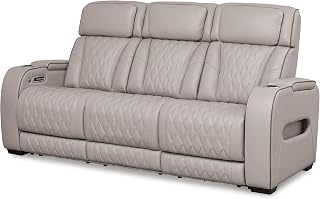
DuraPella’s water-repellent polyester and PU faux leather blend is the practical choice for households with kids or dogs, and the sand tone works with warm neutrals better than gray does. Medium-plush foam and zero-gravity recline make it a comfortable everyday sofa rather than a novelty.
Ashley Yarrow Lane Reclining Sofa in Mocha
Chenille upholstery and pillow-top arms give this one a softer, more traditional presence, with a drop-down table, integrated USB charging, and two cup holders. Choose it if you want warmth and texture in the room and don’t mind a slightly fuller silhouette.
3-Seater Reclining Sofa with Lift Console (New Brown)
Theater seating logic applied to a sofa: a liftable console reveals hidden storage, the armrest console is removable, and there’s USB charging plus cup holders throughout. It’s the value-minded route to a dedicated movie setup, especially in a basement or bonus room.
Frequently Asked Questions
Are power reclining sofas worth the extra cost?
For most buyers, yes. Power recline lets you stop at any angle, adds adjustable headrests for proper neck support while watching TV, and eliminates the side lever that dates a sofa’s look. The tradeoff is a cord and a motor to maintain.
How much space do I need behind a reclining sofa?
Traditional designs want eight to sixteen inches of clearance. Wall-hugger mechanisms cut that to roughly three to six inches by sliding the seat forward as it reclines, so always check the specific listing rather than assuming.
Is leather or performance fabric better?
Leather wipes clean, resists odors, and develops character over time. Performance fabrics like DuraPella resist water and stains at a lower price and feel warmer in cold rooms. Households with young kids often do better with treated fabric.
Do reclining sofas hold up long-term?
The mechanism usually outlasts the cushions. Look for high-density foam, check the warranty terms on motors and frames separately, and avoid overloading a single seat with the heaviest daily use if you can rotate positions.
Final Thoughts
If you want one sofa to do everything, the Watson & Whitely wall-hugger in navy leather is the most livable choice, combining real leather, power headrests, and a footprint that respects small rooms. For a dedicated home theater, the Ashley Boyington with heat and massage delivers the full experience, while the Next-Gen DuraPella in sand is the smartest pick for busy households that need spill resistance without giving up comfort.