Key takeaways
- Milk system design: Favor a frother that disassembles into two or three dishwasher-safe pieces over sealed tube-and-carafe systems. Fewer parts means fewer hiding places, and it’s the single biggest predictor of whether you’ll still be using the machine in year three.
- Grinder material: Ceramic burrs run cooler and quieter than steel and resist wear, which matters when the grinder sits three feet from where you eat breakfast. Check that grind settings are adjustable, not fixed.
- Depth, not width: Standard counters give you about 24 inches; most super-automatics are 17–18 inches deep and need clearance behind for the water tank lid. Measure depth and the vertical space to your upper cabinets before you fall in love with a finish.
- Interface honesty: A touch display with named drinks beats a grid of cryptic symbols. If a guest can’t make a cappuccino unassisted, the machine has failed its one job.
- Water and descaling: Filtered water systems like AquaClean dramatically reduce descaling frequency. Factor filter cartridges into your running costs alongside beans.
The PHILIPS 5500 Series Fully Automatic Espresso Machine with LatteGo is the best overall super-automatic for one-touch lattes and cappuccinos, with the Philips 3200 Series LatteGo as the runner-up for anyone who wants the same milk system for less. Both grind, tamp, brew, and texture milk from a single icon tap, and both clean up in about fifteen seconds under the faucet.
The hard part of buying a bean-to-cup machine isn’t the espresso — nearly all of them pull a respectable shot. It’s the milk. Older systems hide milk inside tubes and rubber gaskets you can’t see, and that’s where hygiene, maintenance dread, and sour-smelling cappuccinos come from. It’s also where counter aesthetics collapse, because a machine you resent cleaning becomes a machine you shove into a corner. This guide looks at six popular super-automatics through two lenses at once: how good the drink is, and how comfortably the machine lives in a considered kitchen — footprint, finish, noise, and the daily ritual of upkeep.
Our top picks





As an Amazon Associate we earn from qualifying purchases at no extra cost to you.
Quick Comparison
| Product | Best For | Standout Feature | Rating |
|---|---|---|---|
| Philips 5500 Series LatteGo | Households with mixed drink preferences | Wide one-touch drink menu plus two-piece LatteGo frother | Outstanding |
| Philips 3200 Series LatteGo (EP3241/54) | First-time bean-to-cup buyers | Ceramic grinder and My Coffee Choice strength control | Excellent |
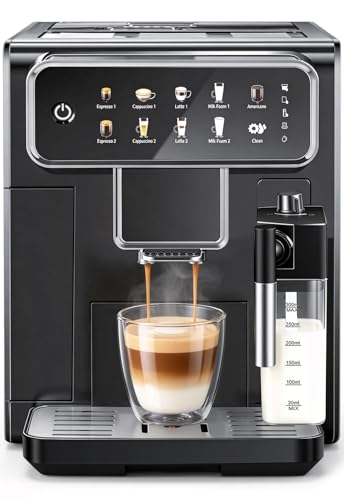
| LINKLIFE Automatic Espresso Machine | Statement-piece kitchens | Integrated grinder and frother in a blacked-out body | Very good |
| De’Longhi Magnifica Duo | Espresso purists who also drink milk | Dual-function milk frother in brushed silver | Excellent |
| EUHOMY Automatic Espresso Machine | Small apartments and offices | Compact all-in-one grind-to-froth layout | Very good |
How to Choose a Super-Automatic Espresso Machine for One-Touch Lattes and Cappuccinos
- Milk system design: Favor a frother that disassembles into two or three dishwasher-safe pieces over sealed tube-and-carafe systems. Fewer parts means fewer hiding places, and it’s the single biggest predictor of whether you’ll still be using the machine in year three.
- Grinder material: Ceramic burrs run cooler and quieter than steel and resist wear, which matters when the grinder sits three feet from where you eat breakfast. Check that grind settings are adjustable, not fixed.
- Depth, not width: Standard counters give you about 24 inches; most super-automatics are 17–18 inches deep and need clearance behind for the water tank lid. Measure depth and the vertical space to your upper cabinets before you fall in love with a finish.
- Interface honesty: A touch display with named drinks beats a grid of cryptic symbols. If a guest can’t make a cappuccino unassisted, the machine has failed its one job.
- Water and descaling: Filtered water systems like AquaClean dramatically reduce descaling frequency. Factor filter cartridges into your running costs alongside beans.
The Best Super-Automatic Espresso Machines for One-Touch Lattes and Cappuccinos Reviewed
Best Overall: PHILIPS 5500 Series LatteGo
This is the machine for a household where one person drinks flat whites, another wants americanos, and someone occasionally requests hot water for tea — the drink menu is broad enough that nobody compromises. The LatteGo frother rinses clean in seconds with no tubes, which is why it earns permanent counter space rather than cupboard exile.
Best Budget: Philips 3200 Series LatteGo (EP3241/54)
Best for the buyer stepping up from pods who wants real bean-to-cup results without paying for features they won’t touch. You get the same two-piece milk system, a 100% ceramic grinder, and My Coffee Choice strength adjustment in a matte black body that disappears politely into dark cabinetry.
Best Premium: LINKLIFE Automatic Espresso Machine with Grinder and Milk Frother
Choose this if you want the machine to read as a deliberate design object — the all-black casework suits walnut, concrete, and brass-hardware kitchens where a silver appliance would fight the palette. It handles the full grind-brew-froth sequence automatically, making it a credible centerpiece for a coffee station or bar cart.
Best for Espresso-First Drinkers: De’Longhi Magnifica Duo
Ideal for someone whose default is a straight double shot but who wants a proper cappuccino on weekends. The brushed silver finish pairs naturally with stainless ranges and sinks, giving you visual continuity that black plastic can’t.
Best for Small Spaces: EUHOMY Automatic Espresso Machine
The right pick for galley kitchens, studio apartments, and small-office break rooms where every inch of counter is contested. It compresses a built-in grinder and milk frother into a modest footprint, so you get café drinks without surrendering your prep area.
Frequently Asked Questions
What’s the real difference between a latte and cappuccino setting?
Ratio and foam texture. A cappuccino uses less milk with a thicker, drier foam cap; a latte uses more milk with thinner microfoam. On these machines the difference is a preset volume and frothing duration — most let you customize both and save the result.
Do I need to clean the milk system after every drink?
Rinse it, yes. With LatteGo-style two-piece frothers that means a ten-second pass under the tap; deeper cleaning can go in the dishwasher weekly. Skipping the rinse is what produces off flavors, not the machine itself.
Can I use flavored or oily beans?
Avoid them. Oily and sugar-coated beans clog burrs and chutes on any automatic grinder. Use a medium-roast whole bean and add flavor with syrups after brewing.
How is the Philips 3300 Series different from the 3200 and 5500?
The PHILIPS 3300 Series LatteGo sits between them, adding drink options over the 3200 while staying below the 5500’s fuller menu. If the 3200 feels thin and the 5500 feels excessive, it’s the sensible middle.
Final Thoughts
For most kitchens, the PHILIPS 5500 Series LatteGo is the machine worth building a coffee station around, with the Philips 3200 Series LatteGo delivering nearly the same daily experience for less and the De’Longhi Magnifica Duo making the strongest case in stainless-forward rooms. Pick the one whose finish belongs in your space — you’ll use it far more often.