Key takeaways
- Pro: Quad-core processor handles multiple browser tabs smoothly
- Pro: Thin design and long battery life make it genuinely portable
- Con: 4GB RAM caps multitasking; heavy web apps can cause slowdowns
Finding the best chromebook 2026 has become a numbers game. Chrome OS strips away the complexity that makes Windows laptops frustrating—no driver conflicts, no forced updates, no bloatware—so the only meaningful decisions come down to processor generation, RAM allocation, storage, and display quality. The problem is that the price range from $105 to $330 covers machines that look identical on a spec sheet yet diverge sharply in daily usability.
A Celeron N4020 with 16GB of flash storage will feel sluggish within weeks for anyone who stores files locally or keeps more than a handful of tabs open. The same processor paired with 64GB of eMMC and a 15.6-inch FHD screen delivers a completely different experience. Owner feedback across dozens of listings confirms the pattern: cheap build quality and anemic storage are the two features that drive negative reviews, while long battery life and a crisp display consistently earn praise. This roundup compares eight current models on published specs, listed prices, and aggregated owner sentiment to separate the genuinely useful machines from the ones that will leave you replacing them in a year.
As an Amazon Associate we earn from qualifying purchases at no extra cost to you. Product prices and availability are accurate as of the date shown and are subject to change.


Quick Picks
| Product | Best for | Price |
|---|---|---|
| HP Chromebook 14 (14a-na0226nr) | Everyday productivity | $224.95 |
| Dell Chromebook 11 3100 Touch (Renewed) | Touch-screen flexibility | $109.99 |
| Dell Chromebook 11 3100 (Renewed) | Ultra-budget entry | $104.99 |
| HP 14″ Chromebook with Accessories | Students needing a bundle | $226 |
| Acer Chromebook 315 | Larger screens on a budget | $222 |
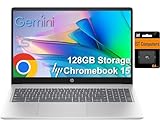
| Lenovo Chromebook 15 | Storage capacity on a mid-range budget | $249.99 |
| Acer 15″ FHD IPS (Renewed) | Display quality at low cost | $229.99 |
| HP Chromebook 15 (N200) | Heavy multitasking | $329.98 |
How We Picked
Four criteria drove every decision in this list. First, processor and RAM configuration: a quad-core Celeron N4120 handles browser workloads noticeably better than a dual-core N4020, and 4GB of RAM is the functional floor for Chrome OS with ten or more open tabs. Second, storage: 16GB of flash memory is effectively unusable offline, while 64GB and above gives breathing room for Google Drive caching and local documents. Third, display and form factor: screen size, resolution, and whether a device is a clamshell or 2-in-1 determine who it actually serves. Fourth, price-to-spec ratio cross-referenced against owner feedback on battery degradation, build quality, and long-term software support.
The 8 Best Chromebook 2026 in 2026
HP Chromebook 14 (14a-na0226nr)
The right choice for anyone wanting a dependable 14-inch clamshell for web-based work, streaming, and light productivity without paying a premium. The Intel Celeron N4120 quad-core processor is a clear step above the N4020 in this price bracket, and the 64GB eMMC storage avoids the cramped feeling that plagues cheaper units.
- Pro: Quad-core processor handles multiple browser tabs smoothly
- Pro: Thin design and long battery life make it genuinely portable
- Con: 4GB RAM caps multitasking; heavy web apps can cause slowdowns
Skip this if you need a touchscreen or prefer a convertible form factor for note-taking.
Dell Chromebook 11 3100 Touch (Renewed)
Designed for parents, students, or anyone wanting a low-cost 2-in-1 with touch input. At under $110 it is the only touchscreen option here, and the fold-flat hinge adds utility for media consumption or drawing. The Celeron N4020 is adequate for Chrome OS at this price.
- Pro: 2-in-1 touchscreen at a fraction of the cost of comparable models
- Pro: Renewed condition keeps the price accessible for families buying multiple units
- Con: 32GB flash storage fills quickly and restricts offline work
Skip this if you store documents locally or plan to use Google Drive’s offline mode heavily.
Dell Chromebook 11 3100 (Renewed)
The absolute cheapest entry into Chrome OS on this list, suited for a child’s first laptop or a dedicated browser-only secondary machine. With 4GB of RAM it at least opens multiple tabs without immediately choking, but the 16GB flash memory is the critical limitation.
- Pro: Lowest price in the roundup while still offering 4GB RAM and Bluetooth
- Pro: Lightweight 11.6-inch form factor is easy to carry
- Con: 16GB storage makes offline work practically impossible
Skip this unless every task you perform lives entirely in a browser tab with zero local storage needs.
HP 14″ Chromebook with Accessories
Aimed squarely at students who want a ready-to-go kit. The inclusion of CUE accessories, a webcam for video calls, HDMI output, and both USB-A and USB-C ports means you unbox it and start working the same day. Specs mirror the HP 14a-na0226nr closely, so the premium is essentially for the peripheral bundle and the stated 14-hour battery life.
- Pro: HDMI plus USB-A and USB-C ports cover all common connection needs
- Pro: Long 14-hour battery life outlasts a full school day with margin
- Con: Quad-core N4120 matches a cheaper model, so you pay extra for the bundle rather than performance
Skip this if you already own a mouse, case, or adapter—you will get identical internals from the HP 14a-na0226nr for less money.
Acer Chromebook 315
A solid pick for anyone who wants a 15.6-inch screen without crossing the $230 threshold. The Intel UHD Graphics and 12.5-hour battery make it a capable media and light-work machine, and the 64GB eMMC provides reasonable headroom for cached documents and Android apps.
- Pro: 15.6-inch HD panel suits spreadsheets, video calls, and split-screen browsing
- Pro: 12.5-hour battery covers a full work or school session
- Con: Dual-core Celeron N4020 lags behind quad-core options when you push multiple demanding web apps
Skip this if you routinely run five or more browser tabs alongside video calls; the dual-core processor becomes a bottleneck.
Lenovo Chromebook 15
For users who value storage above all else in this segment, the 128GB allocation is the standout feature. Combined with a 15.6-inch FHD panel, it suits anyone keeping large document sets or media libraries locally. The Celeron N4500 is a minor step up from the N4020 but remains dual-core.
- Pro: 128GB storage is the highest among sub-$250 models here
- Pro: FHD resolution on 15.6 inches delivers noticeably sharper text and images than HD competitors
- Con: Price climbs above $250 while the processor is still only dual-core
Skip this if you can live with cloud-only storage; the extra cost over the Acer Chromebook 315 buys you gigabytes, not performance.
Acer 15″ FHD IPS (Renewed)
The display is the reason to choose this machine. An FHD IPS panel in a Chromebook under $230 is uncommon, and the wide viewing angles make it suitable for shared screens or content review. DDR5 memory and WiFi 6 keep it feeling current in 2026 despite the renewed status. The main caveat is battery condition on a refurbished unit.
- Pro: FHD IPS panel is the best screen in this price range by a clear margin
- Pro: WiFi 6 and DDR5 memory provide a modern wireless and memory standard
- Con: Renewed means battery cycle count is unknown and may be partially degraded
Skip this if you need guaranteed battery life for long travel days; a new unit at a similar price may hold more charge.
HP Chromebook 15 (N200)
The top performer here by a significant margin. The Intel N200 processor and 8GB of DDR5 RAM put it in a different class from every other machine on this list for multitasking, heavy web apps, and Android application support. The 128GB storage rounds out a package that will remain usable longer than the competition.
- Pro: 8GB DDR5 RAM with N200 processor handles demanding browser workflows without hesitation
- Pro: 128GB storage plus modern processor architecture extend its useful life well beyond budget rivals
- Con: At $329.98 it costs roughly 50 percent more than the next-cheapest 15-inch option
Skip this if your daily workflow stays within five or six tabs and cloud documents; you are paying for headroom you will not use.
Buying Guide
Processor and RAM: The Multitasking Floor
Chrome OS is lighter than Windows, but it still relies on available RAM to keep browser tabs alive in the background. Four gigabytes is the functional minimum; anything less means tabs reload every time you switch away. Processor matters less than RAM for most Chromebook users, but a quad-core chip like the N4120 or a newer N200 will prevent the stuttering that a dual-core N4020 produces under moderate load.
Storage: 16GB Is Not Enough
Chromebooks assume you live in the cloud, but offline caching, Android apps, and system updates all consume local storage. A 16GB machine fills up within days and becomes frustratingly slow. Sixty-four gigabytes is the practical minimum for comfortable use; one hundred twenty-eight gigabytes is ideal if you store documents, photos, or videos offline for travel.
Display Size and Resolution
An eleven-inch screen is genuinely restrictive for anything beyond quick email. Fourteen inches is the sweet spot for portability and workspace. Fifteen-and-a-half inches suits desk-based use where screen area outweighs weight. Resolution matters most at larger sizes: an HD 1366×768 panel on a 15.6-inch screen shows visible pixel structure, while an FHD 1920×1080 panel keeps text crisp. IPS adds viewing-angle consistency, which matters if you share the screen or watch video from slightly off-center positions.
Our Verdict
The top pick is the HP Chromebook 15 with the Intel N200 processor. Its combination of 8GB DDR5 RAM, 128GB storage, and a modern quad-core chip makes it the only machine here that will still feel responsive years from now. For buyers who need to spend under $110, the Dell Chromebook 11 3100 Touch at $109.99 delivers more versatility than its price suggests, provided you accept a small screen and tight storage. However, if your priority is a large, clear display and you are comfortable with a refurbished device, the Acer 15-inch FHD IPS at $229.99 offers the best screen-to-price ratio in the entire group.
FAQ
Is 4GB of RAM enough for a Chromebook?
It is the bare minimum. Four gigabytes handles about ten to fifteen browser tabs plus one or two lightweight web apps. If you regularly run video calls while keeping Gmail, a spreadsheet, and a few reference tabs open, you will feel the ceiling quickly.
Are renewed Chromebooks worth buying?
They can be, especially for secondary machines or children’s first laptops. The risk is battery wear, which is unverifiable from the listing alone. If the price is at least 40 percent below a new equivalent, the gamble is usually reasonable.
Can Chromebooks work without internet?
Yes, but with limits. Google Docs, Sheets, and Slides all offer offline modes that work well once enabled, but you need sufficient local storage to cache files. A 16GB Chromebook cannot store meaningful offline work; 64GB and above is practical.
How long do Chromebooks receive updates?
Google sets a fixed end-of-support date for each model at launch. Newer hardware generally has a longer remaining window, so buying the most recent model within your budget is the safest strategy. A Chromebook past its support date still functions but stops receiving security patches.