Key takeaways
- Behind the desk: allow 600 mm minimum to pull the chair out and sit down; 900 mm if someone needs to walk behind the seated person.
- Seat-to-desk gap: aim for 280–320 mm between the chair seat and the desktop underside — this is why mixing an adult chair with a child-height desk never works.
- In a 10 × 12 ft bedroom: a 1,200 mm desk fits comfortably along the 10-ft wall or under a window, leaving 800 mm+ between desk and bed. Hutch units work here too, but check ceiling height — a 1,600 mm-tall unit under a fan or sloped ceiling feels cramped.
- Doorways: flat-pack desks go through any door; a pre-assembled 1,200 mm desk still fits a standard 800 mm (32 in) doorway when carried on its side, but hutch units often can’t be tilted — measure stairwells if it arrives built.
What's inside
Damro’s study table and chair range boils down to four setups — a compact flat-top desk, a standard desk with a drawer pedestal, a desk with a bookshelf hutch, and child-height table-and-chair sets — and the right choice depends mostly on who’s sitting there and how deep the desktop needs to be. For a child’s bedroom, a simple 800–900 mm desk with a fixed chair is usually enough; for a real home office, the 1,200 mm hutch-style workstations paired with a revolving chair are where the range earns its keep. Prices vary by market, but expect roughly $50–$280 for desks and $25–$200 for chairs as general ranges.
The desk types Damro sells, with real dimensions
Damro doesn’t name its study desks in a way that travels well between markets, so it helps to shop by format and size rather than by model name. Across its Sri Lankan and Indian catalogs, the study range consistently falls into these formats:
| Desk type | Typical size (W × D × H) | Storage | Best for | Usual price range |
|---|---|---|---|---|
| Compact study/computer desk | 800–1,000 × 450–500 × 740–760 mm | None or one slim drawer | Small bedrooms, occasional laptop use | $50–$120 |
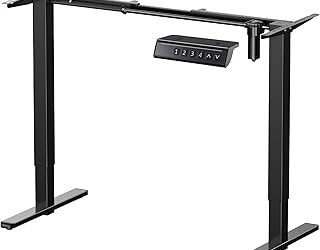
| Desk with drawer pedestal | 1,100–1,200 × 550–600 × 750 mm | 2–3 drawers, or drawer + cabinet | Teens, students, regular study | $90–$180 |
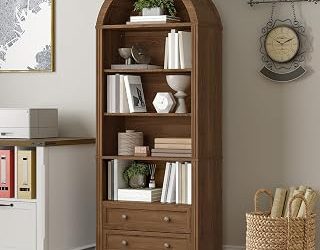
| Desk with bookshelf hutch | 1,000–1,200 × 500–600 mm, 1,400–1,600 mm overall height | 3–6 overhead shelves plus drawers | Exam prep, full home office | $140–$280 |
| Kids’ study set (desk + chair) | 700–900 × 450–500 mm, desk 550–660 mm high | Pencil tray or small shelf | Ages roughly 4–10 | $70–$150 for the set |
| Fixed study chair | Seat height ~430–460 mm | — | Pairs with kids’ and compact desks | $25–$60 |
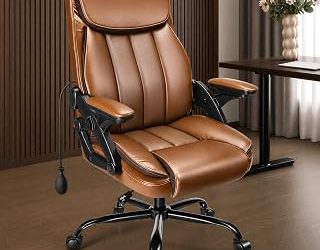
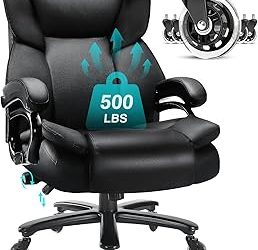
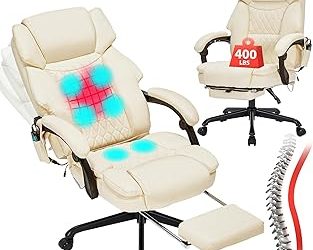
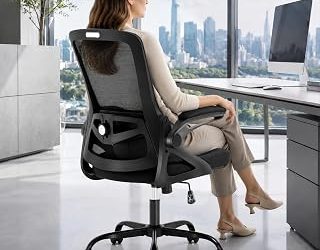
| Revolving office chair | Seat height adjustable ~420–540 mm | — | Teens and adults, long sessions | $70–$200 |
Two details worth checking in any listing before you buy: desktop depth and knee space. A 450 mm-deep top is fine for a laptop and notebook but cramped once you add a monitor — you’ll sit closer than the recommended arm’s-length viewing distance. For a desktop PC or dual-screen setup, hold out for 550 mm or more. And on pedestal models, confirm the clear width between drawer unit and side panel is at least 550–600 mm, or knees end up pressed against the modesty panel.
Will it fit? Desk heights, clearances and room math
Standard Damro study desks sit at 740–760 mm high, sized for adults roughly 5’2″ and up so forearms rest near 90 degrees. That same desk is wrong for an eight-year-old, which is why the child-height sets exist. As a rough guide: ages 4–6 need a desk around 520–560 mm, ages 7–10 around 580–620 mm, and from about age 11 most kids do fine at a full-height desk paired with a revolving chair raised so their feet still touch the floor (or a footrest).
- Behind the desk: allow 600 mm minimum to pull the chair out and sit down; 900 mm if someone needs to walk behind the seated person.
- Seat-to-desk gap: aim for 280–320 mm between the chair seat and the desktop underside — this is why mixing an adult chair with a child-height desk never works.
- In a 10 × 12 ft bedroom: a 1,200 mm desk fits comfortably along the 10-ft wall or under a window, leaving 800 mm+ between desk and bed. Hutch units work here too, but check ceiling height — a 1,600 mm-tall unit under a fan or sloped ceiling feels cramped.
- Doorways: flat-pack desks go through any door; a pre-assembled 1,200 mm desk still fits a standard 800 mm (32 in) doorway when carried on its side, but hutch units often can’t be tilted — measure stairwells if it arrives built.
What Damro tables are made of — and where each material wins
Most of the range is melamine-faced engineered board with steel or rubberwood elements, which is normal at this price point. The trade-offs are predictable:
| Material | Where it appears | Strengths | Watch out for |
|---|---|---|---|
| Pre-laminated particleboard / MDF | Desktops, carcasses, hutch shelves | Smooth wipeable finish, cheapest, holds ~25–35 kg spread evenly | Swells if water gets into edges; screws loosen on reassembly; don’t stand on it |
| Rubberwood / solid wood | Legs and frames on pricier sets | Strong screw-holding, repairable, can be refinished | Heavier to move, needs occasional polish, adds cost |
| Powder-coated steel | Desk frames, chair bases, revolving mechanisms | Slim profile, very durable, stable on carpet | Can scratch hard floors without felt pads; check weld points |
| Mesh vs cushioned chair backs | Revolving chairs | Mesh stays cool in hot climates; foam seats feel softer initially | Mesh can sag after a few years; foam compresses — rotating between chairs extends life |
Practical takeaway: laminate tops are perfectly fine for study duty if you keep drinks off unsealed edges and don’t exceed a desktop PC plus monitor’s combined weight without spreading the load across the frame, not the center span.
Child’s bedroom vs. home office: pick by situation
| Your situation | Desk pick | Chair pick | Why |
|---|---|---|---|
| Child aged 4–9, shared bedroom | Kids’ set or 800 mm compact desk | Fixed 4-leg chair, seat ~380–430 mm | Feet stay flat on the floor; no wheels to climb or roll across the room |
| Teen studying for board exams | 1,100–1,200 mm desk with hutch | Revolving mid-back chair | Overhead shelves keep textbooks off the work surface; adjustability matches growth spurts |
| Adult working from home 6+ hours | 1,200 mm, 550–600 mm deep, with drawers | Revolving chair with lumbar support and height range covering 430–540 mm | Depth supports a monitor at proper distance; drawers replace a separate filing unit |
| Small flat or multi-use room | 800–900 mm compact desk | Fixed chair that tucks fully underneath | Keeps walkways at 700 mm+; desk doubles as a console when not in use |
| Renter who moves every year or two | Flat-pack pedestal desk | Knock-down revolving chair | Boxed weight of 20–45 kg fits in a car and up stairs; limit reassembly to 2–3 moves for particleboard |
| Homes with pets or toddlers | Rounded-edge laminate top, steel legs | Fabric upholstery over PU leather | Claws puncture PU; laminate wipes clean and steel legs can’t be chewed |
Assembly, moving and what wears out first
In Damro’s core markets, delivery and installation are often included, which sidesteps most assembly headaches. If you’re assembling a flat-pack yourself, budget 45–90 minutes with a screwdriver and the supplied hex keys, and plan a second person for hutch units — the tall backs are awkward rather than heavy. Typical boxed weight runs 20–45 kg depending on format.
On longevity, the pattern across this class of furniture is consistent: chair gas lifts and casters go first (five-plus years with normal use, faster on rough floors), edge banding peels where hands rest, and drawer runners wear if overloaded. Retighten all bolts after the first month — particleboard compresses slightly under load — and keep desktop weight under about 30 kg concentrated on the frame points. Warranty coverage on Damro furniture typically runs around a year, so keep the invoice.
Frequently asked questions
What size Damro study table suits a 10 × 12 ft kids’ bedroom?
900–1,200 mm wide and no more than 550 mm deep, placed against a wall or under a window. That leaves a comfortable 800 mm between desk and bed and keeps the door swing clear.
Can I pair an adult chair with a child-height Damro desk?
Not comfortably. Even at its lowest setting, a revolving chair seat (around 420 mm) sits too high against a 550–600 mm desk. Match seat-to-desktop gaps of 280–320 mm, which usually means buying the paired set or a fixed child chair.
Is a Damro study table enough for a desktop computer?
Yes, at 500 mm depth or more, with the CPU tower on the floor or a side shelf. Compact 450 mm tops work for laptops and single monitors but feel shallow for a full PC setup.