Key takeaways
- Best for a small apartment: a countertop nitrogen infuser with a 12–32-ounce vessel. It takes less refrigerator space and avoids a permanent gas-cylinder installation.
- Best for daily coffee: a 32- or 64-ounce mini keg with a faucet, such as a compact stainless-steel cold-brew keg kit. It reduces repeated preparation without requiring a full kegerator.
- Best for entertaining: a standard keg-and-regulator system using a nitrogen-compatible draft line. You gain capacity and steadier pours, but need a cold-storage plan.
- Best for renters: a countertop device or mini keg. Both can be stored in a cupboard; a full draft system may require a dedicated refrigerator and a stable place for the cylinder.
- Best for the least cleanup: an infuser with a removable, dishwasher-safe vessel and few seals. Avoid choosing solely by advertised capacity: long beverage lines and hidden valve channels add cleaning time.
- Best for people who dislike disposable cartridges: a keg system with a refillable nitrogen cylinder and regulator. The initial setup costs more, but a cylinder can be more economical for frequent use.
Best Nitro Cold Brew Makers for Home
The best nitro cold brew maker for most homes is a countertop nitrogen infuser for small, same-day servings, while a keg-and-tap system is the better choice if you want several days of coffee, multiple glasses at once, or café-style pouring.
Nitro cold brew is ordinary cold-brew coffee infused with nitrogen gas. The gas creates a creamy texture and cascading pour, but it also introduces practical decisions that product listings often skip: where the coffee will stay cold, how much pressure the container can safely hold, how often every coffee-contacting part must be cleaned, and whether you want to refill cartridges or manage a gas cylinder.
Our top picks


As an Amazon Associate we earn from qualifying purchases at no extra cost to you. Ratings are shown as listed on Amazon.
Quick comparison: countertop versus keg systems
| System type | Typical batch | Nitrogen source | Chilling requirement | Cleaning and pressure control | Best for |
|---|---|---|---|---|---|
| Countertop infuser | 12–32 fl oz | Small nitrogen cartridge or integrated gas chamber | Pre-chilled coffee; usually no built-in refrigeration | Quick rinse, then thorough cleaning after each batch; limited pressure adjustment | One or two servings, small kitchens, occasional use |
| Mini keg with faucet | 32–64 fl oz | Nitrogen cartridges or a small nitrogen cylinder | Refrigerator or ice bath needed | More parts and lines to clean; pressure is adjustable within the system’s rating | Daily drinkers and couples |
| Standard keg and draft setup | 1.3–5 gallons | Dedicated nitrogen cylinder and regulator | Full-size refrigerator, kegerator, or well-managed ice bath | Most cleaning work, but the most consistent pressure control | Families, entertaining, offices, and batch preparation |
| Can-mounted nitro widget | One can at a time | Gas stored in a compatible ready-made can | The can must be chilled | Very little equipment cleaning; limited to compatible cans | Convenience rather than homemade cold brew |
Our picks by situation
- Best for a small apartment: a countertop nitrogen infuser with a 12–32-ounce vessel. It takes less refrigerator space and avoids a permanent gas-cylinder installation.
- Best for daily coffee: a 32- or 64-ounce mini keg with a faucet, such as a compact stainless-steel cold-brew keg kit. It reduces repeated preparation without requiring a full kegerator.
- Best for entertaining: a standard keg-and-regulator system using a nitrogen-compatible draft line. You gain capacity and steadier pours, but need a cold-storage plan.
- Best for renters: a countertop device or mini keg. Both can be stored in a cupboard; a full draft system may require a dedicated refrigerator and a stable place for the cylinder.
- Best for the least cleanup: an infuser with a removable, dishwasher-safe vessel and few seals. Avoid choosing solely by advertised capacity: long beverage lines and hidden valve channels add cleaning time.
- Best for people who dislike disposable cartridges: a keg system with a refillable nitrogen cylinder and regulator. The initial setup costs more, but a cylinder can be more economical for frequent use.
Countertop nitro makers: compact and quick
Countertop systems are designed to carbonate or infuse a small amount of already-cold coffee immediately before serving. Products in this category include dedicated nitrogen infusers such as the NitroBrew-style countertop systems, as well as compact pressurized vessels designed for home use.
Their main advantage is low commitment. A typical unit occupies roughly 6–10 inches of counter width and may be 10–15 inches tall, so it fits beneath many upper cabinets. You can prepare one or two servings without finding room for a keg in the refrigerator. This makes it the sensible option for a 10-by-12-foot kitchen, studio apartment, or shared refrigerator.
The trade-off is that the coffee is usually best consumed soon after infusion. Small cartridges are convenient, but they add recurring cost and waste. Pressure control is also simpler than with a regulator: you generally follow the maker’s charging procedure rather than fine-tuning gas flow to suit a particular roast or serving speed.
What to check before buying one
- Working volume: a vessel marketed as 32 ounces may have a lower usable fill line because headspace is needed for gas.
- Gas compatibility: nitrogen, nitrous oxide, and carbon dioxide are not interchangeable. N2 gives the characteristic dry, creamy nitro effect; N2O is common in whipped-cream dispensers and produces a different result.
- Dishwasher guidance: check whether the gasket, nozzle, and pressure components can be removed and cleaned separately.
- Clearance: allow at least 2 inches around the device for handling and another 4–6 inches above it if a cartridge is inserted vertically.
Keg systems: better control and larger batches
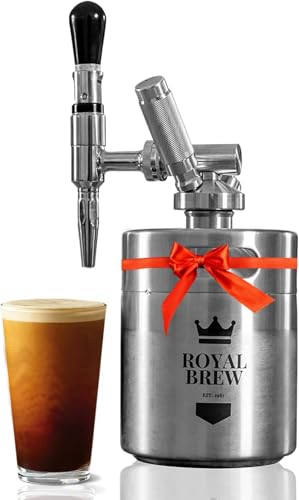
A keg setup consists of a pressure-rated keg, faucet, beverage line, gas line, nitrogen source, and regulator. Home kits from brands such as Royal Brew are sold in several configurations, while GrowlerWerks’ uKeg Nitro models use an insulated growler-style format aimed at smaller batches. Exact fittings and capacities vary, so confirm that the kit is intended for nitrogen service rather than ordinary sparkling water.
Kegs win on consistency. A regulator lets you adjust pressure gradually, and a longer, properly sized beverage line can slow the pour so the coffee arrives creamy rather than violently foamy. A 64-ounce mini keg is often a practical middle ground: large enough for several drinks, small enough to fit in many refrigerators on its side only if the manufacturer permits that orientation. Do not assume a pressurized vessel can be stored any way you like.
Full-size kegs are more demanding. A five-gallon batch of cold brew can weigh more than 40 pounds before adding the keg and hardware, and the filled keg may not fit through a crowded refrigerator shelf. A cylinder also needs to stand securely and remain accessible for shutoff. If you cannot reserve about 18–24 inches of vertical space for a small cylinder-and-regulator arrangement, a cartridge-powered mini keg is usually easier.
Chilling is the hidden constraint
Nitrogen dissolves more readily in cold liquid. For a reliable cascade, chill the cold brew to approximately 35–40°F before dispensing. A countertop system can use a refrigerator-chilled bottle, but a keg system needs enough refrigerator space for the entire keg or an effective ice bath. Serving warm coffee at high pressure tends to create foam without the smooth texture you want.
Ice can work for a short gathering, but it is less stable than refrigeration. Meltwater, uneven cooling, and a keg that sits partly above the ice can cause inconsistent pours. If you plan to serve nitro coffee outdoors, choose an insulated mini keg and make smaller batches rather than expecting a large warm keg to chill quickly.
Cleaning, pressure, and durability realities
Clean the vessel, dip tube, faucet, gas connection, and beverage line after every batch. Coffee oils become rancid and sticky, and the fine particles in cold brew can obstruct a narrow faucet. Rinse immediately, wash with an appropriate food-contact cleaner, flush the line, and allow all parts to dry fully. A system that takes five minutes to disassemble is more likely to be maintained than one with permanently hidden passages.
Never exceed the pressure rating printed by the manufacturer, and use only compatible regulators, cartridges, tubing, and fittings. A pressure gauge is valuable because it shows whether the system is actually receiving gas; a regulator is more important than a decorative pressure readout because it controls delivery. Inspect seals when a system becomes difficult to pressurize. Gaskets and faucet washers usually wear before the metal vessel does.
| Real-space consideration | Countertop infuser | Mini keg | Full keg setup |
|---|---|---|---|
| Counter or floor footprint | About 6–10 by 6–10 inches | About 8–12 inches wide; faucet clearance required | Often 12–24 inches including gas equipment |
| Typical filled weight | 2–4 pounds | 5–9 pounds | 35–45 pounds for a five-gallon batch |
| Useful refrigerator clearance | Height of the bottle, commonly 10–15 inches | Roughly 10–16 inches of shelf height | Dedicated kegerator or large open shelf often needed |
| Best preparation size | One to two drinks | Three to eight drinks | Several days of servings or a gathering |
How to choose the best nitro cold brew maker
- Count servings before comparing features. Choose a countertop unit for one or two drinks, a mini keg for regular household use, and a full keg for groups or batch preparation.
- Decide how you will chill it. Measure a refrigerator shelf, including door width and shelf height, before buying a keg.
- Choose your nitrogen supply. Cartridges are simple and portable; a refillable cylinder is better for frequent use and adjustable pressure.
- Inspect the cleaning path. Removable lines, accessible seals, and a wide opening matter more than a slightly larger advertised capacity.
- Budget for the complete system. Countertop devices commonly fall around $80–$200, mini-keg systems around $150–$350, and full nitrogen draft setups around $300–$700 or more once the regulator, cylinder, refrigerator, and replacement parts are included.
For occasional home use, choose the smallest countertop nitrogen infuser that meets your serving size. For a daily routine, a refrigerated mini keg offers the best balance of convenience and control. Choose a full keg only when you have the cold storage, secure cylinder space, and willingness to clean the lines after every batch.